- Home/
- Collaborative Change: How Partnerships Elevate Women In Rural India
Collaborative Change: How Partnerships Elevate Women In Rural India
Team NDTV | Updated: February 06, 2025 16:37 IST
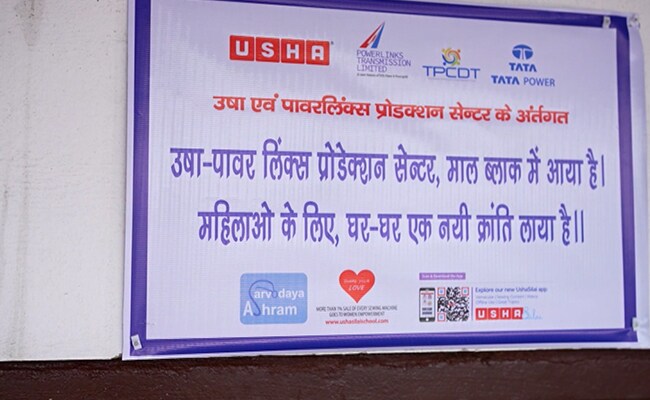
In a world increasingly driven by collaboration and shared values, USHA's Silai School program stands as a beacon of hope, embodying the ideals of growth, upliftment, and self-reliance. Over the past decade, this initiative has empowered more than a million women across India, translating intention into impactful action by partnering with corporations and NGOs that share its vision.
The challenge lies not just in training women but in creating a community that supports resilience and hope. How do we aggregate and amplify our collective intent and purpose into something much larger than ourselves? The answer lies in the partnerships that USHA cultivates, turning seemingly impossible goals into sustainable successes.
USHA's collaborations with corporations - like Tata Power, have proven to be life-changing. These partnerships leverage the resources, connections, and technical expertise needed to uplift women from various regions, turning aspiration into reality.
Heritage Meets Humanity: Ismail Khatri And The USHA Silai School Connection
One of the USHA representative said,
“For more than ten years, USHA has been partnering with companies working at the grassroots level across the country. These partnerships are creating opportunities for the women of rural India, transforming communities and enhancing livelihoods."
One prime example of this impact is the Training cum Production Centre established in the village of Mal, just an hour away from Lucknow. Collaborating with Tata Power since 2021, USHA has established eight such centers, directly benefiting over 300 women in states like Bihar, Himachal Pradesh, and Uttar Pradesh. These women, undeterred by the fog and cold, gather daily to work diligently on their sewing machines, focusing on skills that will change their lives forever.
USHA representative shares,
"The fog and the cold do not stop these women from getting to work on their sewing machines.They are focused on their tasks, nearing the culmination of their training.The Silai School model not only imparts sewing skills but also fosters a self-sustaining culture of learning that extends beyond the classroom.”
USHA's initiatives are further enhanced through partnerships with grassroots NGOs like Sarvodaya Ashram, which helps identify and enroll women into these transformative programs.
Urmila Srivastava, President of Sarvodaya Ashram said,
“I have been associated with USHA International for almost 10 years. All our programs are conducted jointly with them. Sarvodaya Ashram runs many developmental projects, and USHA provides us with technical assistance."
Breaking the stereotype surrounding women and machinery, Urmila emphasizes the capabilities of these trainees,
“There's this myth that women have machine phobia. But that is not the case with the women here. These women learn about the machine and handle it really well.”
The Empowering Journey Of Sanjay Vidyarthi And USHA Silai School
The personal stories of the trainees underscore the program's success.
Seema Devi, a trainee at the USHA Silai School, reflects on her journey,
"My father had a machine. He used to sew a long time ago. So, I brought that machine and started working. Once I completed the training, I started sewing well. There's been a big difference after the training.”
Renu Gupta, another trainee, echoes a similar sentiment,
“I talked to ma'am about how I can come here and learn. No job is too small, whether it is sewing or a government job. What is needed is the skill to do it.”
USHA's commitment extends beyond sewing, these training sessions include lessons on health, social issues, and navigating everyday life.
Niraj Kumar Verma, Assistant Manager at Indian Overseas Bank, highlights the financial aspect,
"We provide every kind of help from the bank. It is with the help of these groups that we know how these women are learning sewing for their development and that of their families."
From Training To Success: The Story Of Miktoksi And USHA Silai School
USHA's Silai School program demonstrates that when intent and commitment converge with the right support, a transformative path emerges for rural women. These social partnerships illuminate the vast possibilities achievable when communities come together, showcasing the immense power of collaboration for empowering women. As these women step into their newfound confidence and capabilities, a world of opportunities unfolds before them, marking the beginning of their journeys toward self-reliance.
Published: February 05, 2025 13:07 IST
also read
Important To Implement Environmental Rules To Sustain Gains Of Lockdown: Union Environment Minister Prakash Javadekar
PTIMumbai Based Green Champion Is Striving To Make The City The Cycling Capital By 2030
Reported by Ambika Singh KahmaDr Naresh Trehan On The Learnings From The Coronavirus Pandemic And How Technology Can Help Save The Environment
Written by Aastha Ahuja, Edited by Sonia Bhaskar
 Written by Sneha Mordani | Wednesday November 25, 2026
One person dies every 2nd day in Delhi due to Lung Cancer reveals data from an RTI query. Top Delhi Chest Surgeon says the number of a gross underestimate.
- Written by Debosmita Ghosh | Wednesday November 25, 2026
6,581 lung cancer cases were reported at AIIMS, Ram Manohar Lohia (RML) Hospital and the Delhi State Cancer Institute (DSCI) between January 1, 2020, and July 31, 2026. Safdarjung Hospital did not provide its total number of cases but reported 393 lung cancer deaths.
- Written by Shreya Goswami | Wednesday November 25, 2026
Air pollution may increase the risk of Alzheimer's disease and dementia by disrupting the brain's immune cells, a new study finds. With Indian cities facing high PM2.5 levels, researchers' findings raise fresh concerns about the long-term neurological effects of polluted air.
- Written by Amit Chaturvedi | Wednesday November 25, 2026
The sources of pollution identified by the study include vehicular traffic, construction, and commercial sources. It also said that stubble burning contributes to seasonal deterioration in the air quality in Delhi and areas around it.
- Wednesday November 25, 2026 , New Delhi
Air quality in Delhi remained in the poor category, with four monitoring stations recording 'very poor' readings.



................................ Advertisement ................................





Opinion | Delhi Has Every Pollution Control Policy - Except One That Works
Monday November 09, 2026Every November, Delhi performs the same ritual. We check the AQI before stepping outdoors, children are kept indoors, masks reappear, schools consider shutting, construction is restricted, and emergency meetings are convened. Politicians blame the weather, neighbouring states, farmers, or firecrackers. And then, as the season changes, the urgency d...
दीवाली की चौखट पर दिल्ली में सांसों का संकट: 30 साल की स्टडी ने हरियाली को लेकर क्या बताया?
Thursday November 05, 2026अध्ययन में हरियाली की मात्रा के साथ उसके फैलाव और आपसी जुड़ाव को भी महत्वपूर्ण पाया गया. जिन इलाकों में हरियाली ज्यादा बिखरी हुई थी, वहां सतही तापमान अधिक रहा. इसके विपरीत, बड़े और आपस में जुड़े हरित क्षेत्रों में तापमान कम पाया गया.
Opinion: Why Delhi's Smog Can't Be Fixed From SpaceDavid Fickling, Bloomberg
Monday October 19, 2026The clearest sign that Delhi is on a path to cleaner air would be a decline in the amount of paddy grown nearby, and therefore the acreage liable to be burned each year.
Don't Normalise Air Purifiers As Delhi Chokes | The Reason Why
Thursday December 11, 2025More than 90 cities in the world's top 100 polluting list are in India. With every passing year, the AQI is rising, reaching 'hazardous' levels.
Blog | Well Done, Delhi. You've Turned Lung Sacrifice Into A Badge Of HonourSaikat Kumar Bose
Monday November 10, 2025Till some years back, Delhiites would ask angry questions to those in power about the capitals annual tryst with toxic air. This has changed. Those in the driving seat dont see the need to answer now.