


- Home/
- Delhi's Air Quality Turns 'Severe' As AQI Reading Soars To 427
Delhi's Air Quality Turns 'Severe' As AQI Reading Soars To 427
Asian News International | Updated: November 17, 2025 08:27 IST
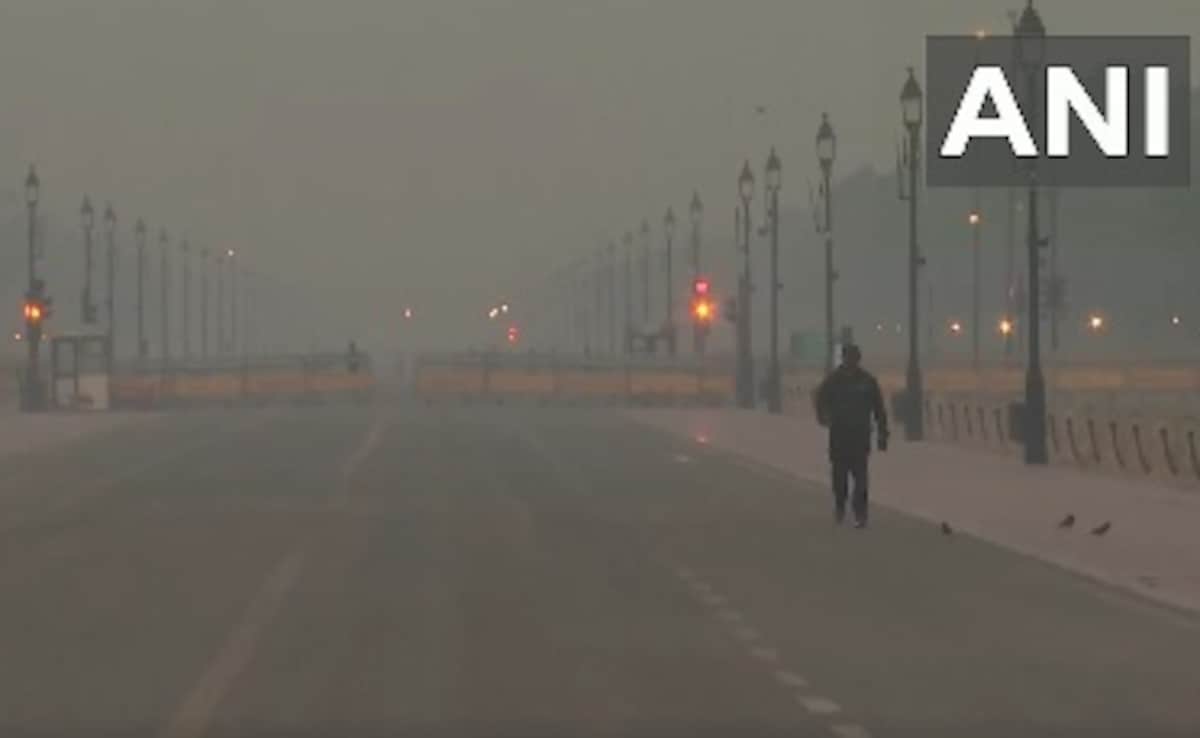
Delhi Air Pollution: The area around India Gate and Kartavya Path is blanketed in a layer of toxic smog.
New Delhi :
The national capital woke up to dense smog on Monday morning as the average Air Quality Index (AQI) stood at 359 at 7 am, falling under the 'very poor' category despite the Graded Response Action Plan (GRAP)-III in effect across Delhi and the National Capital Region (NCR), according to the Central Pollution Control Board (CPCB).
A layer of thick smog engulfed several areas, showing little to no improvement from Sunday morning's AQI of 385.
Bawana recorded the highest AQI level of 427 at 7 am, falling under the 'severe' category. In contrast, NSIT Dwarka recorded the lowest AQI of 225, according to the data by the Central Pollution Control Board (CPCB).
Visuals from India Gate and Kartavya Path are blanketed in a layer of toxic smog as the AQI in the area is 341 in the 'very poor' category, as claimed by the CPCB.
Chandani Chowk recorded an AQI of 383, RK Puram 366, ITO 394, Punjabi Bagh 384, Patparganj 369, Pusa 365, and Dwaraka Sector-8 356.
A layer of toxic smog lingers in the air of Anand Vihar as the Central Pollution Control Board claimed that the Air Quality Index around the area is 383, categorised as 'very poor'.
The thick smog, along with deteriorating air quality, mercury continued to hover around the 9 Degree Celsius mark, with some areas recording even lower temperatures.
As per CPCB classification, an AQI between 0-50 is considered 'good', 51-100 'satisfactory', 101-200 'moderate', 201-300 'poor', 301-400 'very poor', and 401-500 'severe'.
Following the deteriorating air quality in the national capital, the Graded Response Action Plan (GRAP) III was implemented on November 11 across Delhi by the Commission for Air Quality Management (CAQM). The measures aim to control emissions through stricter restrictions on construction, vehicular movement and industrial operations.
Under GRAP-III, curbs include a ban on most non-essential construction activities, restrictions on BS-III petrol and BS-IV diesel four-wheelers, suspension of classes for students up to Class 5 with a shift to hybrid or online learning, curbs on industrial operations dependent on non-clean fuel, and a ban on non-emergency diesel generator sets.
Earlier, the Supreme Court directed the governments of Punjab and Haryana to file a status report on the measures taken to curb stubble burning, which contributes to the air pollution crisis in the Delhi-NCR region.
A bench of Chief Justice of India BR Gavai and Justice K Vinod Chandran ordered, "We direct the state of Punjab and Haryana to file a report on what steps are being taken to curb stubble burning."
Since Diwali, the air quality in Delhi and the National Capital Region (NCR) has been reeling under the 'very poor' and 'severe' categories in several areas, even as Stage III of the GRAP remains in effect.
(This story has not been edited by NDTV staff and is auto-generated from a syndicated feed.)
Published: November 17, 2025 08:20 IST
 Reported by Reet Kaur Sahni | Friday August 07, 2026
As per the ministry, prior Environmental Clearance becomes mandatory for data centres depending on their physical footprint under Schedule 8 of the EIA Notification, 2006.
- Written by Sambhav Kumar | Thursday August 06, 2026
Keerthy Suresh's 41-hour no-sleep stretch highlights the intense demands many professionals face, but experts warn that prolonged sleep deprivation should never become routine.
- Written by Sambhav Kumar | Wednesday August 05, 2026
Preliminary evidence suggests the blood filtration treatment could reduce some microplastic particles, though findings are limited and require more study.
- Monday August 03, 2026 , New Delhi
Study reveals black crust from pollution weakens Humayuns Tomb sandstone
- Written by Debosmita Ghosh | Saturday August 01, 2026
Lung cancer is often diagnosed at an advanced stage because its early symptoms are easy to overlook. A persistent cough is among the most commonly ignored warning signs.



................................ Advertisement ................................

Blog | Well Done, Delhi. You've Turned Lung Sacrifice Into A Badge Of HonourSaikat Kumar Bose
Monday November 10, 2025Till some years back, Delhiites would ask angry questions to those in power about the capitals annual tryst with toxic air. This has changed. Those in the driving seat dont see the need to answer now.
Opinion | Why Indians Have Just Given Up On Air Pollution CrisisTanushree Ganguly
Friday December 20, 2024While some may argue that people in Delhi are now more aware of air pollution than they were a decade back, my rebuttal would be that awareness does not mean that people are concerned.
Opinion | You Must Outrage Over Filthy Air More Than Once A YearJyoti Pande Lavakare
Tuesday December 10, 2024Delhi welcomed us with monsoon rains and mangos. We were home. Fast forward a couple of years, in the winter of 2012, I found myself in denial about something other parents, mostly expats, were calling toxic air.
Opinion | Delhi's Air Pollution Situation Is Like A Bad MarriageNishtha Gautam
Friday November 22, 2024On a good day, such as today, the AQI reading in Delhi is 407. We are jubilant at the sickly sunshine trickling through the slightly dissipated smog. At least its not 1600.
दिवाली... पराली... सियासी जुगाली!Ashwini kumar
Monday November 18, 2024दिल्ली-एनसीआर में प्रदूषण का समाधान तो आज तक मिला नहीं. हर साल चिंतित होकर हम-आप सांसों की तकलीफ के साथ-साथ दिल और ब्लड प्रेशर के मरीज भी क्यों बनें?


