The air quality deteriorated in the national capital on Sunday, with the Air Quality Index (AQI) being recorded at 352, in the 'very poor' category, according to System of Air Quality and Weather Forecasting And Research (SAFAR). This is worse than the average AQI recorded at 255 on Saturday, categorized as 'poor'.
Moreover, AQI in Anand Vihar area crossed the 400 mark, being recorded as 405 at 7 AM, categorized as 'severe', worse than the AQI of 367 recorded on Saturday.
AQI at the Akshardham Temple deteriorated 261, whereas IGI airport recorded an AQI of 324, both categorized as 'very poor.'
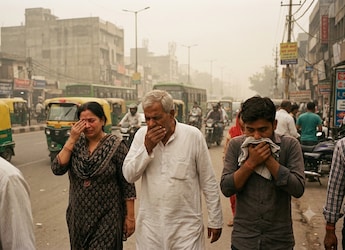
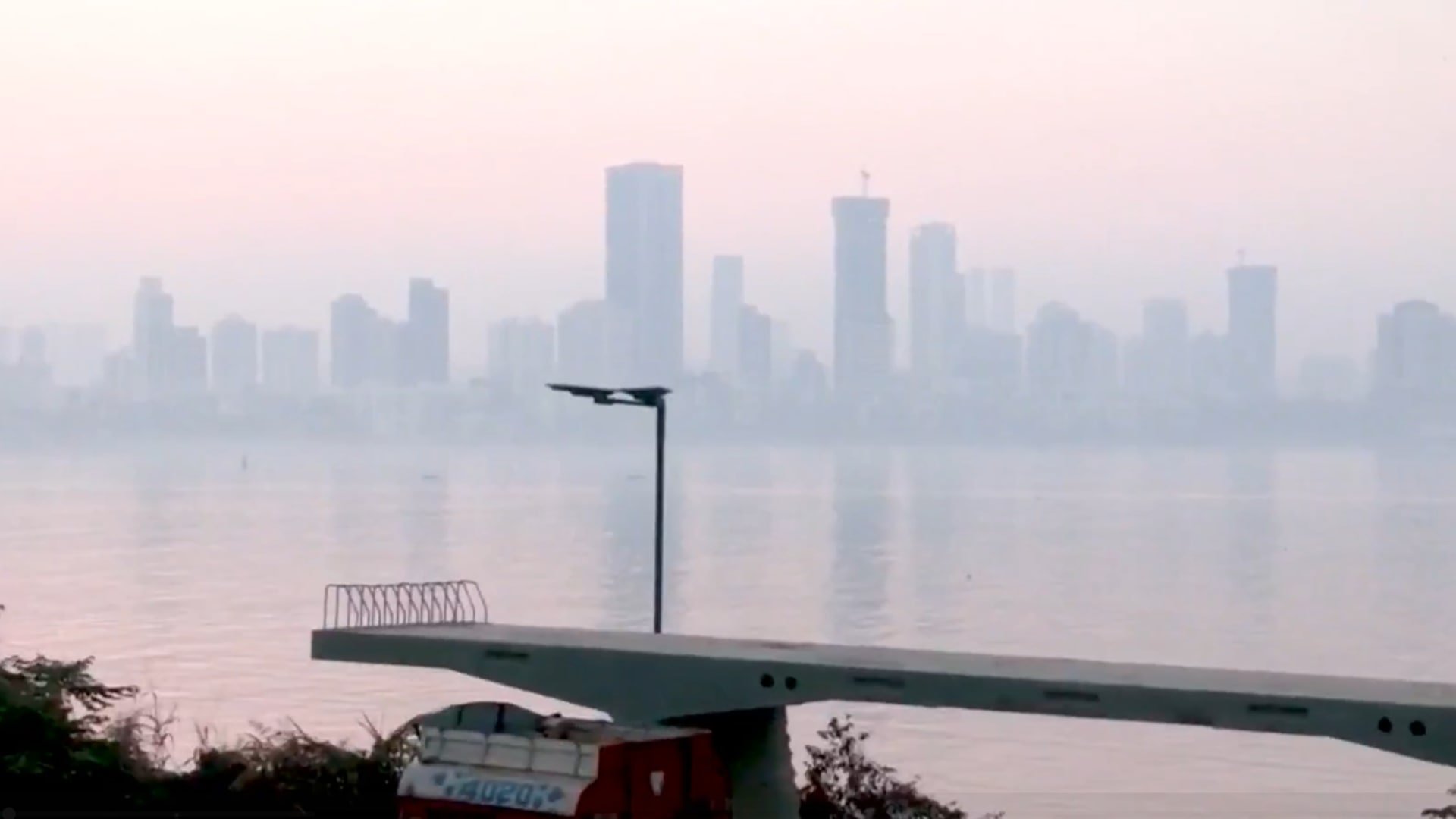
A layer of thick smog enveloped certain parts of the city.
Himanshu, a visitor to the national capital said that the increasing pollution feels 'suffocating.'
"It feels suffocating due to pollution...The govt should look into what can be done to reduce pollution," he told ANI.
Moreover, a cyclist in the city told ANI that they are facing a lot of problems with breathing.
"We are from Delhi and we (the cyclist group) cycle daily here, but this situation of air pollution since the last few days we are facing a lot of problems. We can't breathe properly, we get tired faster due to the pollution. We take precautions like wearing a bandana but nothing is working because the pollution is increasing a lot," he said.
He further said that the measures taken by the government don't seem effective enough, and the government should encourage the people to use public transport more.
"The government did some work like stopping construction and implementing odd-even but it doesn't seem like it is working as this is increasing day by day. There should be constructive measures to encourage people to use public transport and carpooling," he added.
As the festival of lights nears, the Delhi government has also banned firecrackers till January 1 amid efforts to curb pollution levels.
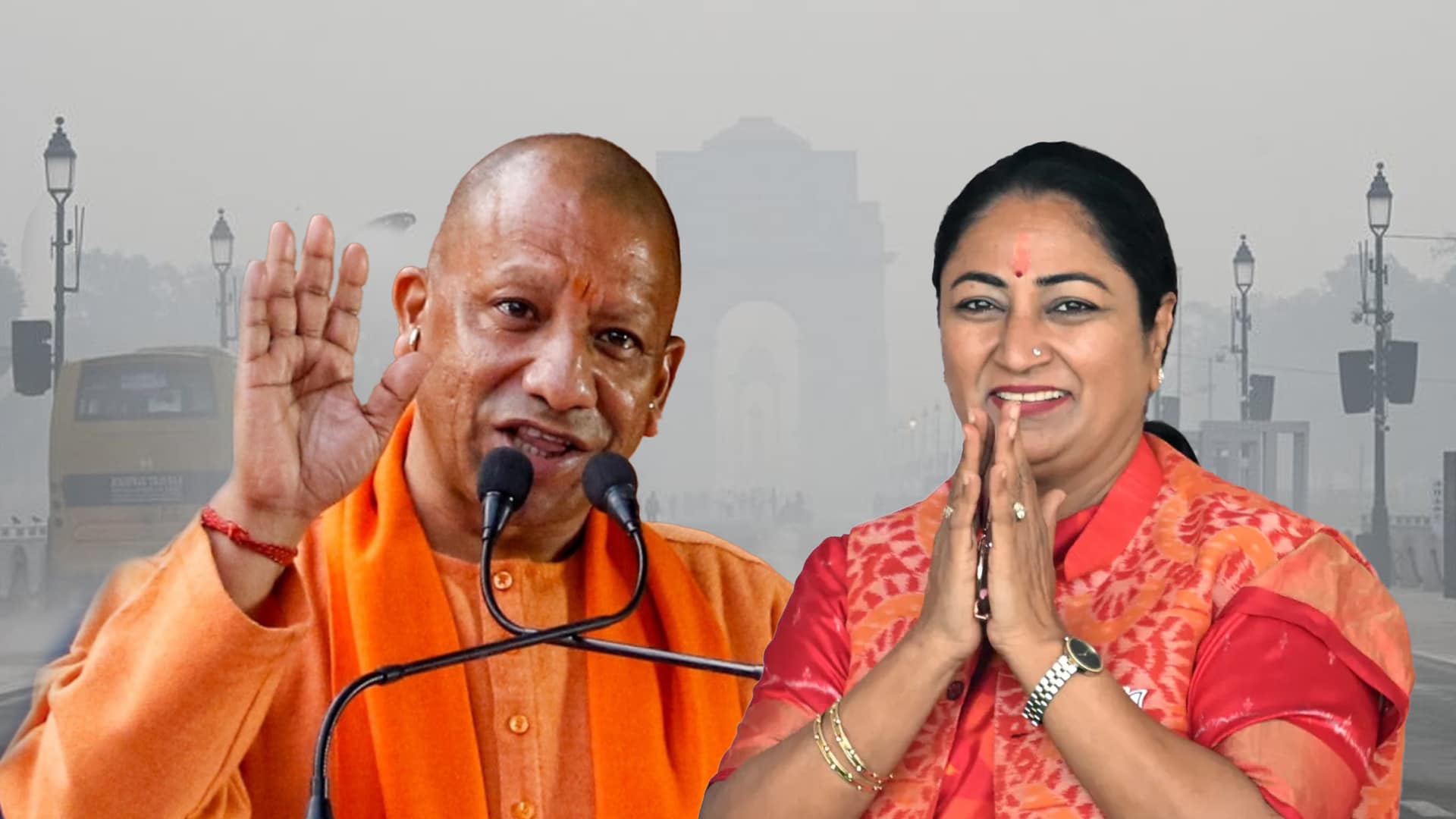
Moreover, toxic foam on the Yamuna river in the Kalindi Kunj area persisted. Earlier the pollution in the river became a topic of hot political debate between the Bharatiya Janata Party (BJP) and Aam Aadmi Party (AAP), with BJP leader Shazia Ilmi criticizing the Delhi government for its handling of the city's worsening pollution crisis, highlighting the alarming presence of toxic foam in the River Yamuna and the resulting breathing difficulties for residents.
"BJP leader Virendraa Sachdeva has fallen ill. Two days ago he took a dip in the Yamuna river. Today he is admitted to the hospital...This is an issue connected to the health of the public of Delhi. Where have the Rs 3000 crore meant for the public of Delhi and Yamuna river?... The public of Delhi is not able to breathe...Toxic foam is floating on the Yamuna River," Ilmi told ANI.
Notably, Delhi environment minister Gopal Rai criticsed the BJP, accusing it of contributing to the increasing pollution in the national capital.
"The BJP is the party that creates pollution and seems to believe that only drama can solve it. I think all governments and parties need to work together. I wish them good health, but stopping these theatrics alone won't reduce pollution. This reflects the BJP leaders' level of understanding. When I was preparing the winter action plan, I had written to the BJP President, but no response or suggestions have come so far," he told ANI.
(Except for the headline, this story has not been edited by NDTV staff and is published from a syndicated feed.)
Iran-Israel war: Health experts say exposure to such air can have both short- and long-term consequences.
With the maximum temperature settling at 21.7 degrees Celsius at Safdarjung, 9.6 degrees below normal, Delhi logged its coldest March day since March 8, 2020, when the mercury had dropped to 21.2 degrees Celsius.
The AIIMS-Delhi is set to conduct the AIRCARE study, which plans to study the correlation between particulate matter and how it is causing lung cancer.
Extreme heat can affect how the body regulates temperature, fluids and circulation, making pregnant women more vulnerable to heat-related illnesses.
People in war zones, where they are already under stress, can reduce their health risks by staying indoors in the days after military attacks, if possible. Keeping windows and doors closed can help reduce the amount of polluted ambient air
................................ Advertisement ................................
Blog | Well Done, Delhi. You've Turned Lung Sacrifice Into A Badge Of HonourSaikat Kumar Bose
Monday November 10, 2025Till some years back, Delhiites would ask angry questions to those in power about the capitals annual tryst with toxic air. This has changed. Those in the driving seat dont see the need to answer now.
Opinion | Why Indians Have Just Given Up On Air Pollution CrisisTanushree Ganguly
Friday December 20, 2024While some may argue that people in Delhi are now more aware of air pollution than they were a decade back, my rebuttal would be that awareness does not mean that people are concerned.
Opinion | You Must Outrage Over Filthy Air More Than Once A YearJyoti Pande Lavakare
Tuesday December 10, 2024Delhi welcomed us with monsoon rains and mangos. We were home. Fast forward a couple of years, in the winter of 2012, I found myself in denial about something other parents, mostly expats, were calling toxic air.
Opinion | Delhi's Air Pollution Situation Is Like A Bad MarriageNishtha Gautam
Friday November 22, 2024On a good day, such as today, the AQI reading in Delhi is 407. We are jubilant at the sickly sunshine trickling through the slightly dissipated smog. At least its not 1600.
दिवाली... पराली... सियासी जुगाली!Ashwini kumar
Monday November 18, 2024दिल्ली-एनसीआर में प्रदूषण का समाधान तो आज तक मिला नहीं. हर साल चिंतित होकर हम-आप सांसों की तकलीफ के साथ-साथ दिल और ब्लड प्रेशर के मरीज भी क्यों बनें?