


- Home/
- Delhi Orange Alert Amid Heavy Rain: Don't Ignore These Air Quality Health Risks
Delhi Orange Alert Amid Heavy Rain: Don't Ignore These Air Quality Health Risks
Written by Sambhav Kumar | Updated: July 28, 2026 17:12 IST
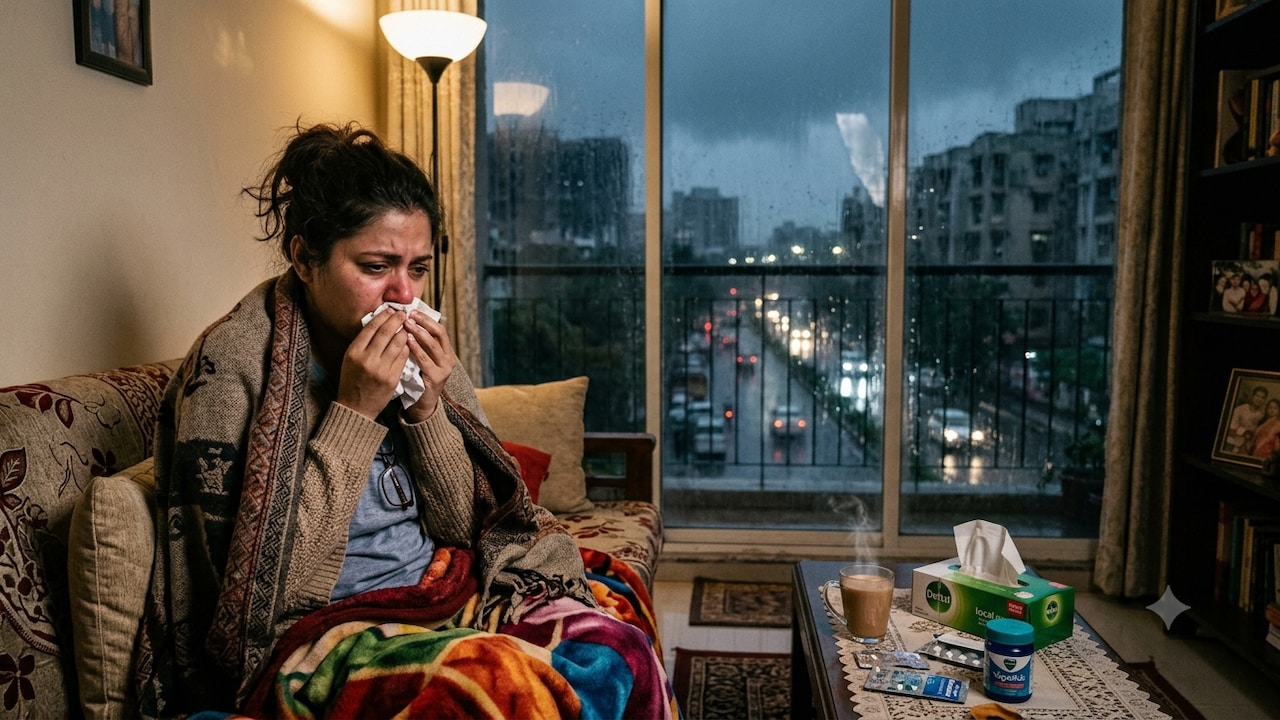
Monsoon conditions can also increase humidity
Highlights
- Delhi-NCR faces heavy monsoon rain with orange alert for waterlogging and traffic issues
- Rain may reduce outdoor pollutants briefly but can worsen indoor air via mould and humidity
- Mould spores from damp homes can trigger asthma, allergies, and respiratory irritation
Delhi-NCR is witnessing heavy rainfall, with an orange alert raising concerns about waterlogging, traffic disruptions and weather-related illnesses. But while rain may offer temporary relief from dust and some outdoor pollutants, experts warn that monsoon weather does not automatically mean cleaner or healthier air. High humidity, water seepage and poor ventilation can create another problem indoors mould and fungal growth. For people with asthma, COPD or allergies, damp indoor environments and sudden changes in weather may trigger respiratory symptoms. Rain can temporarily remove some pollutants from the atmosphere, but the effect does not necessarily last. Once the rain stops, pollutants can accumulate again depending on traffic, wind and local weather conditions.
Can Heavy Rain Make Air Quality Worse?
Monsoon conditions can also increase humidity indoors, particularly when homes have water seepage, damp walls or inadequate ventilation. "Rain may temporarily wash some pollutants out of the air, but monsoon does not necessarily mean cleaner or safer air," says Dr Pradeep Bajad, Senior Consultant, Pulmonology, Amrita Hospital, Faridabad.
Why Is Indoor Air Quality A Concern During Monsoon?
One of the biggest concerns during prolonged wet weather is mould. High humidity, water leakage and damp conditions can encourage mould growth on walls, carpets, fabrics and other surfaces. Mould releases spores into the air, which can irritate the respiratory system. According to Dr Bajad, these spores can trigger:
- Coughing
- Wheezing
- Nasal allergies
- Asthma attacks
- Respiratory irritation
People with existing asthma or allergic rhinitis may be particularly sensitive to these changes.
Don't Ignore Damp Walls And A Musty Smell
A constant damp smell inside the house may be more than just an unpleasant odour. It can indicate excess moisture and possible fungal growth. "If you see any mould, leaking or a constant damp smell, you need to fix it quickly," Dr Bajad advises. Damp areas should be cleaned appropriately, while the source of moisture or leakage should also be addressed. Simply cleaning visible mould without fixing the underlying dampness may allow it to return.
"I would advise people with asthma, COPD, respiratory allergies or existing heart and lung conditions to be particularly cautious during this season. Keeping homes dry and well ventilated, addressing damp patches and mould promptly, and avoiding prolonged exposure to visibly mouldy environments can help reduce respiratory irritation," says Dr Sanay Verma, Additional Director, Internal Medicine, Fortis Escorts Heart Institute, Okhla.
"People who are sensitive to allergens may also consider wearing a well-fitting mask when air quality is poor or when they are exposed to damp, dusty or mould-prone environments. Those with asthma or COPD should continue their prescribed medications and keep their rescue inhalers accessible," Dr Verma adds.
Why Thunderstorms Can Trigger Asthma
"Monsoon weather can also bring sudden winds and thunderstorms, which may disturb pollen and fungal particles and carry them deeper into the airways. This can be particularly problematic for people with asthma or allergic rhinitis. Someone who normally experiences mild seasonal allergies may notice increased sneezing, nasal congestion, coughing or breathing difficulty during such weather conditions," says Dr Bajad.
How To Keep Indoor Air Cleaner During Rainy Weather
Keeping the house dry and adequately ventilated is one of the simplest ways to reduce respiratory triggers during the monsoon. Dr Bajad recommends paying attention to areas that can accumulate moisture and ensuring that household ventilation systems are properly maintained. Air-conditioner filters, coolers and exhaust systems should be cleaned regularly to prevent the accumulation of dust, mould and other particles. Wet clothes should also not be dried in poorly ventilated rooms, as this can further increase indoor humidity.
Don't Add More Indoor Pollution
When it is raining heavily, people often keep windows and doors shut for long periods. However, this can allow indoor pollutants to build up. Smoke from cigarettes, incense sticks, mosquito coils and indoor cooking can worsen air quality, particularly in poorly ventilated spaces. People with respiratory conditions should therefore avoid exposure to these pollutants as much as possible.
Should Asthma And COPD Patients Take Extra Precautions?
Yes. People with asthma or chronic obstructive pulmonary disease (COPD) should be particularly careful during changing weather and periods of poor air quality. "Patients with asthma or COPD should use their prescribed controller medications and keep their rescue inhaler with them," says Dr Bajad. However, patients should not change or stop their prescribed medication simply because symptoms improve. Any changes to long-term treatment should be discussed with their doctor.
Check Air Quality Before Outdoor Exercise
Heavy rain does not mean that outdoor air quality is always safe. People with asthma and other respiratory conditions should check the local Air Quality Index (AQI) before exercising outdoors. It may also be sensible to avoid intense physical activity near heavy traffic or waterlogged areas. Exercise itself is beneficial for overall health, but people with respiratory conditions should adjust the intensity and location of workouts according to their symptoms and environmental conditions.
When Should You Seek Medical Help?
Breathing problems should not be dismissed as a routine consequence of the weather. Urgent medical attention is needed if a person develops:
- Breathlessness at rest
- Severe or persistent chest tightness
- Persistent wheezing
- Bluish lips
- Poor response to a prescribed rescue inhaler
- Rapidly worsening breathing difficulty
Children with asthma or allergies may also require closer monitoring during periods of sudden weather changes. Delhi's heavy monsoon rain may temporarily clear some outdoor pollutants, but it can also create conditions that affect respiratory health, particularly indoors.
Damp walls, mould, poor ventilation and indoor smoke can all worsen air quality during the rainy season. People with asthma, COPD or allergic rhinitis should take extra precautions, maintain their prescribed treatment and check air quality before exercising outdoors.
Keeping homes dry, fixing leaks quickly, cleaning air-conditioner and cooler filters, improving ventilation and avoiding indoor smoke can go a long way towards protecting respiratory health during the monsoon.
\r\n
\r\n
Disclaimer: This content including advice provides generic information only. It is in no way a substitute for a qualified medical opinion. Always consult a specialist or your own doctor for more information. NDTV does not claim responsibility for this information.
Published: July 28, 2026 16:06 IST
also read
Could The Air Around Us Be Making Us Sicker? Rise Of Dangerous Invasive Fungal Infections Explained
Written by Dr RamanarayananReplacing Gas Stoves With Electric Stoves Greatly Reduces Asthma Symptoms
Written by Ashwini SehgalThe Hidden Environmental Toxicants Causing Lung Cancer In Young Non-Smokers
Written by Rupashi Chhabra
 Written by Sambhav Kumar | Tuesday July 28, 2026
Heavy monsoon rains in Delhi-NCR may clear outdoor pollutants temporarily but increase indoor humidity and mould growth, affecting respiratory health.
- Written by Dr Ramanarayanan | Sunday July 26, 2026
Invasive fungal infections are rising in India, affecting more patients and showing resistance to treatments, posing serious health risks.
- Written by Ashwini Sehgal | Thursday July 23, 2026
The study included 85 adults and children with poorly controlled asthma who lived in homes or apartments with gas stoves. Asthma control was determined from responses to a standard questionnaire.
- Written by Rupashi Chhabra | Tuesday July 21, 2026
Dr Bhuvan Chugh explains how hidden environmental toxicants cause lung cancer in young non-smokers. Here is how fine air pollution triggers hidden mutations.
- Reported by Reet Kaur Sahni | Sunday July 19, 2026
Long before the tournament began, FIFA had made big promises of its own. Under its official targets, FIFA pledged to halve greenhouse gas emissions by 2030 and reach net-zero by 2040.



................................ Advertisement ................................

Blog | Well Done, Delhi. You've Turned Lung Sacrifice Into A Badge Of HonourSaikat Kumar Bose
Monday November 10, 2025Till some years back, Delhiites would ask angry questions to those in power about the capitals annual tryst with toxic air. This has changed. Those in the driving seat dont see the need to answer now.
Opinion | Why Indians Have Just Given Up On Air Pollution CrisisTanushree Ganguly
Friday December 20, 2024While some may argue that people in Delhi are now more aware of air pollution than they were a decade back, my rebuttal would be that awareness does not mean that people are concerned.
Opinion | You Must Outrage Over Filthy Air More Than Once A YearJyoti Pande Lavakare
Tuesday December 10, 2024Delhi welcomed us with monsoon rains and mangos. We were home. Fast forward a couple of years, in the winter of 2012, I found myself in denial about something other parents, mostly expats, were calling toxic air.
Opinion | Delhi's Air Pollution Situation Is Like A Bad MarriageNishtha Gautam
Friday November 22, 2024On a good day, such as today, the AQI reading in Delhi is 407. We are jubilant at the sickly sunshine trickling through the slightly dissipated smog. At least its not 1600.
दिवाली... पराली... सियासी जुगाली!Ashwini kumar
Monday November 18, 2024दिल्ली-एनसीआर में प्रदूषण का समाधान तो आज तक मिला नहीं. हर साल चिंतित होकर हम-आप सांसों की तकलीफ के साथ-साथ दिल और ब्लड प्रेशर के मरीज भी क्यों बनें?


