


- Home/
- Farm Fires Didn't End, They Just Moved To Afternoon: Satellite Data Analysis
Farm Fires Didn't End, They Just Moved To Afternoon: Satellite Data Analysis
Reported by Shreya Ghosh | Updated: December 09, 2025 17:47 IST
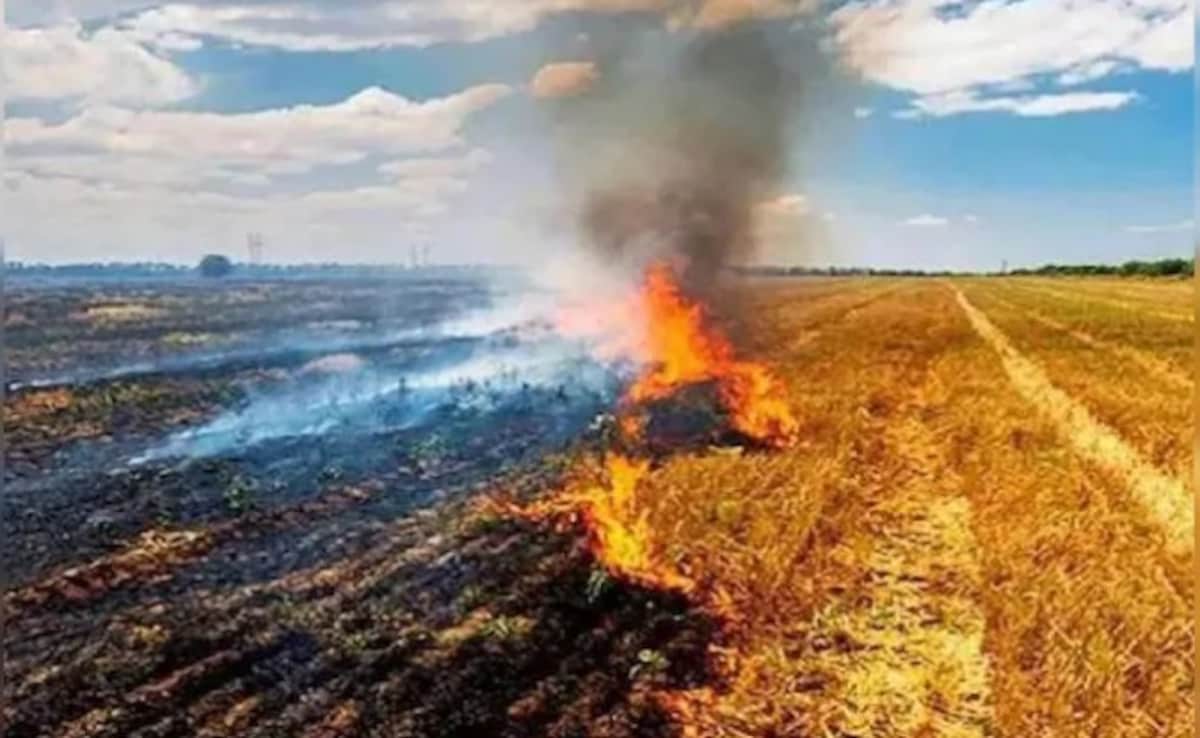
The report has also confirmed genuine progress in reducing the total area set on fire.
New Delhi :
Claims of a nearly 90% drop in stubble burning in Punjab and Haryana - a key contributor to pollution in Delhi-NCR - have been challenged by a new multi-satellite analysis, revealing that the reported decline is a result of a gap in India's monitoring system, not a true reduction in farm fires.
The Stubble Burning Status Report 2025 by the International Forum for Environment, Sustainability and Technology (iFOREST) indicates that farmers are strategically shifting their burning to the late afternoon and evening, a time window routinely missed by the standard monitoring satellites, leading to a significant undercount.
Monitoring Blind Spot
The government's official monitoring protocol, run by Indian Agricultural Research Institute's CREAMS (Consortium for Research on Agroecosystem Monitoring and Modeling from Space) relies on polar-orbiting satellites like MODIS/VIIRS (Moderate Resolution Imaging Spectroradiometer/ Visible Infrared Imaging Radiometer Suite) that only pass over the region between 10:30 AM and 1:30 PM.
iFOREST's report used high-frequency observations from the geostationary SEVIRI ( Spinning Enhanced Visible and InfraRed Imager) satellite to confirm a dramatic shift in burning times. In Punjab, over 90% of large fires in 2024 and 2025 occurred after 3 pm, compared to just 3% in 2021. In Haryana, most large fires have consistently occurred after 3 pm since 2019, confirming that a massive undercount has persisted for years.
"Our analysis provides incontrovertible evidence that India's current stubble-burning monitoring system is structurally misaligned with ground realities," said Chandra Bhushan, CEO, iFOREST. "The result is a massive underestimation of fires, emissions, and their contribution to air pollution in Delhi."
Genuine Progress Too
While contesting the 90% decline, the iFOREST report, using Sentinel-2 satellite's burnt-area mapping, confirms genuine progress in reducing the total area set on fire. Burnt-area analysis is considered a more reliable measure than active fire counts, which are skewed by timing.
In Punjab, the area in which stubble was burnt reduced by 37% since its 2022 peak - from 31,447 square km to about 20,000 square km in 2025. In Haryana, the figure went down by 25% since its 2019 peak, going down to 8,812 square km in 2025.
"Burnt area provides a more reliable picture of stubble burning... a 25-35% reduction is good news and indicates that in-situ and ex-situ stubble-management practices are being adopted," Bhushan noted.
However, he warned against complacency, as close to 30,000 square km of paddy fields were still burnt in the two states in 2025.
Call For Overhaul
The report warns that the flawed data is weakening the evidence base for air-quality policymaking, leading to an underestimation of stubble burning's impact on Delhi's pollution.
Among the corrective measures, iFOREST has suggested that CREAMS must start publishing burnt-area data in addition to active fire counts for an accurate picture.
The forum also called for air-quality forecasting models for Delhi being revised to correctly quantify the contribution of stubble burning, and for policy efforts to be expanded beyond Punjab and Haryana to address emerging hotspots in states like Uttar Pradesh and Madhya Pradesh.
"We cannot manage what we do not measure accurately," stressed Ishaan Kochhar, Programme Lead, iFOREST. "To solve the stubble-burning problem, the government must urgently reform the monitoring protocol to integrate burnt-area mapping and geostationary data."
A similar analysis last year had also revealed that farmers were timing stubble burning in a way that it would not be captured by NASA satellites. Satellite images accessed exclusively by NDTV appeared to confirm this.
Published: December 09, 2025 17:47 IST
also read
"Dangerous, Causes Toxic Pollution": Court Bans Firecrackers On Mumbai Roads
Press Trust Of IndiaAnti-Pollution Crackdown Intensifies Across NCR, 150 Inspections In 15 Days
Reported by Reet Kaur SahniNo School Sports In Delhi-NCR In November-December? Check What Air Quality Panel Says
Reported by Ishika Verma, Edited by Aakanksha Singh
 Tuesday September 22, 2026 , Mumbai
The court had on Monday taken suo motu (on its own) cognizance of the issue of severe noise and air pollution caused during processions.
- Written by Sambhav Kumar | Tuesday September 22, 2026
Air pollution does not necessarily mean you have to give up physical activity. The key is to adapt your workout according to the conditions.
- Written by Sambhav Kumar | Friday September 18, 2026
While Bryan Johnson's highly structured approach may attract attention, experts caution against treating any celebrity's routine as a universal prescription
- Written by Debosmita Ghosh | Thursday September 17, 2026
Researchers from Queen's University Belfast reviewed scientific evidence examining whether environmental exposures could be associated with suicide and suicidal behaviour.
- Written by Sambhav Kumar | Thursday September 17, 2026
September and October bring temperature shifts, humidity, mould, viruses, and pollution that can worsen respiratory health, especially in asthma patients.



................................ Advertisement ................................



Blog | Well Done, Delhi. You've Turned Lung Sacrifice Into A Badge Of HonourSaikat Kumar Bose
Monday November 10, 2025Till some years back, Delhiites would ask angry questions to those in power about the capitals annual tryst with toxic air. This has changed. Those in the driving seat dont see the need to answer now.
Opinion | Why Indians Have Just Given Up On Air Pollution CrisisTanushree Ganguly
Friday December 20, 2024While some may argue that people in Delhi are now more aware of air pollution than they were a decade back, my rebuttal would be that awareness does not mean that people are concerned.
Opinion | You Must Outrage Over Filthy Air More Than Once A YearJyoti Pande Lavakare
Tuesday December 10, 2024Delhi welcomed us with monsoon rains and mangos. We were home. Fast forward a couple of years, in the winter of 2012, I found myself in denial about something other parents, mostly expats, were calling toxic air.
Opinion | Delhi's Air Pollution Situation Is Like A Bad MarriageNishtha Gautam
Friday November 22, 2024On a good day, such as today, the AQI reading in Delhi is 407. We are jubilant at the sickly sunshine trickling through the slightly dissipated smog. At least its not 1600.
दिवाली... पराली... सियासी जुगाली!Ashwini kumar
Monday November 18, 2024दिल्ली-एनसीआर में प्रदूषण का समाधान तो आज तक मिला नहीं. हर साल चिंतित होकर हम-आप सांसों की तकलीफ के साथ-साथ दिल और ब्लड प्रेशर के मरीज भी क्यों बनें?


