


- Home/
- Delhi Was Most Polluted City In 2024-25, Patna Close Second: Study
Delhi Was Most Polluted City In 2024-25, Patna Close Second: Study
Press Trust of India | Updated: March 12, 2026 10:13 IST
Highlights
- Delhi recorded the highest annual PM2.5 levels and longest severe pollution periods in 2024-25
- Patna ranked second in pollution, driven by strong atmospheric stagnation in the Indo-Gangetic Plain
- Bengaluru and Chennai showed worsening air quality during winter, indicating new vulnerability
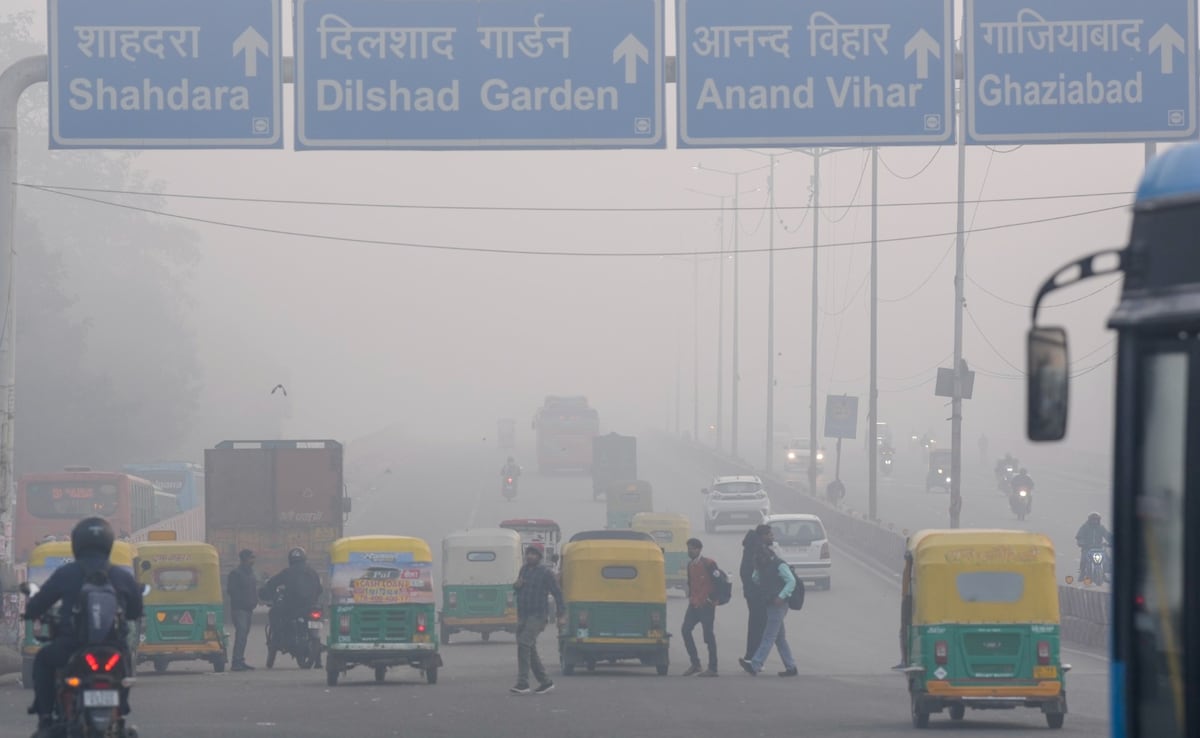
Delhi was the most polluted city during 2024-25, recording the highest annual PM2.5 levels and extended periods of "severe" air quality in winter while Patna was the second-most polluted city, according to a new analysis by Climate Trends. Climate Trends is a research-based consulting and capacity-building initiative that aims to bring greater focus on issues of environment, climate change and sustainable development. Based on Central Pollution Control Board (CPCB) air quality monitoring data, this report analysed how meteorological conditions influence the persistence of PM2.5 pollution across six major Indian cities such as Delhi, Patna, Kolkata, Mumbai, Chennai and Bengaluru. Using CPCB air quality data (2024-2025) combined with meteorological clustering, the study distinguished emission-driven pollution from weather-driven variability.
"Delhi continues to face the most severe pollution crisis nationally with the highest annual average PM2.5 levels and the longest stretches of 'severe' or 'emergency' category air days, driven by local emissions and regional factors.
"Patna is confirmed as the second-most polluted city after Delhi, with persistently high PM2.5 concentrations driven by strong atmospheric stagnation, highlighting an intensifying crisis in the eastern Indo-Gangetic Plain," the report said.
While historically less polluted, Bengaluru and Chennai showed signs of air quality deterioration during the winter months, a new vulnerability trend.
Both Mumbai and Chennai recorded an increase in their annual average pollution levels in 2025, signalling a growing year-round concern beyond just seasonal spikes.
Sagnik Dey, Head, Centre for Atmospheric Sciences, Indian Institute of Technology (IIT), Delhi, noted that persistence of PM2.5 exceedances is strongly associated with sub-1 m/s wind regimes and elevated relative humidity across northern cities, where stagnation episodes sustain disproportionately high exposure levels.
"Ventilation efficiency emerges as the dominant determinant of inter-city variability. However, current NCAP evaluation frameworks primarily assess observed concentration changes without explicitly accounting for meteorological modulation, potentially leading to distorted interpretations of policy effectiveness," he said.
The report proposed significant reform in NCAP Phase-III, including separate winter targets, meteorology-adjusted metrics, and dynamic weather-triggered action plans, alongside integrated airshed-based planning.
(Except for the headline, this story has not been edited by NDTV staff and is published from a syndicated feed.)
Published: March 11, 2026 18:15 IST
also read
 Written by Ambika Singh Kahma | Friday June 19, 2026
NDTV Lifeline's first episode gives India a wake-up call to recognise sleep apnea as a critical public health issue
- Reported by Ishika Verma | Friday June 19, 2026 , New Delhi
The measures, outlined under a newly notified winter air quality management framework, are intended to help authorities, businesses and residents prepare in advance for the period between November and February, when Delhi's air quality typically dete
- Edited by Nikhil Pandey | Friday June 19, 2026
An unprecedented Ukrainian drone strike on a major Moscow oil refinery has caused a bizarre environmental crisis, with oily "black rain" falling over parts of the Russian capital.
- Written by Dr Anindita Singh | Monday June 15, 2026
From a clinical point of view, infertility often develops quietly, without noticeable symptoms, especially in the early stages, and the whole process can look normal from the outside.
- Written by Shreya Goswami | Monday June 15, 2026
Naseeruddin Shah's moving portrayal of a man with dementia in Imtiaz Ali's latest movie highlights the emotional and practical challenges faced by caregivers.





................................ Advertisement ................................


Blog | Well Done, Delhi. You've Turned Lung Sacrifice Into A Badge Of HonourSaikat Kumar Bose
Monday November 10, 2025Till some years back, Delhiites would ask angry questions to those in power about the capitals annual tryst with toxic air. This has changed. Those in the driving seat dont see the need to answer now.
Opinion | Why Indians Have Just Given Up On Air Pollution CrisisTanushree Ganguly
Friday December 20, 2024While some may argue that people in Delhi are now more aware of air pollution than they were a decade back, my rebuttal would be that awareness does not mean that people are concerned.
Opinion | You Must Outrage Over Filthy Air More Than Once A YearJyoti Pande Lavakare
Tuesday December 10, 2024Delhi welcomed us with monsoon rains and mangos. We were home. Fast forward a couple of years, in the winter of 2012, I found myself in denial about something other parents, mostly expats, were calling toxic air.
Opinion | Delhi's Air Pollution Situation Is Like A Bad MarriageNishtha Gautam
Friday November 22, 2024On a good day, such as today, the AQI reading in Delhi is 407. We are jubilant at the sickly sunshine trickling through the slightly dissipated smog. At least its not 1600.
दिवाली... पराली... सियासी जुगाली!Ashwini kumar
Monday November 18, 2024दिल्ली-एनसीआर में प्रदूषण का समाधान तो आज तक मिला नहीं. हर साल चिंतित होकर हम-आप सांसों की तकलीफ के साथ-साथ दिल और ब्लड प्रेशर के मरीज भी क्यों बनें?


