


- Home/
- Delhi Records Coldest March Day In 6 Years, Cleanest Air Quality In 5 Months
Delhi Records Coldest March Day In 6 Years, Cleanest Air Quality In 5 Months
Press Trust of India | Updated: March 20, 2026 20:52 IST
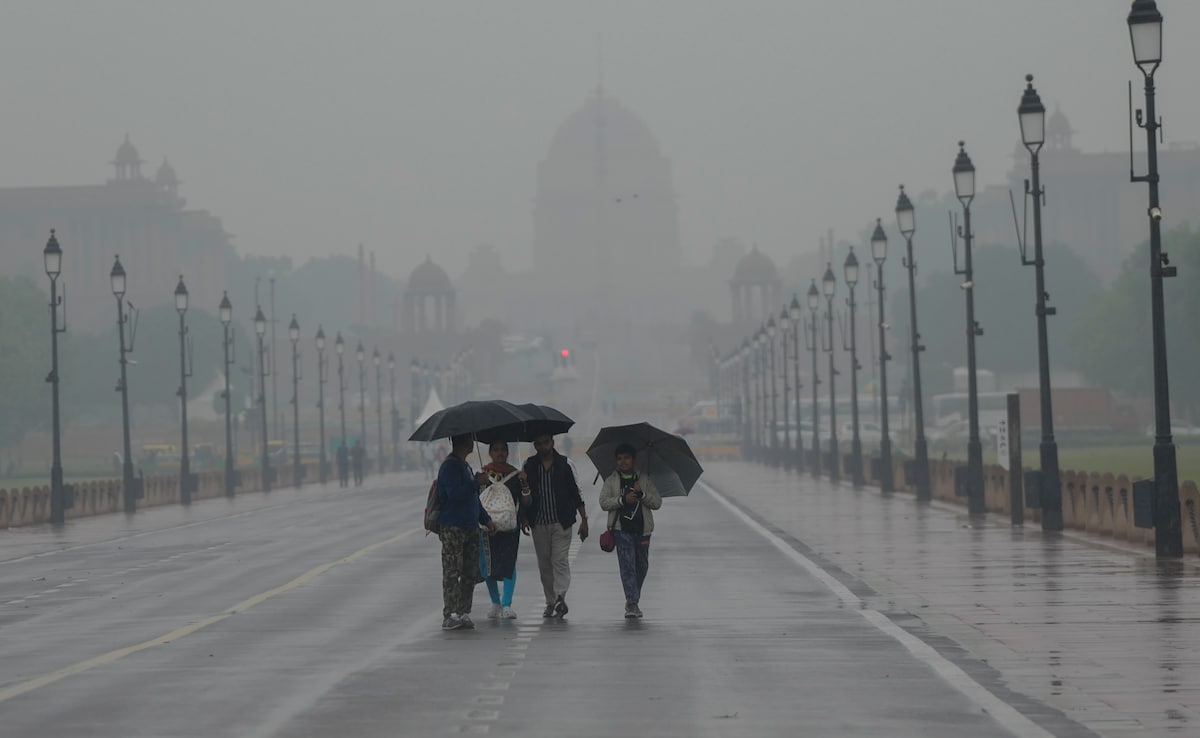
Across the city, maximum temperatures remained well below normal levels.
New Delhi:
After days of persistent rain and gusty winds, the national capital witnessed a sharp dip in temperatures along with a spell of clean air, recording its coldest March day in six years and the cleanest air in about five months, with the AQI falling in the 'satisfactory' category on Friday.
With the maximum temperature settling at 21.7 degrees Celsius at Safdarjung, 9.6 degrees below normal, Delhi logged its coldest March day since March 8, 2020, when the mercury had dropped to 21.2 degrees Celsius.
After the rain, air quality also improved markedly, with the Air Quality Index (AQI) recorded at 93, placing it in the 'satisfactory' category. This marks the first such day in about five months (161 days), with the last time the city recorded 'satisfactory' air quality on October 9, 2025, when the AQI stood at 99.
According to CPCB standards, an AQI of 0-50 is considered 'good', 51-100 'satisfactory', 101-200 'moderate', 201-300 'poor', 301-400 'very poor', and 401-500 'severe'.
Across the city, maximum temperatures remained well below normal levels.
Palam recorded a maximum temperature of 21.2 degrees Celsius, 10.4 degrees below normal. Lodhi Road recorded 21.0 degrees Celsius, 9.0 degrees below normal, Ridge 21.1 degrees Celsius, 10.7 degrees below normal, and Ayanagar 21.5 degrees Celsius, 10.5 degrees below normal.
On the minimum temperature front, Safdarjung recorded 16 degrees Celsius, 0.5 degrees below normal. Palam logged 14.7 degrees Celsius, 1.7 degrees below normal.
Lodhi Road recorded 15.8 degrees Celsius, 0.8 degrees above normal, Ridge recorded 15.1 degrees Celsius, 2.6 degrees below normal, and Ayanagar reported 16 degrees Celsius, 0.2 degrees below normal.
The city recorded 7 mm of rainfall during the day, taking the average rainfall for the month so far to 16.2 mm till date, making it the wettest March in three years since 2023, when the average rainfall stood at 50.4 mm.
After 8.30 am on Friday, rainfall was recorded at Safdarjung at 1.4 mm, Palam at 1.4 mm, Lodhi Road at 1.2 mm, Ridge at 1.0 mm and Ayanagar at 0.8 mm. Among other stations, Mayur Vihar recorded 2.5 mm, while Pusa and Janakpuri recorded 1.0 mm each.
Between 11.30 am and 2.30 pm, Safdarjung and Lodhi Road recorded no rainfall, while Palam recorded 0.2 mm, Ridge 0.2 mm and Ayanagar 0.2 mm. Among other stations, Najafgarh and Janakpuri recorded 0.5 mm each.
Between 2.30 pm and 5.30 pm, no station recorded any rainfall.
From 8.30 am on Thursday to 8.30 am on Friday, the national capital recorded cumulative rainfall of 6.6 mm at Safdarjung, 5.4 mm at Palam, 6.3 mm at Lodhi Road, 7.4 mm at Ridge and 5.6 mm at Ayanagar.
The air quality is likely to be in the 'moderate' category from Saturday to March 23, according to the Air Quality Early Warning System.
For Saturday, the minimum temperature is expected to settle at 14 degrees Celsius and the maximum temperature at 27 degrees Celsius, with a forecast of a partly cloudy sky, bringing an end to the recent spell of rainy days.
(Except for the headline, this story has not been edited by NDTV staff and is published from a syndicated feed.)
Published: March 20, 2026 20:52 IST
 Reported by Reet Kaur Sahni | Friday August 07, 2026
As per the ministry, prior Environmental Clearance becomes mandatory for data centres depending on their physical footprint under Schedule 8 of the EIA Notification, 2006.
- Written by Sambhav Kumar | Thursday August 06, 2026
Keerthy Suresh's 41-hour no-sleep stretch highlights the intense demands many professionals face, but experts warn that prolonged sleep deprivation should never become routine.
- Written by Sambhav Kumar | Wednesday August 05, 2026
Preliminary evidence suggests the blood filtration treatment could reduce some microplastic particles, though findings are limited and require more study.
- Monday August 03, 2026 , New Delhi
Study reveals black crust from pollution weakens Humayuns Tomb sandstone
- Written by Debosmita Ghosh | Saturday August 01, 2026
Lung cancer is often diagnosed at an advanced stage because its early symptoms are easy to overlook. A persistent cough is among the most commonly ignored warning signs.



................................ Advertisement ................................



Blog | Well Done, Delhi. You've Turned Lung Sacrifice Into A Badge Of HonourSaikat Kumar Bose
Monday November 10, 2025Till some years back, Delhiites would ask angry questions to those in power about the capitals annual tryst with toxic air. This has changed. Those in the driving seat dont see the need to answer now.
Opinion | Why Indians Have Just Given Up On Air Pollution CrisisTanushree Ganguly
Friday December 20, 2024While some may argue that people in Delhi are now more aware of air pollution than they were a decade back, my rebuttal would be that awareness does not mean that people are concerned.
Opinion | You Must Outrage Over Filthy Air More Than Once A YearJyoti Pande Lavakare
Tuesday December 10, 2024Delhi welcomed us with monsoon rains and mangos. We were home. Fast forward a couple of years, in the winter of 2012, I found myself in denial about something other parents, mostly expats, were calling toxic air.
Opinion | Delhi's Air Pollution Situation Is Like A Bad MarriageNishtha Gautam
Friday November 22, 2024On a good day, such as today, the AQI reading in Delhi is 407. We are jubilant at the sickly sunshine trickling through the slightly dissipated smog. At least its not 1600.
दिवाली... पराली... सियासी जुगाली!Ashwini kumar
Monday November 18, 2024दिल्ली-एनसीआर में प्रदूषण का समाधान तो आज तक मिला नहीं. हर साल चिंतित होकर हम-आप सांसों की तकलीफ के साथ-साथ दिल और ब्लड प्रेशर के मरीज भी क्यों बनें?


