


- Home/
- Delhi Records Season's Lowest Minimum Temperature At 16 Degrees Celsius
Delhi Records Season's Lowest Minimum Temperature At 16 Degrees Celsius
| Updated: October 26, 2026 20:14 IST
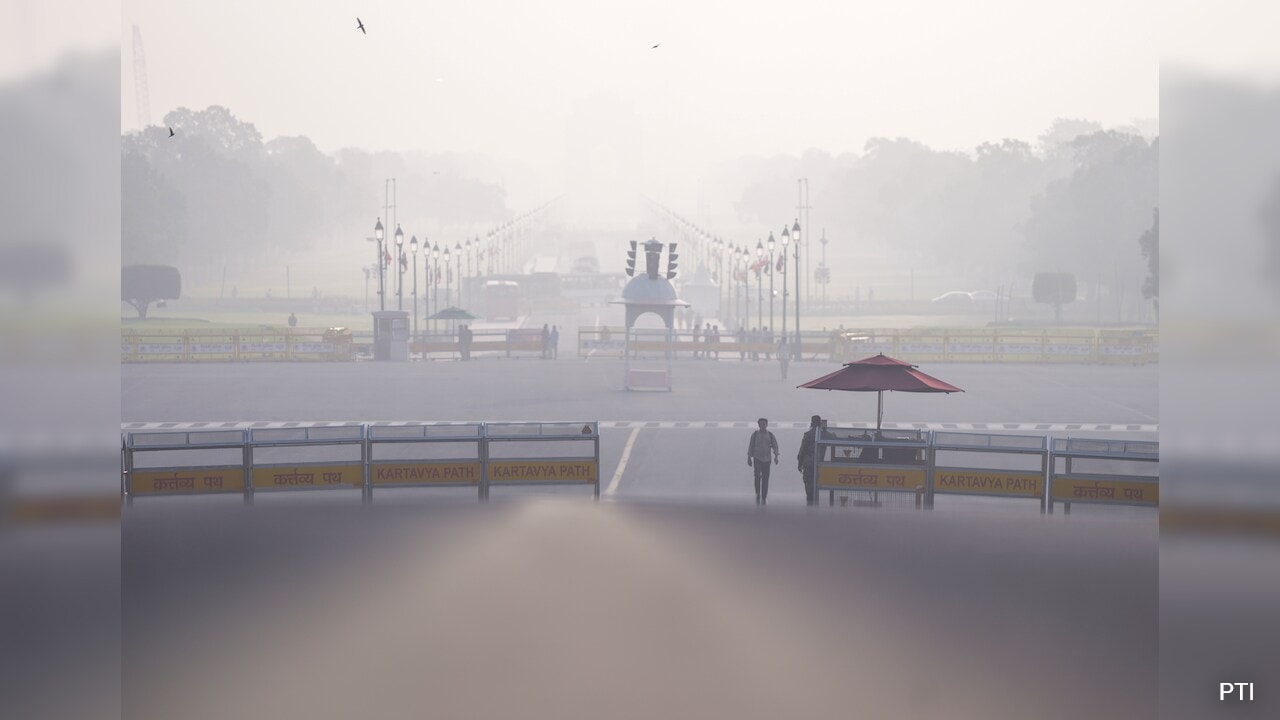
The Air Quality Index at 174 was higher than the previous day's 153.
Highlights
- Delhi recorded a minimum temperature of 16.2°C, the lowest this month, with moderate air quality
- The Air Quality Index rose to 174, with 18 stations reporting poor air quality on Monday
- Transport emissions contributed 23.8% to Delhi's pollution, the highest among all sources
New Delhi:
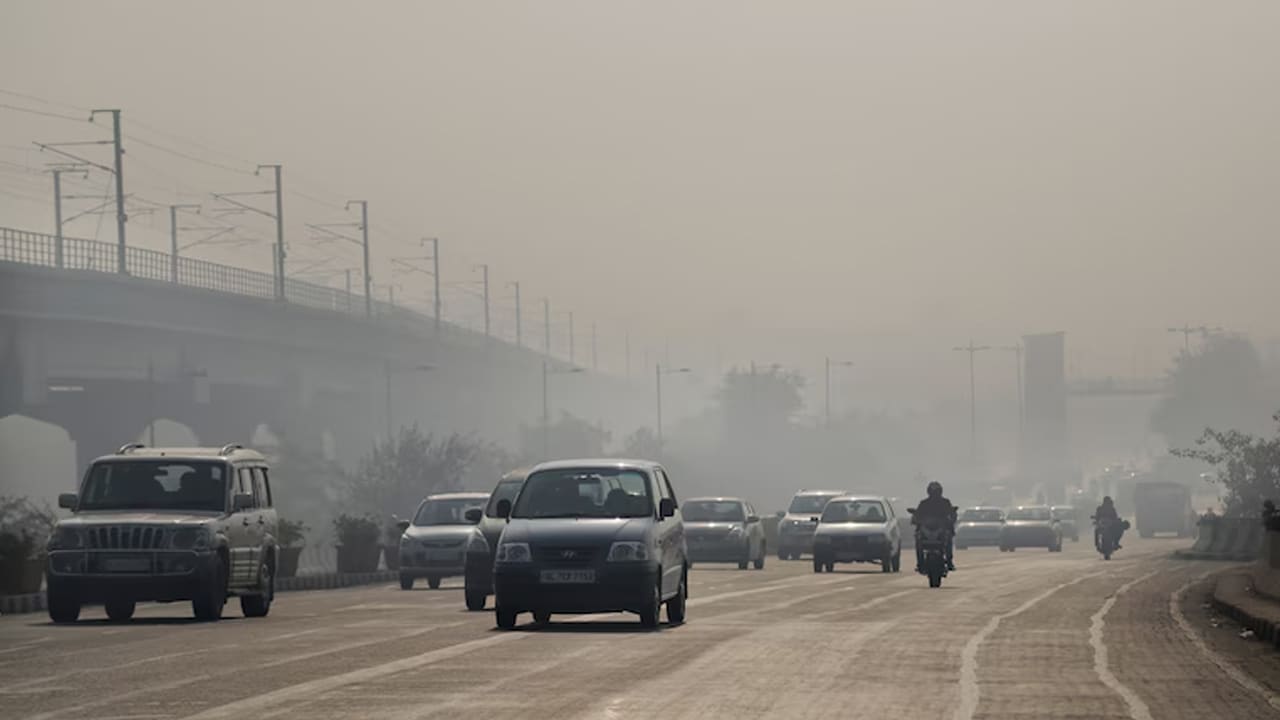
Delhi on Monday recorded a minimum temperature of 16.2 degrees Celsius, the lowest so far this month, and a 'moderate' air quality.
The city recorded a maximum temperature of 31.4 degrees Celsius, 0.4 degrees below normal.
The Air Quality Index at 174 was higher than the previous day's 153.
According to the Central Pollution Control Board (CPCB), an AQI between 0 and 50 is classified as good, 51 and 100 as satisfactory, 101 and 200 as moderate, 201 and 300 as poor, 301 and 400 as very poor, and 401 and 500 as severe.
Of the 57 air quality monitoring stations in Delhi, 18 recorded poor air quality, one station, Ghogha, recorded satisfactory air quality, and the rest recorded moderate air quality.
The highest AQI was recorded at CRRI Mathura Road at 248.
The Air Quality Early Warning System for Delhi said the ventilation index is expected to remain below 6,000 square metres per second, with average wind speeds below 10 kmph, conditions unfavourable for the dispersion of pollutants.
The city's air quality is likely to deteriorate to poor on October 27 and 28, and improve to moderate on October 29. The outlook for the subsequent six days indicates moderate to poor air quality, the system said.
According to the Decision Support System for Air Quality Management in Delhi, transport emissions contributed 23.8 per cent, the highest, to the city's pollution. Residential sources' contribution to air pollution was 6 per cent, industries' was 4.9 per cent, construction activities' was 3.3 per cent, energy and waste burning contributed 2.2 per cent each, and road dust and other sectors 1.6 per cent each.
Among the National Capital Region districts, Sonipat contributed 7.2 per cent, followed by Jhajjar at 6 per cent, Gurugram at 2.5 per cent, and Ghaziabad and Rohtak at 2.3 per cent each.
Gautam Buddha Nagar and Baghpat contributed 1.7 per cent each, Jind 1.3 per cent, Meerut 1 per cent, Faridabad 0.9 per cent, Muzaffarnagar 0.8 per cent, and Bulandshahr 0.5 per cent.
Stubble burning contributed up to 4.6 per cent to Delhi's pollution, according to the Decision Support System.
Meanwhile, satellite data from the ICAR-Indian Agricultural Research Institute for October 25 detected 112 farm-fire events in six states: 32 in Rajasthan, 29 in Madhya Pradesh, 25 in Uttar Pradesh, 18 in Uttarakhand, seven in Punjab and one in Haryana.
No farm-fire events were detected in Delhi that day.
A total of 1,935 farm-fire events were detected across these six states between September 15 and October 25.
A total of 581 such incidents were recorded in Punjab, 19 in Haryana, 286 in Uttar Pradesh, 438 in Rajasthan, 141 in Uttarakhand, and 468 in Madhya Pradesh.
Two events were recorded in Delhi during the period - the first on September 19 and the second on October 24.
At the Safdarjung weather station, the maximum temperature rose by 0.3 degrees Celsius, and the minimum fell by 0.8 degrees Celsius over the past 24 hours. Palam recorded a maximum of 29.3 degrees Celsius, 2.8 degrees below normal, and a minimum of 16.3 degrees Celsius, 1.5 degrees below normal.
Lodhi Road recorded a maximum of 31.4 degrees Celsius, 0.6 degrees below normal, and a minimum of 16 degrees Celsius, near normal. The Ridge recorded a maximum of 31 degrees Celsius, 1.1 degrees below normal, and a minimum of 16.6 degrees Celsius, 1.9 degrees below normal.
Ayanagar recorded a maximum of 31.1 degrees Celsius, 1.2 degrees below normal, and a minimum of 15.7 degrees Celsius, 1.5 degrees below normal.
No rainfall was recorded at any of the five weather stations during the 24 hours ending at 5.30 pm.
The India Meteorological Department (IMD) said Delhi is likely to witness mainly clear to partly cloudy skies until October 28. Thunderstorms accompanied by rain are possible on October 29 and 30.
(Except for the headline, this story has not been edited by NDTV staff and is published from a syndicated feed.)
Published: October 26, 2026 20:00 IST
also read
Delhi-NCR AQI Turns 'Very Poor': Will Schools Remain Open Under GRAP Stage 2?
Edited by Priyanka NegiDelhi Air Quality Plummets Ahead Of Diwali, AQI Over 400 In Some Areas
Press Trust Of IndiaSchool Assembly News Headlines (November 3): Top National, International, Sports News
Edited by Aakanksha Singh
 Edited by Priyanka Negi | Tuesday November 03, 2026
Stage II focuses on pollution control measures like road sweeping and traffic management, with hybrid classes considered only at higher GRAP stages.
- Tuesday November 03, 2026
According to the CPCB, an AQI between zero and 50 is classified as good, 51 and 100 as satisfactory, 101 and 200 as moderate, 201 and 300 as poor, 301 and 400 as very poor, and 401 and 500 as severe.
- Edited by Aakanksha Singh | Monday November 02, 2026
Today's News Bulletin: Delhi battles hazardous air and a new set of pollution restrictions, while the Supreme Court weighs in on Diwali celebrations.
- Monday November 02, 2026 , New Delhi
The GRAP-II involves a series of restrictions that include mechanical or vacuum sweeping of roads and water sprinkling, raising parking fees to discourage the use of personal vehicles, increasing the frequency of Metro services and CNG and electric buses.
- Written by Vishesh Nagar | Monday November 02, 2026
Check the latest AQI readings for New Delhi, Mumbai, Bengaluru, Chennai, Hyderabad and Kolkata.

................................ Advertisement ................................

Opinion: Why Delhi's Smog Can't Be Fixed From SpaceDavid Fickling, Bloomberg
Monday October 19, 2026The clearest sign that Delhi is on a path to cleaner air would be a decline in the amount of paddy grown nearby, and therefore the acreage liable to be burned each year.
Don't Normalise Air Purifiers As Delhi Chokes | The Reason Why
Thursday December 11, 2025More than 90 cities in the world's top 100 polluting list are in India. With every passing year, the AQI is rising, reaching 'hazardous' levels.
Blog | Well Done, Delhi. You've Turned Lung Sacrifice Into A Badge Of HonourSaikat Kumar Bose
Monday November 10, 2025Till some years back, Delhiites would ask angry questions to those in power about the capitals annual tryst with toxic air. This has changed. Those in the driving seat dont see the need to answer now.
Opinion | Why Indians Have Just Given Up On Air Pollution CrisisTanushree Ganguly
Friday December 20, 2024While some may argue that people in Delhi are now more aware of air pollution than they were a decade back, my rebuttal would be that awareness does not mean that people are concerned.
Opinion | You Must Outrage Over Filthy Air More Than Once A YearJyoti Pande Lavakare
Tuesday December 10, 2024Delhi welcomed us with monsoon rains and mangos. We were home. Fast forward a couple of years, in the winter of 2012, I found myself in denial about something other parents, mostly expats, were calling toxic air.



