


Opinion: Why Delhi's Smog Can't Be Fixed From Space
(c) 2026, Bloomberg | Updated: October 19, 2026 14:05 IST
David Fickling, Bloomberg
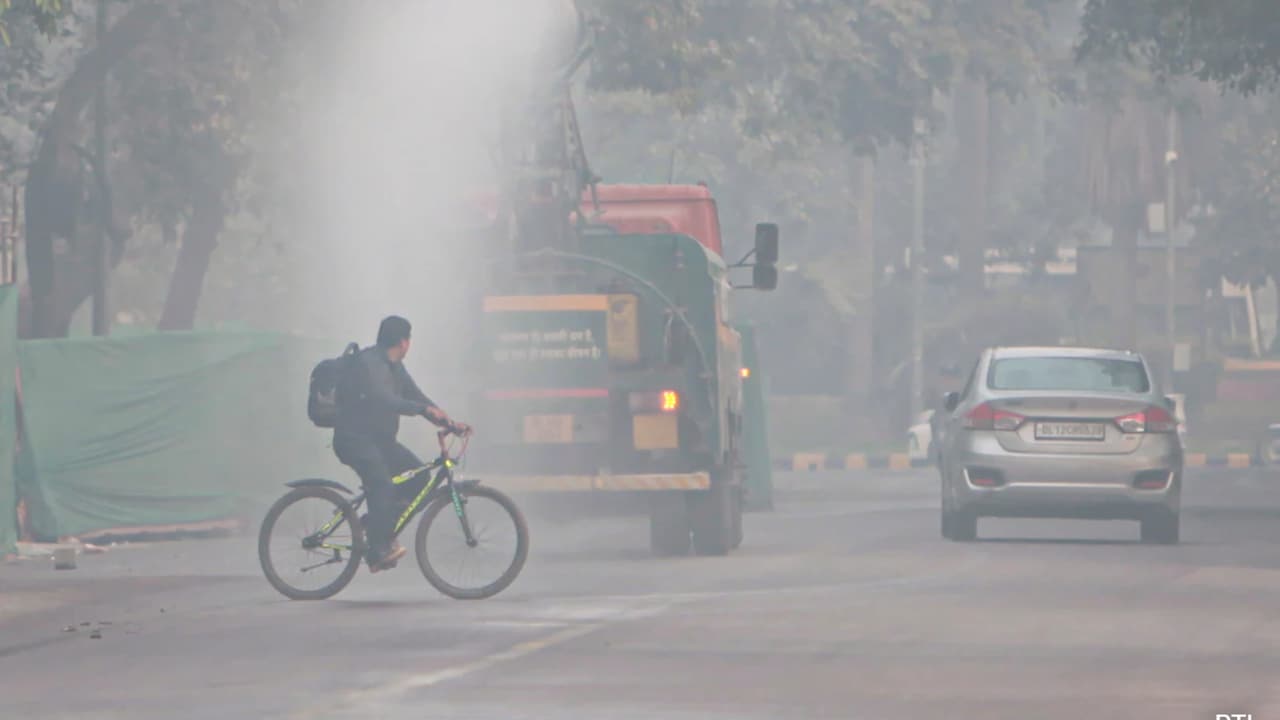
Launched around the turn of the millennium, NASA's Terra and Aqua satellites have served as workhorses of climate observation for decades.
From 700 kilometers (435 miles) above Earth, they track clouds, algae, forests, smoke plumes and fires, producing some of the most iconic images ever captured from orbit: Hurricane Katrina barreling toward New Orleans, Saharan sandstorms blotting out the Atlantic Ocean, and the " blue marble" image of our planet familiar from early iPhone screens. Yet farmers in India have been thwarting these sophisticated eyes in the sky with techniques that have barely changed since the Stone Age.
That helps explain why technocratic efforts to tackle Delhi's chronic air pollution keep falling short.
It would be comforting to think that better regulation and its implementation could clear the apocalyptic haze that descends on Delhi every winter. The harder truth is that until the political and economic incentives behind the pollution change, choking smog will remain an annual blight.
Satellites once seemed to offer part of the solution. One significant source of Delhi's seasonal pollution is farmers burning rice straw after the monsoon harvest to clear their fields for the winter wheat crop. Haryana, Punjab and Uttar Pradesh, the states surrounding the capital, produce about a quarter of India's rice. Since 2021, government authorities have been trying to use satellites to tip off local officials to illegal fire hotspots and send out enforcement crews.
But the initiative ran headlong into an adage known as Goodhart's law: Once a measure becomes a target, people learn how to game it.
Bloomberg
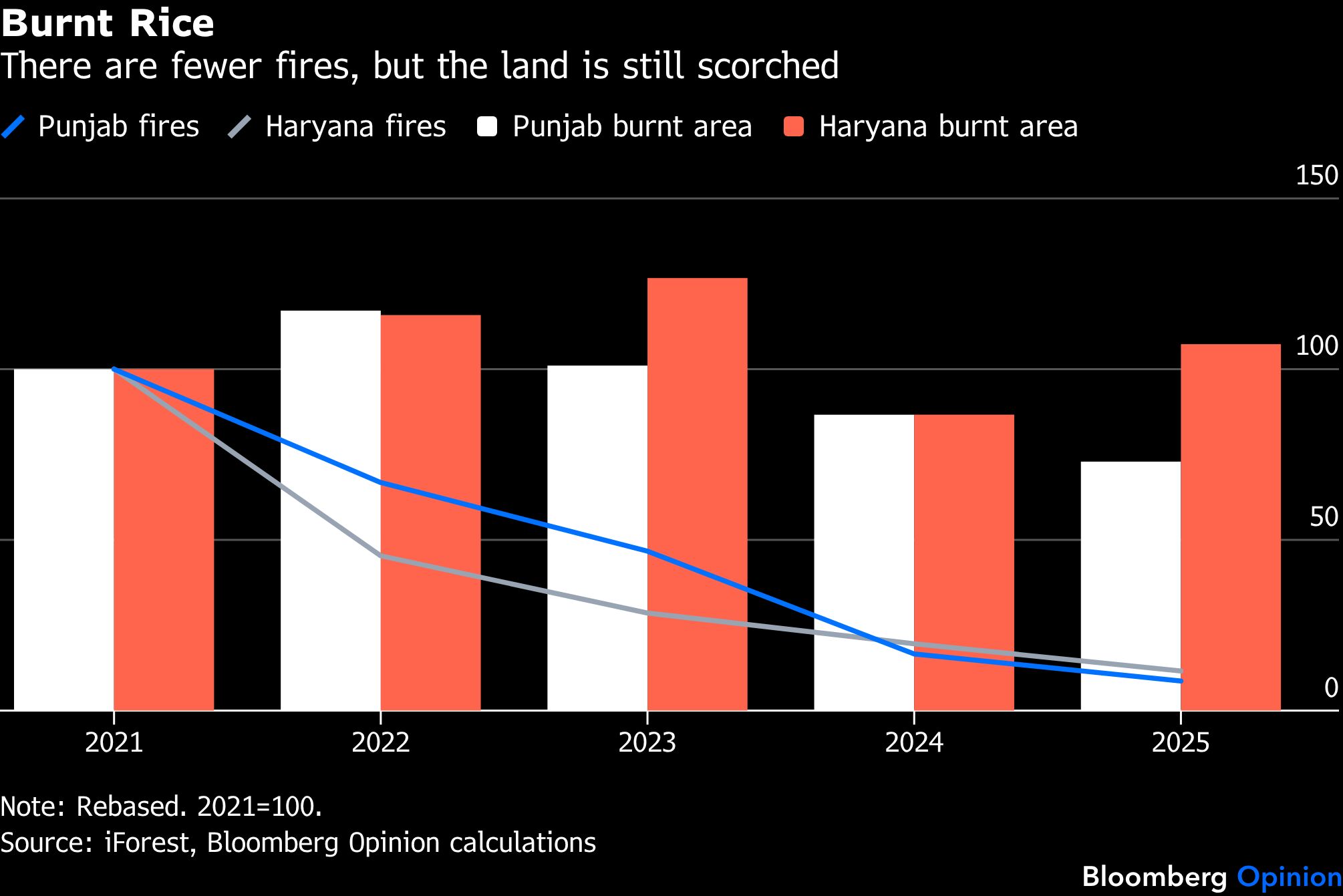
The satellites only pass over northern India in a brief window of the day, between 10 a.m. and 2 p.m. A 2024 investigation by an Indian media organisation found that government officials in Punjab were tipping farmers off about the schedule, allowing them to shift their burning later in the day. The result was revealing. The number of large farm fires occurring after 3 p.m. in the state went from about 3% in 2021 to more than 90% in 2024 and 2025. Some of the most sophisticated monitoring technology humanity has ever devised is being outwitted by farmers using a technique that has existed for thousands of years.
We've seen this movie before. The stick of satellite surveillance was developed in part because an earlier technocratic carrot had failed. In the late 2010s, officials hoped that mechanized equipment could eliminate the need for stubble burning. Tractor-drawn machines such as the Happy Seeder and Super Seeder, which allow farmers to sow wheat directly into fields without first burning the rice residue, were touted as a way to curb smog, boost yields and modernize Indian agriculture.
That didn't work. Farmers who switched to seeders had to pay for the machinery, as well as diesel to power it. Poorer smallholders relying on community-owned equipment might have to wait their turn during a narrow planting window when every lost day costs money. Against the speed and simplicity of dropping a match, machinery struggled to compete. Roughly a quarter of the crop-residue machines distributed in Punjab since 2018 are out of action. Even among farmers who use them, about half still burn stubble.
The root of the problem lies in the political economy of Indian agriculture. The government has made growing rice extraordinarily attractive in northern India, with guaranteed floor prices, near-unlimited procurement, and subsidies for water pumping and fertilizer. Those incentives encourage farmers to produce vast quantities of a crop that leaves them with equally large amount of residue to clear in a hurry. Against such powerful economics, Happy Seeders and satellite surveillance never stood much of a chance.
The prospects for change are about as gloomy as Delhi's skies during Diwali, when residents burn firecrackers that deepen the seasonal smog. Decades of efforts to shift India's rice and wheat bowl away from Punjab and Haryana and toward eastern states have barely dented paddy cultivation near the capital. Attempts to persuade farmers to switch to less environmentally damaging crops such as corn and lentils have fared little better. The result is a remarkable paradox: India keeps encouraging farmers to grow rice beyond even the needs of its 1.4 billion people. Government inventories have swelled to record levels this year: 10 times above the required buffer.
The clearest sign that Delhi is on a path to cleaner air would be a decline in the amount of paddy grown nearby, and therefore the acreage liable to be burned each year. Instead, the numbers are moving in the opposite direction. And the political obstacles to changing that are formidable. The last serious attempt to overhaul India's agricultural system, in 2020, brought farmers from the northern states onto the streets around the capital for a year, until the government eventually backed down.
That's the trap. Officials keep reaching for technological fixes because the underlying political problem is so difficult to confront. But the metric that matters isn't how many fires satellites detect or how many seeders governments distribute. It's how much paddy farmers plant. Until that acreage starts shrinking, no amount of technology will clear Delhi's skies.
(Except for the headline, this story has not been edited by NDTV staff and is published from a syndicated feed.)
Published: October 19, 2026 14:00 IST
David Fickling, Bloomberg
 Monday October 19, 2026 , New Delhi
The day's maximum temperature was recorded at 31.7 degrees Celsius, the India Meteorological Department (IMD) said.
- David Fickling, Bloomberg | Monday October 19, 2026
The clearest sign that Delhi is on a path to cleaner air would be a decline in the amount of paddy grown nearby, and therefore the acreage liable to be burned each year.
- Written by Amit Chaturvedi | Monday October 19, 2026
Delhi's Environment Minister Manjinder Singh Sirsa said on Saturday that Delhi has recorded 211 days of good, satisfactory and moderate air quality so far this year, its best performance since 2016, except for the COVID-affected year 2020.
- Sunday October 18, 2026 , Jakarta
Air purifier retailers, meanwhile, said sales have jumped since air quality levels started to dip in August during haze conditions.
- Written by Sneha Mordani | Thursday October 15, 2026
Air pollution increases the risk of respiratory and cardiovascular diseases. Addressing it requires sustained action across multiple sectors, including transport, industry, household fuels and waste management.
................................ Advertisement ................................
Opinion: Why Delhi's Smog Can't Be Fixed From SpaceDavid Fickling, Bloomberg
Monday October 19, 2026The clearest sign that Delhi is on a path to cleaner air would be a decline in the amount of paddy grown nearby, and therefore the acreage liable to be burned each year.
Blog | Well Done, Delhi. You've Turned Lung Sacrifice Into A Badge Of HonourSaikat Kumar Bose
Monday November 10, 2025Till some years back, Delhiites would ask angry questions to those in power about the capitals annual tryst with toxic air. This has changed. Those in the driving seat dont see the need to answer now.
Opinion | Why Indians Have Just Given Up On Air Pollution CrisisTanushree Ganguly
Friday December 20, 2024While some may argue that people in Delhi are now more aware of air pollution than they were a decade back, my rebuttal would be that awareness does not mean that people are concerned.
Opinion | You Must Outrage Over Filthy Air More Than Once A YearJyoti Pande Lavakare
Tuesday December 10, 2024Delhi welcomed us with monsoon rains and mangos. We were home. Fast forward a couple of years, in the winter of 2012, I found myself in denial about something other parents, mostly expats, were calling toxic air.
Opinion | Delhi's Air Pollution Situation Is Like A Bad MarriageNishtha Gautam
Friday November 22, 2024On a good day, such as today, the AQI reading in Delhi is 407. We are jubilant at the sickly sunshine trickling through the slightly dissipated smog. At least its not 1600.


