


- Home/
- Diaphragmatic Breathing: What Is It And How It Helps To Calm Your Anxiety?
Diaphragmatic Breathing: What Is It And How It Helps To Calm Your Anxiety?
Written by Debosmita Ghosh | Updated: April 20, 2026 21:47 IST
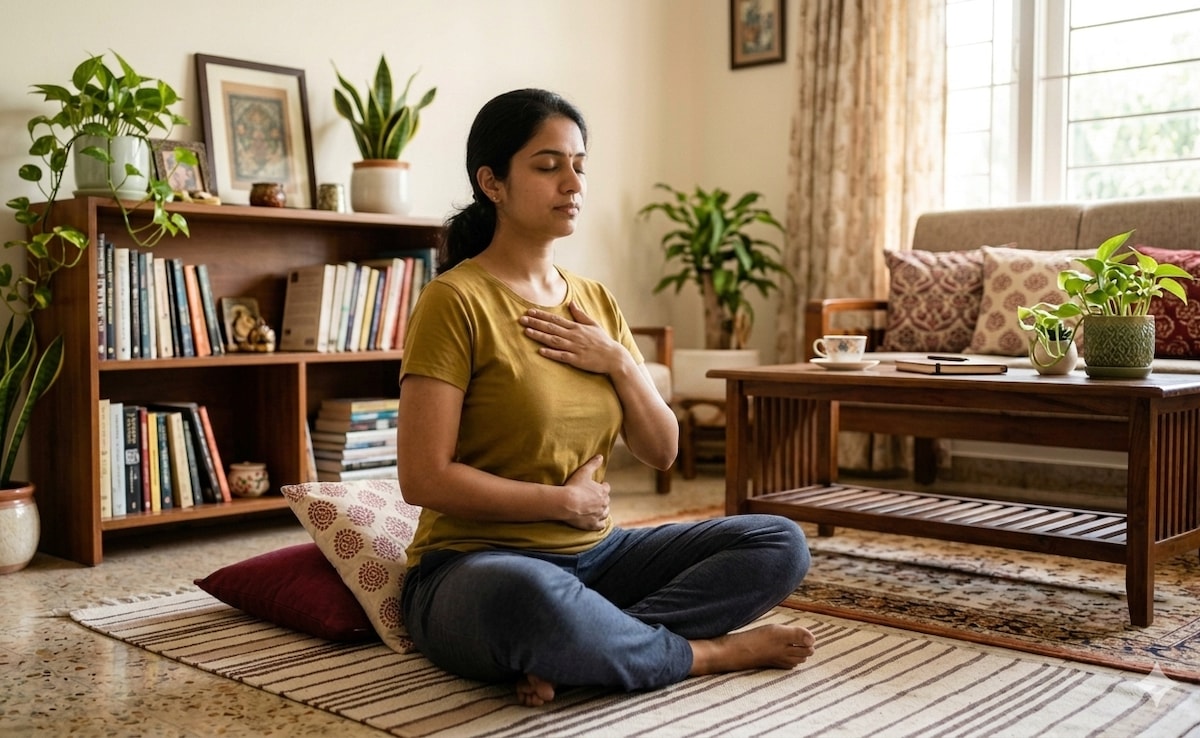
Diaphragmatic breathing can help in calming your anxiety
Highlights
- Anxiety affects 359 million people worldwide, per WHO data
- Diaphragmatic breathing activates the parasympathetic nervous system
- This technique improves oxygen intake by expanding the diaphragm
Anxiety has become a common challenge for many people in today's face-paced world. From work stress to daily worries, and overwhelming thoughts, feeling anxious can impact your peace and focus. According to the World Health Organisation (WHO), anxiety disorders affect 359 million people across the world. While the condition is highly prevalent, there are simple ways that can help you calm the anxiety. Diaphragmatic breathing, also known as belly breathing, is a natural way that can help ease these feelings. This method focuses on deep, intentional breaths to activate your parasympathetic nervous system, which counters the 'fight or flight' mode triggered by anxiety.
Diaphragmatic breathing uses the diaphragm, which is a dome-shaped muscle at the base of your lungs, to draw in more air and help in better oxygen exchange. This technique encourages slow, deep inhales that expand your belly, filling your lungs completely. Regular practice can lower heart rate, reduce muscle tension, and quiet a racing mind. Studies from the American Psychological Association show it effectively manages anxiety symptoms. Read on to know
What Exactly Is Diaphragmatic Breathing?
Diaphragmatic breathing shifts your breath from the chest to the diaphragm. When you inhale deeply, your belly rises as the diaphragm contracts and moves downward, creating space for your lungs to expand fully. This contrasts with everyday shallow breathing, where only the upper chest moves, limiting oxygen intake.
- Key muscle involved: The diaphragm, located below your lungs, acts like a piston to pull air in deeply.
- Primary benefit for breath: This breathing technique increases lung capacity by up to 50%, delivering more oxygen to your brain and body.
- When to notice it: Your hand on your belly should rise on inhale and fall on exhale, no chest puffing needed.
This technique is rooted in ancient practices like pranayama in yoga, now backed by modern science for anxiety relief.
The Science: How It Calms Anxiety
Anxiety stems from the sympathetic nervous system overdrive, speeding up your heart and tightening muscles. Diaphragmatic breathing flips this by stimulating the vagus nerve, which activates the parasympathetic "rest and digest" system. Research from Harvard Medical School shows it lowers blood pressure and cortisol within minutes.
Here's how it works:
- Deep breaths increase oxygen flow, starving panic signals in the brain's amygdala.
- Slow exhales regulate carbon dioxide, preventing dizziness from hyperventilation.
- It promotes brain waves linked to calm.
- Over time, it rewires your stress response, making you less reactive to triggers.
Step-by-Step Guide To Practice It
1. Choose a comfortable position
Lie on your back, sit erect in a chair, or stand tall with relaxed shoulders. Beginners usually find lying down the easiest because gravity helps the diaphragm move freely.
2. Place your hands correctly
Put one hand on your upper chest and the other just below your rib cage on your belly. The chest hand should stay still and the belly hand should move with each breath.
3. Inhale slowly through the nose
Breathe in gently through your nose over 4-5 seconds, letting your belly rise and push your lower hand upward. Keep your chest relaxed and avoid lifting your shoulders.
4. Exhale slowly through the mouth
Purse your lips slightly and exhale through your mouth for about 6-8 seconds, drawing your belly inward and letting your hand fall. Keep your chest as still as possible and the focus should be on the belly movement.
5. Repeat and pace yourself
Continue for 5-10 minutes, aiming for 6-10 breaths per minute. If you feel lightheaded, shorten the inhale-exhale ratio and rest briefly.
6. Practice daily and build habit
Practice 2-3 times daily, ideally in the morning and before bed. Gradually transfer this into everyday breathing.
Everyday Benefits Beyond Anxiety
This breathing isn't just for panic moments, it improves your overall health and well-being.
- Better sleep: Slows racing thoughts at night, improving insomnia linked to anxiety.
- Improved focus: More oxygen helps sharpen concentration during work or study.
- Pain relief: Eases tension headaches and digestive issues by relaxing the core.
- Heart health: Lowers blood pressure, reducing long-term stress risks.
- Boosts mood: Releases endorphins, acting like a natural antidepressant.
Disclaimer: This content including advice provides generic information only. It is in no way a substitute for a qualified medical opinion. Always consult a specialist or your own doctor for more information. NDTV does not claim responsibility for this information.
Published: April 20, 2026 21:31 IST
also read
Bhopal Unveils Futuristic 'Algae Tree' That Can Absorb As Much CO2 As 25 Trees, Sparks Buzz
Edited by Ritu SinghGreat Pacific Garbage Patch Fuels Microplastics, Contributing To Climate Change
Edited by Srishti Singh SisodiaChildhood Asthma On The Rise: Causes, Triggers, And Management Strategies
Written by Debosmita Ghosh
 Edited by Ritu Singh | Monday May 11, 2026
A single algae tree unit is claimed to be as effective as 25 adult trees in absorbing carbon dioxide and releasing oxygen.
- Edited by Srishti Singh Sisodia | Thursday May 07, 2026
As plastic tumbles against itself, it fragments, and a new study shows those fragments don't stay in the water.
- Written by Debosmita Ghosh | Tuesday May 05, 2026
Childhood asthma arises from a mix of genetic predisposition and environmental factors that inflame and narrow airways in children.
- Written by Dr Sharad Joshi | Tuesday May 05, 2026
Most people tend to look outside for reasons behind their worsening asthma symptoms, blaming factors like pollution, pollen, or changes in the weather.
- Friday May 01, 2026 , New Delhi
Climate change poses an escalating threat to brain health, with extreme heat, rapid humidity shifts and exposure to dust and sandstorms increasing the risk of having a stroke, according to a scientific statement by experts from the World Stroke Organ




................................ Advertisement ................................





Blog | Well Done, Delhi. You've Turned Lung Sacrifice Into A Badge Of HonourSaikat Kumar Bose
Monday November 10, 2025Till some years back, Delhiites would ask angry questions to those in power about the capitals annual tryst with toxic air. This has changed. Those in the driving seat dont see the need to answer now.
Opinion | Why Indians Have Just Given Up On Air Pollution CrisisTanushree Ganguly
Friday December 20, 2024While some may argue that people in Delhi are now more aware of air pollution than they were a decade back, my rebuttal would be that awareness does not mean that people are concerned.
Opinion | You Must Outrage Over Filthy Air More Than Once A YearJyoti Pande Lavakare
Tuesday December 10, 2024Delhi welcomed us with monsoon rains and mangos. We were home. Fast forward a couple of years, in the winter of 2012, I found myself in denial about something other parents, mostly expats, were calling toxic air.
Opinion | Delhi's Air Pollution Situation Is Like A Bad MarriageNishtha Gautam
Friday November 22, 2024On a good day, such as today, the AQI reading in Delhi is 407. We are jubilant at the sickly sunshine trickling through the slightly dissipated smog. At least its not 1600.
दिवाली... पराली... सियासी जुगाली!Ashwini kumar
Monday November 18, 2024दिल्ली-एनसीआर में प्रदूषण का समाधान तो आज तक मिला नहीं. हर साल चिंतित होकर हम-आप सांसों की तकलीफ के साथ-साथ दिल और ब्लड प्रेशर के मरीज भी क्यों बनें?


