- Home/
- Empowering Women And Strengthening Communities Through USHA Silai School Initiatives
Empowering Women And Strengthening Communities Through USHA Silai School Initiatives
Team NDTV | Updated: February 04, 2025 12:04 IST
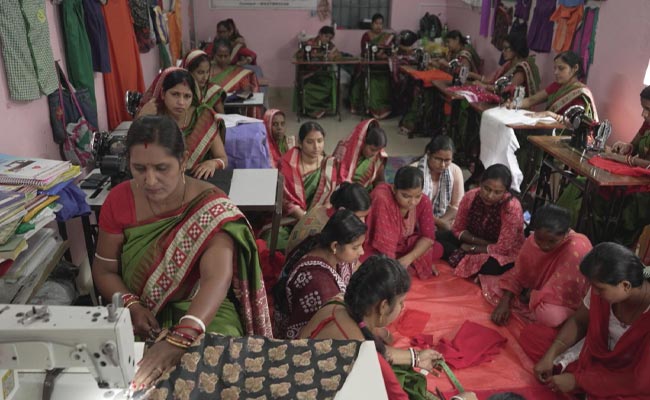
Mumbai, the bustling financial capital of India, is a city of dreams. Yet, for countless women in its underserved communities, achieving economic independence remains a challenge. Bridging this gap are transformative initiatives by USHA, which aim to empower women through skill-building and sustainable livelihood opportunities. One such initiative is led by Sana Aftab, an 11th-grade student at Bombay Scottish School.
Driven by her passion for societal change, Sana spearheaded a fundraising campaign to economically empower marginalized women residing in slum areas of Bandra and Andheri. Her collaboration with Pratham Mumbai Education Initiative and USHAt Silai School focuses on equipping these women with essential sewing skills and tools for self-reliance.
Speaking about her motivation, Sana shared,
“I observed firsthand how Pratham works with the mission of uplifting individuals living in harsh conditions in Mumbai. The indomitable spirit of the women in these areas inspired me. Most of them wanted to work with dignity from home to contribute to their household incomes and ensure better lives for their children.”
Sana's vision is to enable at least 10 women to establish sustainable sewing businesses and mentor others within their communities.
She said,
“I came across the Usha Silai School program while researching impactful social initiatives in India.Their work, which has benefitted over 1.3 million women, inspired me to collaborate with Pratham and Usha for this project.”
Heritage Meets Humanity: Ismail Khatri And The USHA Silai School Connection
Through crowdfunding platforms, Sana successfully raised ₹2.5 lakhs, connecting with over 30 funders, including corporate sponsors.
She added,
“It was a meticulous process, but the resilience and hope of these women motivated me to persist.”
Pratham, an innovative learning organization founded in 1995, has expanded its programs nationwide to improve education and skill development. Partnering with Usha International, they introduced the USHA Silai School's ‘Train the Trainer' model. This 40-day comprehensive course equips women with advanced sewing techniques, enabling them to become Master Trainers.
According to a Pratham representative,
“We adapted a three-hour daily training model to suit the needs of these women, using community centers as training hubs.”
Currently, 10 women are enrolled in the USHA Silai School program. Upon completion, they will receive sewing machines, course booklets, and service manuals. Equipped with these resources, the women will launch their sewing enterprises and mentor others in their community, fostering a cycle of skill development and economic upliftment.
Paresh Narayan Nagpure, State Manager - Maharashtra and Goa for Usha Social Service, explained,
“Through this partnership, women will not only develop their own enterprises but also train others, extending the impact to their families and communities.”
The story continues in Odisha's Bhadrak district, where every day, women from nearby villages gather at a training-cum-production center in Tihidi town. Here, they learn, create, and earn, transforming their lives through acquired skills. The center recently welcomed Amita Kapoor and Neeraj Kapoor, whose contributions have been instrumental in establishing such centers nationwide. Since 2021, the Kapoors have partnered with Usha International to set up five centers across India, benefiting 68 women.
Amita Kapoor shared,
“Our association with Usha began in 2021 with the first production center in Punjab. Seeing its success, we supported centers in Hardoi (UP), Meghalaya, Bhadrak (Odisha), and Telangana. These centers have become sustainable models for empowerment.”
The Empowering Journey Of Sanjay Vidyarthi And USHA Silai School
Neeraj Kapoor added,
“Around our father's 80th birthday, we decided to pursue impactful initiatives over one-time charity. Empowering women and fostering financial inclusivity struck a chord with us. We've learned that sustainable models, supported by NGOs and local authorities, are crucial to success.”
The Bhadrak center has been a beacon of productivity, with women producing garments and products that contribute directly to their incomes.
Amita emphasized,
“We've tried to support these centers by providing as many machines as possible to execute orders. Sustainability and collaboration are key to making these models thrive.”
Thanks to the efforts of individuals like Sana Aftab, Amita Kapoor, Neeraj Kapoor, and the collective support of organizations like USHA International and Pratham, the Silai School program has become a symbol of hope and resilience. By empowering women through skills and collaboration, these initiatives are transforming lives and creating a ripple effect of positive change.
Published: February 04, 2025 11:28 IST
also read
Important To Implement Environmental Rules To Sustain Gains Of Lockdown: Union Environment Minister Prakash Javadekar
PTIMumbai Based Green Champion Is Striving To Make The City The Cycling Capital By 2030
Reported by Ambika Singh KahmaDr Naresh Trehan On The Learnings From The Coronavirus Pandemic And How Technology Can Help Save The Environment
Written by Aastha Ahuja, Edited by Sonia Bhaskar
 Written by Sneha Mordani | Wednesday November 25, 2026
One person dies every 2nd day in Delhi due to Lung Cancer reveals data from an RTI query. Top Delhi Chest Surgeon says the number of a gross underestimate.
- Written by Debosmita Ghosh | Wednesday November 25, 2026
6,581 lung cancer cases were reported at AIIMS, Ram Manohar Lohia (RML) Hospital and the Delhi State Cancer Institute (DSCI) between January 1, 2020, and July 31, 2026. Safdarjung Hospital did not provide its total number of cases but reported 393 lung cancer deaths.
- Written by Shreya Goswami | Wednesday November 25, 2026
Air pollution may increase the risk of Alzheimer's disease and dementia by disrupting the brain's immune cells, a new study finds. With Indian cities facing high PM2.5 levels, researchers' findings raise fresh concerns about the long-term neurological effects of polluted air.
- Written by Amit Chaturvedi | Wednesday November 25, 2026
The sources of pollution identified by the study include vehicular traffic, construction, and commercial sources. It also said that stubble burning contributes to seasonal deterioration in the air quality in Delhi and areas around it.
- Wednesday November 25, 2026 , New Delhi
Air quality in Delhi remained in the poor category, with four monitoring stations recording 'very poor' readings.



................................ Advertisement ................................





Opinion | Delhi Has Every Pollution Control Policy - Except One That Works
Monday November 09, 2026Every November, Delhi performs the same ritual. We check the AQI before stepping outdoors, children are kept indoors, masks reappear, schools consider shutting, construction is restricted, and emergency meetings are convened. Politicians blame the weather, neighbouring states, farmers, or firecrackers. And then, as the season changes, the urgency d...
दीवाली की चौखट पर दिल्ली में सांसों का संकट: 30 साल की स्टडी ने हरियाली को लेकर क्या बताया?
Thursday November 05, 2026अध्ययन में हरियाली की मात्रा के साथ उसके फैलाव और आपसी जुड़ाव को भी महत्वपूर्ण पाया गया. जिन इलाकों में हरियाली ज्यादा बिखरी हुई थी, वहां सतही तापमान अधिक रहा. इसके विपरीत, बड़े और आपस में जुड़े हरित क्षेत्रों में तापमान कम पाया गया.
Opinion: Why Delhi's Smog Can't Be Fixed From SpaceDavid Fickling, Bloomberg
Monday October 19, 2026The clearest sign that Delhi is on a path to cleaner air would be a decline in the amount of paddy grown nearby, and therefore the acreage liable to be burned each year.
Don't Normalise Air Purifiers As Delhi Chokes | The Reason Why
Thursday December 11, 2025More than 90 cities in the world's top 100 polluting list are in India. With every passing year, the AQI is rising, reaching 'hazardous' levels.
Blog | Well Done, Delhi. You've Turned Lung Sacrifice Into A Badge Of HonourSaikat Kumar Bose
Monday November 10, 2025Till some years back, Delhiites would ask angry questions to those in power about the capitals annual tryst with toxic air. This has changed. Those in the driving seat dont see the need to answer now.