


- Home/
- Experts Urge Year-Round Solutions To Tackle Air Pollution, Not Just Short-Term Fixes
Experts Urge Year-Round Solutions To Tackle Air Pollution, Not Just Short-Term Fixes
Indo-Asian News Service | Updated: November 30, 2025 09:17 IST
New Delhi:
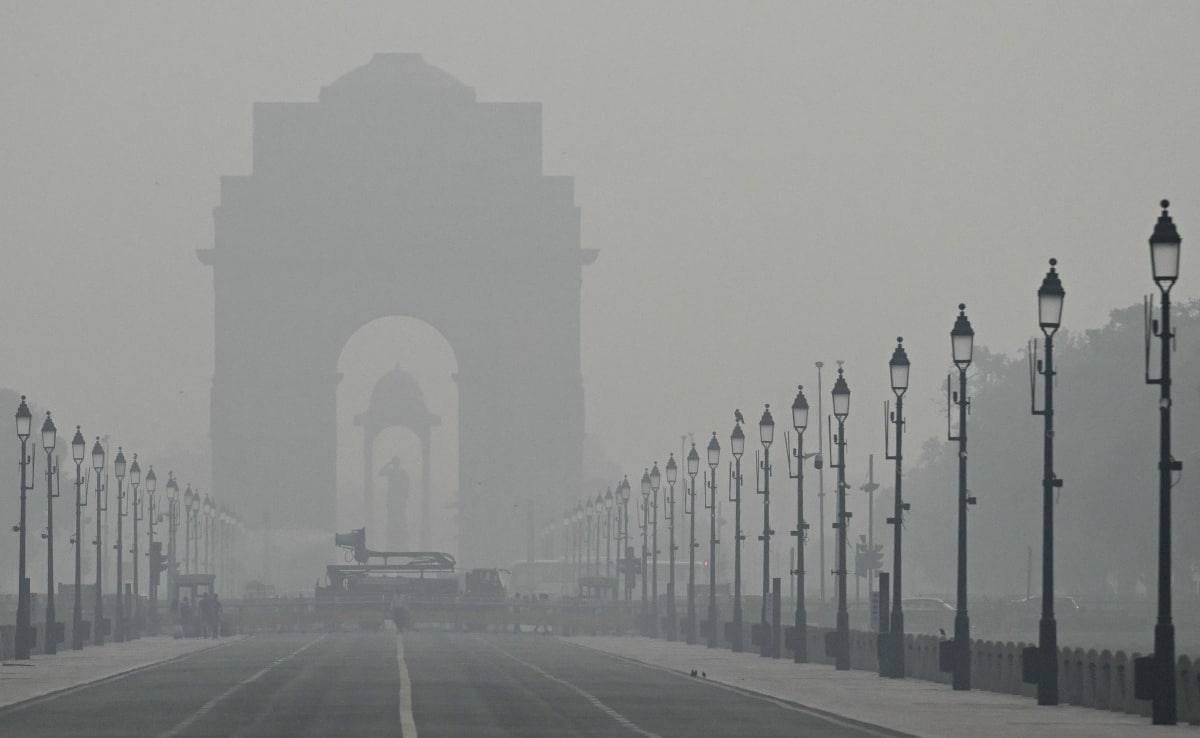
Amid worsening air pollution in the national capital, health experts on Saturday emphasised the need for solutions that work throughout the year, and not for a short period. Delhi's air quality remained entrenched in the very poor category for the 15th consecutive day, with the Central Pollution Control Board (CPCB) recording an Air Quality Index (AQI) of 338 at 7 a.m. “We have reached an emergency in Delhi. The efforts to curb pollution cannot be only temporary, which may help immediately for a little while, but long-term solutions to this city are urgently required,” Dr. Anant Mohan, Professor and Head, Department of Pulmonary Medicine and Sleep Disorders, AIIMS New Delhi, told IANS.
"We have to do something very urgently on this now at this stage," he added.
The city's 24-hour average AQI on Friday stood at 369, extending Delhi's persistent run of very poor air quality through half the month.
Forecasts from air-quality and weather agencies indicate that conditions are unlikely to undergo any significant improvement over the coming week, as meteorological factors remain largely unfavourable for the dispersion of pollutants.
“We talk about pollution when November and December come, and those three months we are very active. We are thinking there is so much in the media, but even in the summer, the air quality is not good. Air quality remains suboptimal as compared to the global standards, even when the weather is fine,” said Dr Saurabh Mittal, Department of Pulmonary Medicine, AIIMS Delhi.
“We need to work on solutions that work throughout the year, not on a short period of time,” Mittal added.
The consistently unhealthy air levels are due to Delhi's geography and man-made factors, said the experts
“The airshed for the Indo-Gangetic plains includes Delhi and has some of the highest pollution levels in the world. One reason is the unique geography of the region, which traps pollution during the winter months when winds slow. But this is exacerbated by many other factors that we have more control over, such as the ever-increasing numbers of vehicles, biomass burning, unlicensed factories, festivals which add to the polluted air, and constant construction,” Gautam Menon, Dean, Research and Professor of Physics and Biology, Ashoka University, told IANS.
Air pollution has both short-term and long-term effects on health. Short-term consequences are coughing, eye irritation, headaches, and asthma attacks, while long-term impacts include severe chronic diseases such as respiratory diseases, including COPD and lung cancer, heart attacks, stroke, and nervous system damage, as well as developmental issues in children.
Many studies have reported that pollutants from the environment, such as carbon monoxide, ozone, nitrogen dioxide, and sulphur dioxide, are a leading cause of stroke.
“Tiny particulate matter (PM 2.5) enters our bloodstream via the lungs and damages blood vessels, increasing blood pressure,” city-based neurologist Dr. (Prof.) P. N. Renjen told IANS.
The experts recommended wearing masks during peak pollution and avoiding early morning outdoor activities.
(Except for the headline, this story has not been edited by NDTV staff and is published from a syndicated feed.)
Published: November 29, 2025 15:16 IST
also read
 Written by Ambika Singh Kahma | Friday June 19, 2026
NDTV Lifeline's first episode gives India a wake-up call to recognise sleep apnea as a critical public health issue
- Reported by Ishika Verma | Friday June 19, 2026 , New Delhi
The measures, outlined under a newly notified winter air quality management framework, are intended to help authorities, businesses and residents prepare in advance for the period between November and February, when Delhi's air quality typically dete
- Edited by Nikhil Pandey | Friday June 19, 2026
An unprecedented Ukrainian drone strike on a major Moscow oil refinery has caused a bizarre environmental crisis, with oily "black rain" falling over parts of the Russian capital.
- Written by Dr Anindita Singh | Monday June 15, 2026
From a clinical point of view, infertility often develops quietly, without noticeable symptoms, especially in the early stages, and the whole process can look normal from the outside.
- Written by Shreya Goswami | Monday June 15, 2026
Naseeruddin Shah's moving portrayal of a man with dementia in Imtiaz Ali's latest movie highlights the emotional and practical challenges faced by caregivers.





................................ Advertisement ................................

Blog | Well Done, Delhi. You've Turned Lung Sacrifice Into A Badge Of HonourSaikat Kumar Bose
Monday November 10, 2025Till some years back, Delhiites would ask angry questions to those in power about the capitals annual tryst with toxic air. This has changed. Those in the driving seat dont see the need to answer now.
Opinion | Why Indians Have Just Given Up On Air Pollution CrisisTanushree Ganguly
Friday December 20, 2024While some may argue that people in Delhi are now more aware of air pollution than they were a decade back, my rebuttal would be that awareness does not mean that people are concerned.
Opinion | You Must Outrage Over Filthy Air More Than Once A YearJyoti Pande Lavakare
Tuesday December 10, 2024Delhi welcomed us with monsoon rains and mangos. We were home. Fast forward a couple of years, in the winter of 2012, I found myself in denial about something other parents, mostly expats, were calling toxic air.
Opinion | Delhi's Air Pollution Situation Is Like A Bad MarriageNishtha Gautam
Friday November 22, 2024On a good day, such as today, the AQI reading in Delhi is 407. We are jubilant at the sickly sunshine trickling through the slightly dissipated smog. At least its not 1600.
दिवाली... पराली... सियासी जुगाली!Ashwini kumar
Monday November 18, 2024दिल्ली-एनसीआर में प्रदूषण का समाधान तो आज तक मिला नहीं. हर साल चिंतित होकर हम-आप सांसों की तकलीफ के साथ-साथ दिल और ब्लड प्रेशर के मरीज भी क्यों बनें?


