


- Home/
- Government's Rs 22,000-Crore Plan To Fix Delhi's Yamuna, Air Pollution
Government's Rs 22,000-Crore Plan To Fix Delhi's Yamuna, Air Pollution
Reported by Ishika Verma | Updated: April 06, 2026 00:14 IST
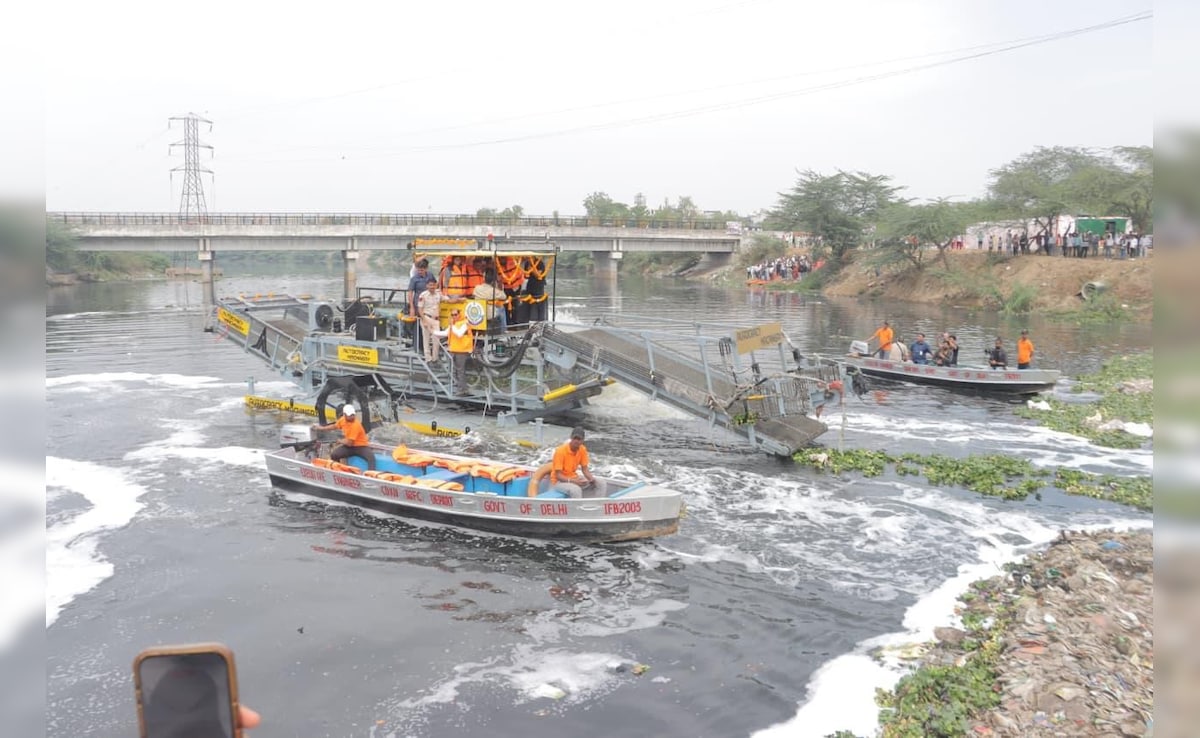
The largest allocation, Rs 6,485 crore, has gone for Yamuna clean-up and sewage treatment.
Highlights
- Delhi's 2026-27 Green Budget allocates Rs 22,236 crore for environmental goals
- Seventeen departments must track and report spending against green objectives
- Rs 6,485 crore is allocated to the Delhi Jal Board for Yamuna sewage treatment
Can a Rs 22,236 crore push fix Delhi's choking air and the polluted Yamuna? The Delhi government said it has a plan -- this time linking the spending directly to environmental outcomes across departments. The announcement comes as the capital continues to struggle with persistently poor air that residents breathe every day, and a river that remains heavily polluted despite years of clean-up efforts.
On Sunday, Chief Minister Rekha Gupta unveiled the 2026-27 'Green Budget', setting aside over 21 per cent of this year's state budget (Rs 1,03,700 crore) for environment-linked work.
The key shift: 17 departments will now be required to track and report their spending against green goals, according to the government.
Why This Matters Now
Delhi's pollution crisis is not new, but it remains stubborn. Air quality routinely slips into "poor" and "very poor" and even "severe" categories across seasons, while the Yamuna continues to carry untreated sewage through key drains, with toxic foam appearing on the surface year after year.
Despite multiple plans and years of spending, results on the ground remain uneven, putting the focus squarely on accountability.
What's Changing: Tracking Every Rupee
The biggest shift in this budget is how every rupee will now be tracked. "All departmental expenditures will now be mapped against green objectives," the Chief Minister said.
In simple terms, departments will not just have to spend, they will be expected to report what that spending delivers in terms of cleaner air, better water and reduced pollution. A dedicated 'Green Fund' will back projects across departments and reduce the fragmentation that has slowed past efforts.
Yamuna Clean-Up: The Biggest Bet
The largest allocation -- Rs 6,485 crore, has gone to the Delhi Jal Board for sewage treatment and river clean-up. This is crucial because untreated and partially treated sewage remains the biggest contributor to the Yamuna's pollution load, with major drains continuing to discharge waste into the river.
While similar clean-up plans have been announced before, execution gaps have limited impact. This time, the government is placing its biggest financial bet on fixing that pipeline.
But cleaning the river is only one part of the problem.
Cleaner Transport, Less Dust
The budget also targets two major sources of pollution -- vehicles and dust. An allocation of Rs 4,758 crore has been made to expand the electric bus fleet and strengthen public transport, while Rs 3,350 crore has been earmarked to control road dust and build greener infrastructure.
Officials say the focus is on reducing pollution at source rather than rely only on seasonal emergency measures.
A Government-Wide Push
Unlike earlier approaches that relied heavily on a few departments, this plan spreads responsibility across the system.
Key departments -- handling planning, urban development and power -- have been given significant roles in designing projects, improving local infrastructure and expanding renewable energy.
At the same time, smaller but targeted funding has been set aside for pollution control, water conservation, afforestation, cleaner industry practices, green schools and environmental upgrades in hospitals, according to officials.
The Real Test
The scale of spending is significant. The challenge now is delivery. If departments can follow through and show results on the ground, the plan could mark a shift in how Delhi tackles pollution.
Published: April 06, 2026 00:14 IST
 Reported by Reet Kaur Sahni | Friday August 07, 2026
As per the ministry, prior Environmental Clearance becomes mandatory for data centres depending on their physical footprint under Schedule 8 of the EIA Notification, 2006.
- Written by Sambhav Kumar | Thursday August 06, 2026
Keerthy Suresh's 41-hour no-sleep stretch highlights the intense demands many professionals face, but experts warn that prolonged sleep deprivation should never become routine.
- Written by Sambhav Kumar | Wednesday August 05, 2026
Preliminary evidence suggests the blood filtration treatment could reduce some microplastic particles, though findings are limited and require more study.
- Monday August 03, 2026 , New Delhi
Study reveals black crust from pollution weakens Humayuns Tomb sandstone
- Written by Debosmita Ghosh | Saturday August 01, 2026
Lung cancer is often diagnosed at an advanced stage because its early symptoms are easy to overlook. A persistent cough is among the most commonly ignored warning signs.


................................ Advertisement ................................

Blog | Well Done, Delhi. You've Turned Lung Sacrifice Into A Badge Of HonourSaikat Kumar Bose
Monday November 10, 2025Till some years back, Delhiites would ask angry questions to those in power about the capitals annual tryst with toxic air. This has changed. Those in the driving seat dont see the need to answer now.
Opinion | Why Indians Have Just Given Up On Air Pollution CrisisTanushree Ganguly
Friday December 20, 2024While some may argue that people in Delhi are now more aware of air pollution than they were a decade back, my rebuttal would be that awareness does not mean that people are concerned.
Opinion | You Must Outrage Over Filthy Air More Than Once A YearJyoti Pande Lavakare
Tuesday December 10, 2024Delhi welcomed us with monsoon rains and mangos. We were home. Fast forward a couple of years, in the winter of 2012, I found myself in denial about something other parents, mostly expats, were calling toxic air.
Opinion | Delhi's Air Pollution Situation Is Like A Bad MarriageNishtha Gautam
Friday November 22, 2024On a good day, such as today, the AQI reading in Delhi is 407. We are jubilant at the sickly sunshine trickling through the slightly dissipated smog. At least its not 1600.
दिवाली... पराली... सियासी जुगाली!Ashwini kumar
Monday November 18, 2024दिल्ली-एनसीआर में प्रदूषण का समाधान तो आज तक मिला नहीं. हर साल चिंतित होकर हम-आप सांसों की तकलीफ के साथ-साथ दिल और ब्लड प्रेशर के मरीज भी क्यों बनें?


