


- Home/
- Historic First Phase Of India-US Trade Deal Sets Stage For FTA: Former Envoy
Historic First Phase Of India-US Trade Deal Sets Stage For FTA: Former Envoy
Reported by Aditya Raj Kaul | Updated: February 03, 2026 18:01 IST
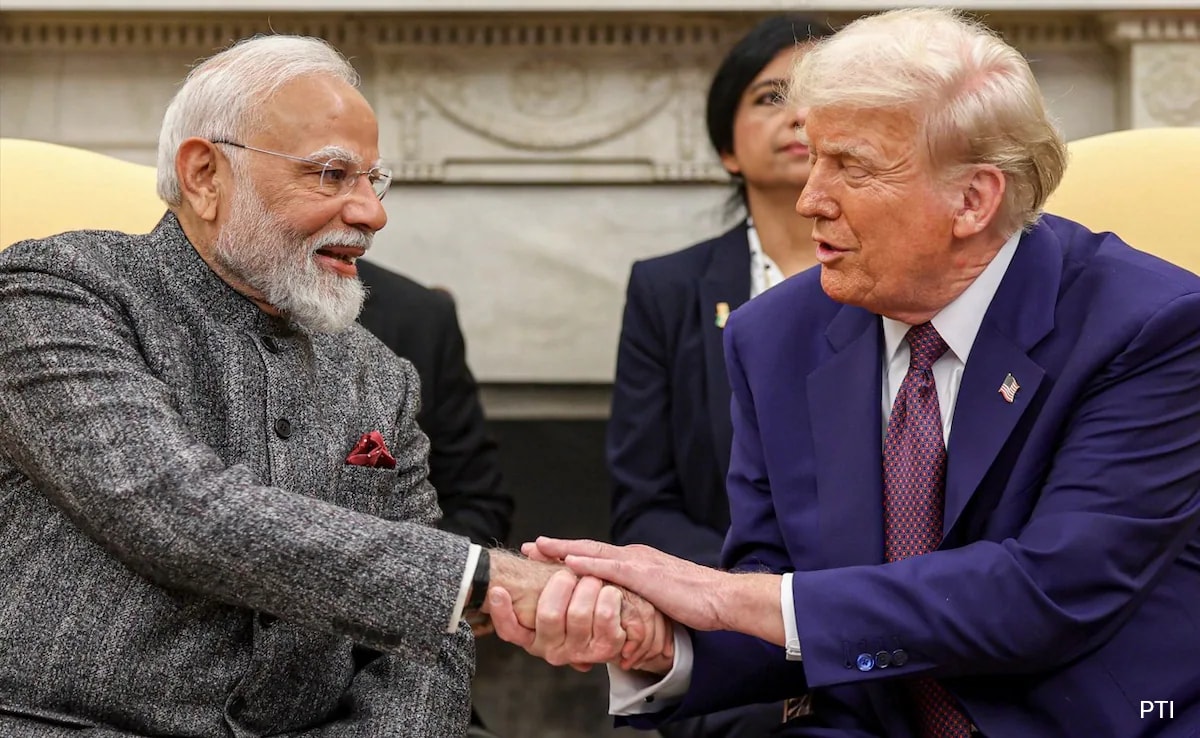
Kenneth I. Juster described the newly announced India-US trade understanding as "historic"
Former US Ambassador to India Kenneth I. Juster on Tuesday described the newly announced India-US trade understanding as "historic", saying it marks the first agreement of this magnitude between New Delhi and Washington and lays the foundation for a future free trade agreement.
Speaking exclusively to NDTV's Senior Executive Editor Aditya Raj Kaul, Juster said he felt "gratified" after decades of engagement with India-US economic ties. "This is really the first phase of what both leaders have said would hopefully be a free trade agreement," he noted, adding that while the pact still needs to be reduced to writing and fine details ironed out, the political decision by the two leaders to move forward was the critical breakthrough.
He underlined that, unlike several earlier trade announcements by Washington with other partners, this understanding contains "substantive provisions that have been negotiated between the two sides" and therefore has "real content and meat to it."
Juster also addressed the sensitive question of India's purchases of Russian oil, after US President Donald Trump said Prime Minister Narendra Modi had agreed to reduce such imports to "nil". The former envoy said he was not privy to the operational details but pointed out that India had already been lowering Russian oil purchases in recent months due to market conditions. He called this a "positive development" that could also contribute to momentum for a peace settlement in the Russia-Ukraine conflict.
On the trade front, the removal of 25% punitive tariffs and the reduction of reciprocal tariffs from 25% to 18% were, in his view, major confidence-building steps. More importantly, he argued, the deal resolves a long-standing irritant in the relationship. "The strategic partnership stretches across defence, technology, energy, space and many other areas. Trade has always lagged behind and been a sore subject. This now helps resolve the tensions on that issue and should provide even further impetus to the strategic partnership," he said.
Juster linked the breakthrough to wider geopolitical coordination, including the potential to energise the Quad grouping of India, the United States, Japan and Australia, especially if India hosts a leaders' summit later this year that could see President Trump visit New Delhi.
On the China angle, Juster noted that India now enjoys one of the lowest tariff levels in Asia at 18% following the announcement. He suggested that as negotiations progress toward a full FTA, tariffs could be reduced further. "I actually think it is in India's interest to open up its economy. It has world-class companies and will be further integrated into global supply chains. It's a win-win for both countries," he said, while acknowledging that sensitive sectors such as agriculture and dairy would require careful handling in future rounds.
Asked about recent diplomatic activity in New Delhi, including the presence of the US Ambassador and reports of high-level engagements, Juster said that while he was not aware of the specifics, "having a US ambassador on the ground with a direct line to the President can only be positive" for advancing such complex negotiations.
For Juster, the announcement is less an endpoint and more a beginning - the first concrete step toward a comprehensive India-US free trade agreement long seen as the missing pillar of an otherwise deep strategic partnership.
Published: February 03, 2026 18:01 IST
also read
 Karin Modig, The Conversation | Tuesday February 03, 2026
A new study published in Science has challenged this view, suggesting the genetic contribution might be considerably higher.
- Asian News International | Monday February 02, 2026 , New Delhi
Several parts of the national capital woke up to dense fog on Monday morning, with the Air Quality Index (AQI) remaining in the moderate to poor categories according to the Central Pollution Control Board (CPCB) data.
- Reported by Shreya Ghosh | Sunday February 01, 2026 , New Delhi
India's fight against toxic air just took a hit. The 2026-27 Budget allocated only Rs 1,091 crore to pollution control - down from Rs 1,300 crore last year.
- Sunday February 01, 2026
Several parts of Delhi and the wider National Capital Region (NCR) witnessed light rain during the intervening night of Saturday and Sunday. The India Meteorological Department (IMD) has forecast a drop in the maximum temperature for today.
- Press Trust of India | Saturday January 31, 2026
The air quality in Delhi has shown slight deterioration this January compared to last year, with the average Air Quality Index (AQI) till January 30 standing at 307, compared to 306 during the same period in 2025, according to an analysis


................................ Advertisement ................................

Blog | Well Done, Delhi. You've Turned Lung Sacrifice Into A Badge Of HonourSaikat Kumar Bose
Monday November 10, 2025Till some years back, Delhiites would ask angry questions to those in power about the capitals annual tryst with toxic air. This has changed. Those in the driving seat dont see the need to answer now.
Opinion | Why Indians Have Just Given Up On Air Pollution CrisisTanushree Ganguly
Friday December 20, 2024While some may argue that people in Delhi are now more aware of air pollution than they were a decade back, my rebuttal would be that awareness does not mean that people are concerned.
Opinion | You Must Outrage Over Filthy Air More Than Once A YearJyoti Pande Lavakare
Tuesday December 10, 2024Delhi welcomed us with monsoon rains and mangos. We were home. Fast forward a couple of years, in the winter of 2012, I found myself in denial about something other parents, mostly expats, were calling toxic air.
Opinion | Delhi's Air Pollution Situation Is Like A Bad MarriageNishtha Gautam
Friday November 22, 2024On a good day, such as today, the AQI reading in Delhi is 407. We are jubilant at the sickly sunshine trickling through the slightly dissipated smog. At least its not 1600.
दिवाली... पराली... सियासी जुगाली!Ashwini kumar
Monday November 18, 2024दिल्ली-एनसीआर में प्रदूषण का समाधान तो आज तक मिला नहीं. हर साल चिंतित होकर हम-आप सांसों की तकलीफ के साथ-साथ दिल और ब्लड प्रेशर के मरीज भी क्यों बनें?


