


- Home/
- Budget 2026: Funding Slump For Pollution Control Amid Climate Crisis
Budget 2026: Funding Slump For Pollution Control Amid Climate Crisis
Reported by Shreya Ghosh | Updated: February 01, 2026 15:22 IST
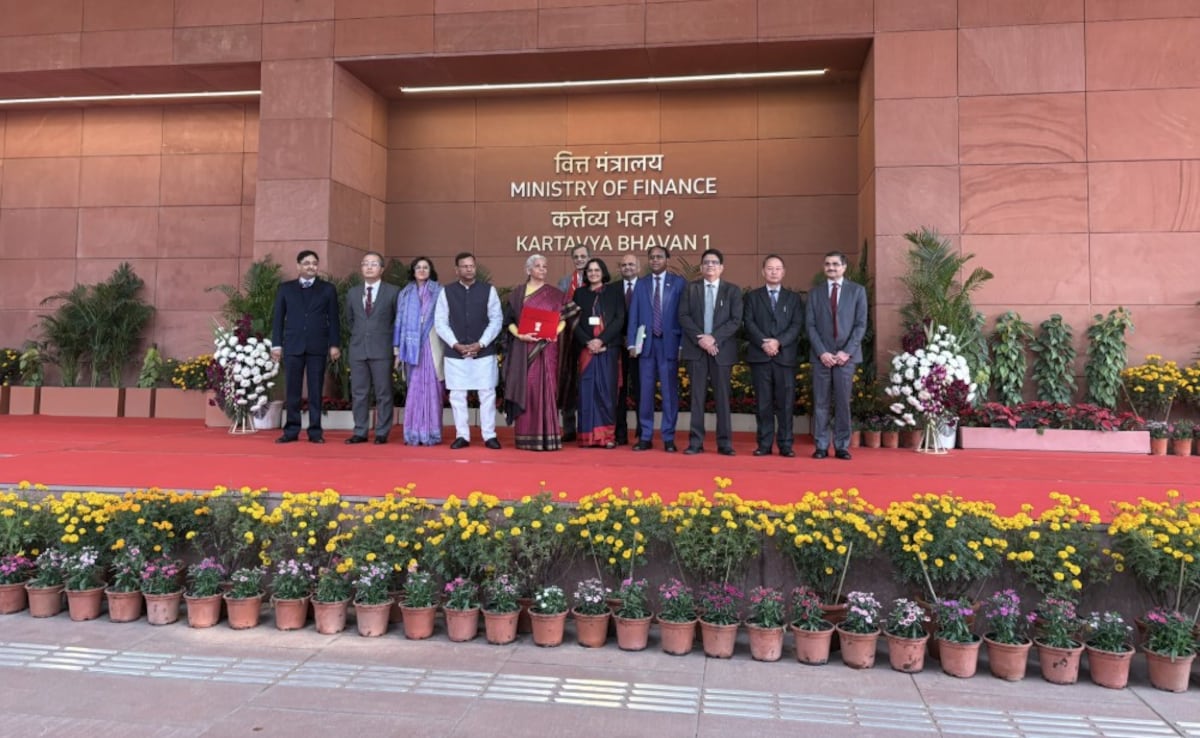
Experts say overall funding level remains disproportionately low given India's climate vulnerabilities
New Delhi:
India's fight against toxic air just took a hit. The 2026-27 Budget allocated only Rs 1,091 crore to pollution control - down from Rs 1,300 crore last year. This funding gap ignores the reality of a worsening public health emergency and leaves clean-air initiatives under-resourced.
The retreat looks even starker in historical context: last year's Budget Estimate (2024-25) stood at just Rs 854 crore, which was later revised upward to reflect catch-up needs, yet actual spending in 2024-25 collapsed to a shockingly low Rs 16 crore.
Moreover, the Union Budget has provided only a modest increase in funding for India's environmental and climate efforts, even as the country grapples with an escalating frequency of extreme weather events such as heatwaves, floods, cyclones, and severe air pollution episodes.
The Ministry of Environment, Forest and Climate Change (MoEFCC) received an allocation of Rs 3,759.46 crore for the fiscal year 2026-27. This marks a rise of approximately Rs 278 crore, or about 8 per cent, compared to the 2025-26 Budget Estimate of Rs 3,481.61 crore.
While the percentage hike may seem noteworthy at first glance, experts point out that the overall funding level remains disproportionately low relative to the immense scale of India's climate vulnerabilities, ecological degradation, and international commitments on adaptation and mitigation.
Breaking down the allocations reveals a pattern of incremental adjustments rather than transformative investment.
Capital expenditure has increased from Rs 174.39 crore to Rs 222.80 crore, which could support enhanced infrastructure for research, environmental monitoring, and long-term assets. Revenue expenditure shows only marginal growth, primarily directed toward maintaining existing institutions, regulatory bodies, and ongoing schemes.
Key areas of focus include bolstering institutional and regulatory frameworks. Funding has risen for subordinate offices like the Botanical Survey of India, Zoological Survey of India, and notably the National Green Tribunal (NGT), where higher allocations address the surging volume of environmental litigation and enforcement needs nationwide.
Pollution abatement remains a major priority, with Rs 1,091 crore earmarked for pollution control boards and the National Clean Air Programme (NCAP). However, this figure represents a decline from the Rs 1,300 crore in the 2025-26 revised estimates, indicating constrained resources amid persistent air quality crises in urban centers.
In the forestry and wildlife sector, signals are mixed. The National Mission for a Green India has been allocated Rs 212.50 crore - a notable uptick from the previous year's revised low of Rs 95.7 crore but still falling short of more ambitious past targets.
Funding for Project Tiger and Project Elephant stays steady at Rs 290 crore, while wildlife habitat initiatives see only limited expansion.
This restrained approach comes against a backdrop of intensifying climate pressures. Recent years have seen a sharp rise in extreme weather incidents, with reports documenting hundreds of events annually leading to significant loss of life, agricultural damage, and economic strain. India ranks among the most vulnerable nations globally to such risks, with floods, heatwaves, and cyclones becoming more frequent and severe, overburdening state and local response mechanisms.
Experts say India's national pledges - including land restoration, forest expansion, improved air and water quality, and enhanced climate resilience - demand far more robust financing.
The Budget's modest bump largely restores deferred expenditures from previous years rather than injecting fresh momentum.
Published: February 01, 2026 15:20 IST
also read
 Written by Dr Sabine Kapasi | Tuesday September 29, 2026
Air pollution is often discussed as a cause of respiratory disease, but its effects extend to the heart and blood vessels.
- Edited by Debanish Achom | Monday September 28, 2026 , New Delhi
The steps include doubling parking charges, a complete ban on construction and demolition activity and work-from-home for government and private employees
- Written by Debosmita Ghosh | Friday September 25, 2026
Air purifiers are mainly designed to clean pollutants that are suspended in the air. A HEPA filter can trap very small particles and may help reduce indoor levels of particulate matter, dust, pollen and some other airborne particles. However, the performance of a purifier depends on several factors.
- Written by Dr Ankit Kumar Sinha | Friday September 25, 2026
To improve respiratory health, it is important to minimise exposure to polluted air, enhance indoor ventilation, adhere to workplace safety regulations, and promote physical activity.
- Tuesday September 22, 2026 , Mumbai
The court had on Monday taken suo motu (on its own) cognizance of the issue of severe noise and air pollution caused during processions.



................................ Advertisement ................................

Blog | Well Done, Delhi. You've Turned Lung Sacrifice Into A Badge Of HonourSaikat Kumar Bose
Monday November 10, 2025Till some years back, Delhiites would ask angry questions to those in power about the capitals annual tryst with toxic air. This has changed. Those in the driving seat dont see the need to answer now.
Opinion | Why Indians Have Just Given Up On Air Pollution CrisisTanushree Ganguly
Friday December 20, 2024While some may argue that people in Delhi are now more aware of air pollution than they were a decade back, my rebuttal would be that awareness does not mean that people are concerned.
Opinion | You Must Outrage Over Filthy Air More Than Once A YearJyoti Pande Lavakare
Tuesday December 10, 2024Delhi welcomed us with monsoon rains and mangos. We were home. Fast forward a couple of years, in the winter of 2012, I found myself in denial about something other parents, mostly expats, were calling toxic air.
Opinion | Delhi's Air Pollution Situation Is Like A Bad MarriageNishtha Gautam
Friday November 22, 2024On a good day, such as today, the AQI reading in Delhi is 407. We are jubilant at the sickly sunshine trickling through the slightly dissipated smog. At least its not 1600.
दिवाली... पराली... सियासी जुगाली!Ashwini kumar
Monday November 18, 2024दिल्ली-एनसीआर में प्रदूषण का समाधान तो आज तक मिला नहीं. हर साल चिंतित होकर हम-आप सांसों की तकलीफ के साथ-साथ दिल और ब्लड प्रेशर के मरीज भी क्यों बनें?


