


- Home/
- India's Rising Nighttime Temperatures Should Worry Us More Than We Think
India's Rising Nighttime Temperatures Should Worry Us More Than We Think
Written by Aastha Ahuja | Updated: June 24, 2026 15:55 IST
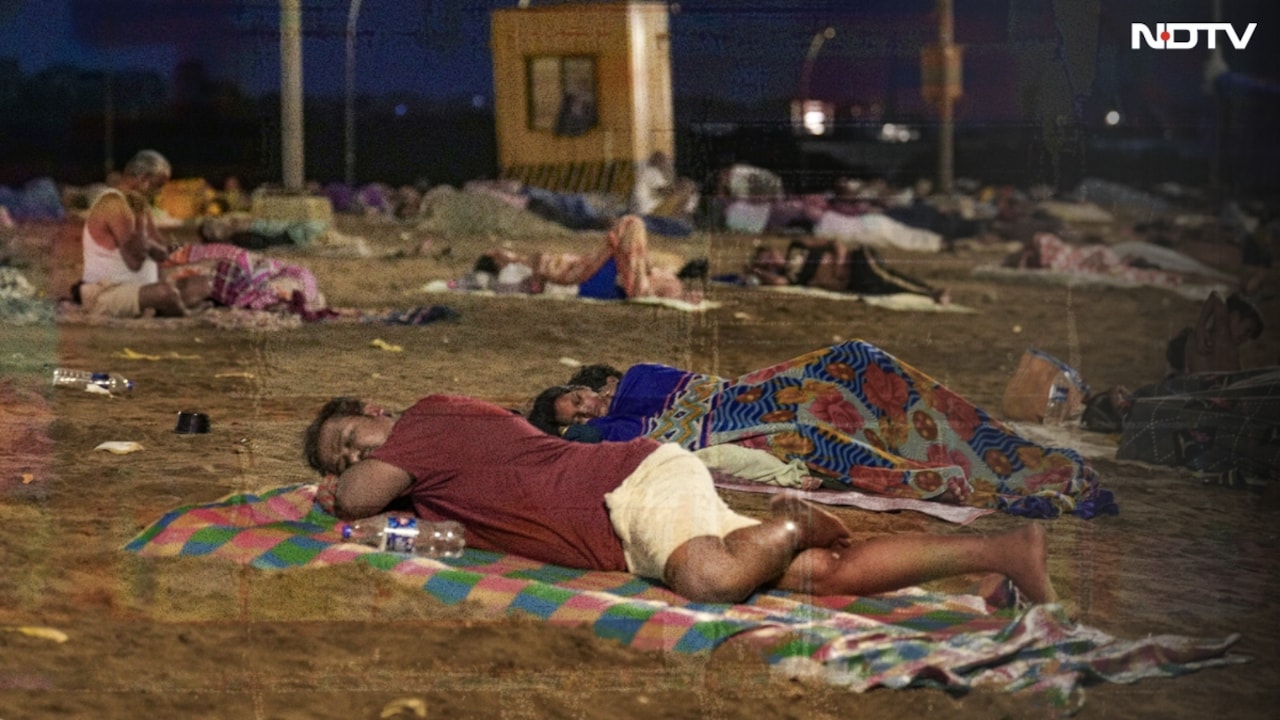
The rise in very warm nights is most noticeable in districts with a large population (over 10 lakh).
New Delhi: 
The year is 2006. It's the peak of summer. I sleep on a double bed, sandwiched between my parents. I look up at the fan rotating at full speed. My mother sings me a lullaby, asking me to sleep because I have school tomorrow morning. Just when I feel like I am slipping into a deep sleep, the fan stops working. I open my eyes and see the three blades standing still. "Pick up your pillow and bedsheet, let's go to the terrace," my dad says as he picks up a folding bed for my grandmother in one hand and holds her arm in the other. We spread our sheets and lie down. I feel the cool breeze on my forehead, washing away the tiny sweat beads.
Two decades later, I'm walking back home from a friend's place after dinner. Barely 10 minutes into the walk, I feel my shirt sticking to my body. I run my hand over my face, wiping off the sweat. Five more minutes, I tell myself.
I miss the breeze that once comforted me every time there was a power cut.
The Night Is Not Cool Anymore
The minimum nightime temperatures are increasing. The India Meteorological Department's (IMD) seasonal outlook for April to June 2026 predicted that maximum temperatures are likely to be normal to below normal over many parts of the country. However, the IMD predicted above-normal minimum temperatures over most parts of the country except some regions of Maharashtra and Telangana.
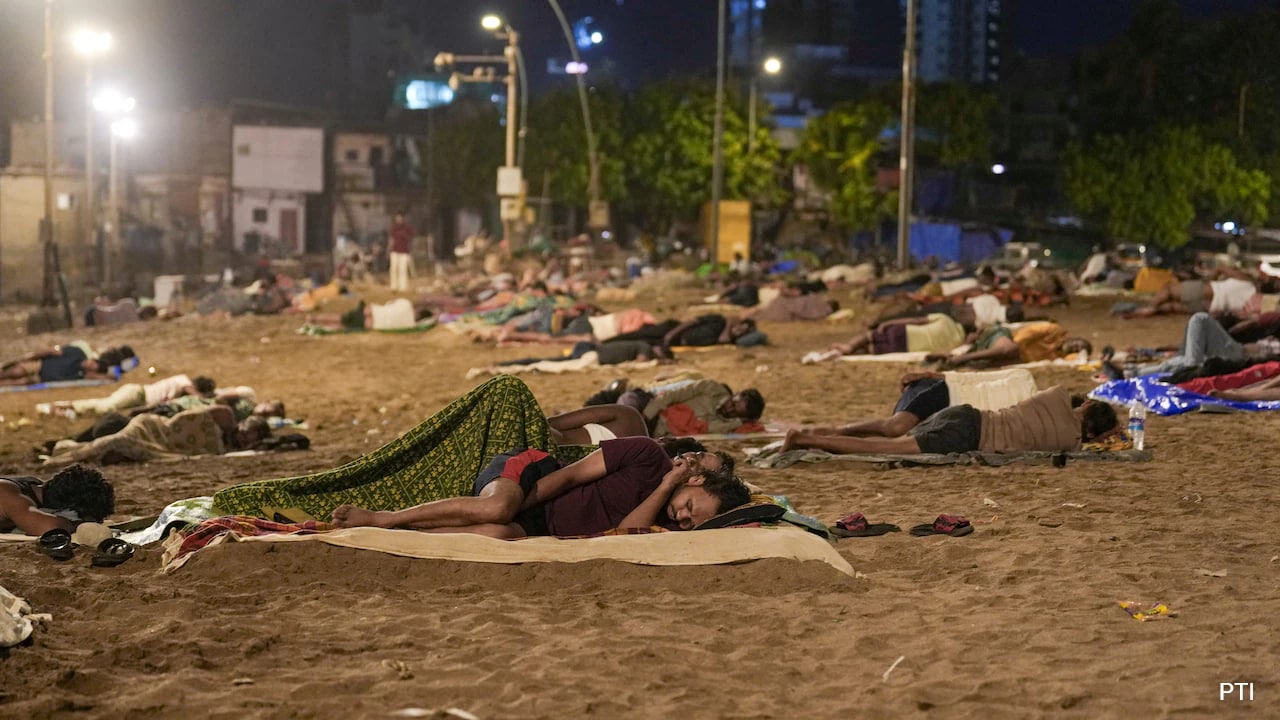
People sleep on Versova Beach amid intense heatwave and frequent power outages, in Mumbai.
What Are Warm Nights?
The IMD declares a warm night when the maximum temperature is 40 degrees Celsius or more and the minimum temperature is 4.5-6.4 degrees Celsius above normal.
The definition is based on the departure of actual minimum temperatures (the difference between actual minimum temperature and the long-term average). A departure of 4.5-6.4 degrees Celsius qualifies as a warm night and above 6.4 is a very warm night.
Number Of Very Warm Nights Increasing Faster Than Days
A May 2025 report titled 'How Extreme Heat is Impacting India' by the Council on Energy, Environment and Water (CEEW), a not-for-profit policy research institute, found that the number of very warm nights is increasing more than the number of very warm days.
"Over the last decade (2012-2022), nearly 70 per cent of districts experienced an additional five very warm nights per summer (March to June). In comparison, approximately 28 per cent of districts experienced five or more additional very hot days," the report states.
The rise in very warm nights is most noticeable in districts with a large population (over 10 lakh), which are often home to tier I and II cities. In the last decade, Mumbai saw 15 additional very warm nights per summer, Bengaluru (11), Bhopal and Jaipur (7 each), Delhi (6), and Chennai (4), the report adds.

Women shield themselves from the scorching sun amid intense summer heat, in Prayagraj.
A similar trend has been observed in traditionally cooler Himalayan regions. For example, in the union territories of Jammu and Kashmir and Ladakh, the number of very hot days and very warm nights has risen by over 15 days and nights each summer. This could severely impact fragile mountain ecosystems, the report warns.
A study by Climate Trends, a Delhi-based research-based consulting and capacity building initiative, examined indoor thermal environments across 50 residential units in Chennai, Tamil Nadu between October 2025 and April 2026. The study found that indoor temperatures frequently exceeded 32 degrees Celsius and 35 degrees Celsius during the warmer months. Nighttime temperatures rarely fell below an average of 31 degrees Celsius, highlighting persistent heat retention.
What Contributes To Rising Nighttime Temperatures
The urban heat island (UHI) effect is seen as a key driver of rising minimum temperatures. An urban heat island occurs when a city is significantly warmer than nearby rural areas due to a lack of green cover, urban infrastructure, poor ventilation, and humidity.
Dr Vishwas Chitale, a fellow at CEEW, defines urban heat islands as "really warm pockets" or "heat hotspots" within a city.
"The daytime temperatures are already high. Urban landscapes tend to absorb a lot of heat during the daytime, and cool down very slowly at night. Before they can cool significantly, a new day begins. Rapid urbanisation is one of the main causes of warm nights," explains Dr Chitale.
As cities expand and high-rises multiply, it is important to examine what goes into building these luxurious spaces. Concrete, steel, glass and aluminium - urban building materials trap heat during the day and release it after sunset, delaying cooling. Asphalt, along with waste heat from vehicles, diesel generators, factories and air-conditioners worsens the problem.
In many cases, a lack of green cover significantly contributes to this, opines Dr Chitale and he suggests allocating enough green spaces in a city or large townships to contain the growth of heat islands.
Why Rising Nighttime Temperature Is A Threat
The human body naturally cools itself through sweating and blood circulation. At night, when temperatures drop, the body gets time to recover from the day's accumulated thermal stress. But high nighttime temperatures prevent the body from getting adequate relief.
The problem is exacerbated because, at night, the heat is not visible, says Dr Chitale.
"During the daytime, when the temperatures go as high as 45 or 46 degrees Celsius, you not only just experience that heat but also see it. When stepping out, you may cover your head or travel in an air-conditioned car or go back indoors. But at night, when the temperature hits 30 to 33 degrees Celsius, you do not acknowledge it, and that is where the lack of awareness comes in. You may not feel that it is hot, but for a night temperature, it is unusually high and can have invisible effects on your health, including dehydration, exhaustion, and even kidney and cardiac disorders," he says.
A Centre for Science and Environment (CSE) report states the increased dependence on air conditioners as one of the reasons for rising nighttime temperatures, as they aggravate ambient temperatures. It quotes a Beirut study that found that night-time temperatures rose by 4.4 degrees Celsius to 4.7 degrees Celsius in neighbourhoods with high AC penetration.
Doctors and climate experts say prolonged overnight heat exposure can worsen dehydration, increase cardiovascular strain, disrupt the sleep cycle, reduce work productivity, and raise the risk of heat stroke, kidney problems, and even death. Vulnerable groups such as older adults, children, pregnant women, outdoor workers, and people with chronic diseases face the greatest risk.
Dr Chitale opines that the warming trend is not going down owing to higher carbon emissions. But integrating nature-based solutions into urban planning can help.
Heat-Resilience
The CSE report lays down city-wide strategies for resilience. It recommends recognising heat as a disaster; adopting better indicators for heat alerts like the wet bulb temperature or the heat index which are closer to felt heat and humidity than just the maximum temperature; mandating thermally efficient or cool roofs in industrial areas, office complexes, markets and informal settlements, as they can reduce indoor temperatures by up to 5 degrees Celsius; the use of green-blue infrastructure; improving the quality of green cover.
These solutions might not bring back the summers when we slept under open skies, with the breeze cutting through the heat, but they could make the nights a little less unforgiving.
Published: June 24, 2026 11:30 IST
also read
- Written by Debosmita Ghosh | Friday June 26, 2026
One natural and effective way to improve lung capacity is through yoga. There are several yoga asanas that focus on opening the chest, improving posture, and encouraging deep, controlled breathing.
- Written by Ambika Singh Kahma | Friday June 19, 2026
NDTV Lifeline's first episode gives India a wake-up call to recognise sleep apnea as a critical public health issue
- Reported by Ishika Verma | Friday June 19, 2026 , New Delhi
The measures, outlined under a newly notified winter air quality management framework, are intended to help authorities, businesses and residents prepare in advance for the period between November and February, when Delhi's air quality typically dete
- Edited by Nikhil Pandey | Friday June 19, 2026
An unprecedented Ukrainian drone strike on a major Moscow oil refinery has caused a bizarre environmental crisis, with oily "black rain" falling over parts of the Russian capital.
- Written by Dr Anindita Singh | Monday June 15, 2026
From a clinical point of view, infertility often develops quietly, without noticeable symptoms, especially in the early stages, and the whole process can look normal from the outside.





................................ Advertisement ................................





Blog | Well Done, Delhi. You've Turned Lung Sacrifice Into A Badge Of HonourSaikat Kumar Bose
Monday November 10, 2025Till some years back, Delhiites would ask angry questions to those in power about the capitals annual tryst with toxic air. This has changed. Those in the driving seat dont see the need to answer now.
Opinion | Why Indians Have Just Given Up On Air Pollution CrisisTanushree Ganguly
Friday December 20, 2024While some may argue that people in Delhi are now more aware of air pollution than they were a decade back, my rebuttal would be that awareness does not mean that people are concerned.
Opinion | You Must Outrage Over Filthy Air More Than Once A YearJyoti Pande Lavakare
Tuesday December 10, 2024Delhi welcomed us with monsoon rains and mangos. We were home. Fast forward a couple of years, in the winter of 2012, I found myself in denial about something other parents, mostly expats, were calling toxic air.
Opinion | Delhi's Air Pollution Situation Is Like A Bad MarriageNishtha Gautam
Friday November 22, 2024On a good day, such as today, the AQI reading in Delhi is 407. We are jubilant at the sickly sunshine trickling through the slightly dissipated smog. At least its not 1600.
दिवाली... पराली... सियासी जुगाली!Ashwini kumar
Monday November 18, 2024दिल्ली-एनसीआर में प्रदूषण का समाधान तो आज तक मिला नहीं. हर साल चिंतित होकर हम-आप सांसों की तकलीफ के साथ-साथ दिल और ब्लड प्रेशर के मरीज भी क्यों बनें?


