


- Home/
- What Makes Delhi Wait? Mumbai Enforces GRAP-4 With Air Quality Half As Bad
What Makes Delhi Wait? Mumbai Enforces GRAP-4 With Air Quality Half As Bad
Reported by Sujata Kanhaiya Dwivedi | Updated: December 01, 2025 10:47 IST
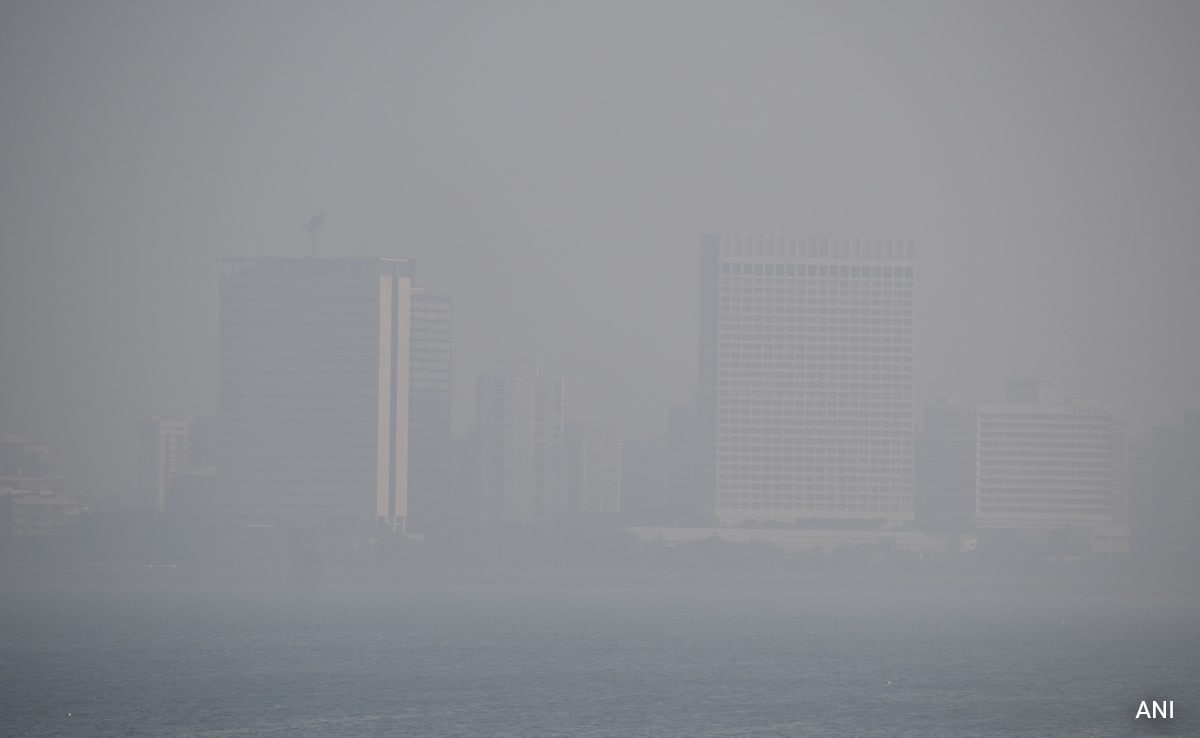
Mumbai has officially joined Delhi in providing toxic air to its citizens.
Mumbai :
Amid the worsening air quality in the financial capital Mumbai, the civic body has started enforcing restrictions under the Graded Response Action Plan (GRAP-4).
The areas where GRAP-4 curbs have been rolled out are the ones reporting Air Quality Index (AQI) in 'very poor' and 'severe' categories, leading to health discomfort among residents. These include Mazgaon, Deonar, Malad, Borivali East, Chakala-Andheri East, Navy Nagar, Powai and Mulund.
While Mumbai's declining air quality has drawn comparisons between the Maximum City and the national capital Delhi, the GRAP-4 imposition in Mumbai is different in several ways. Also, different are the factors behind the spike in pollutants
GRAP-4 In Mumbai: What It Includes
- Mumbai's civic body, the Brihanmumbai Municipal Corporation (BMC), has halted construction and dust-generating activities in these areas, and dozens of sites are being monitored.
- Stop-work/shutdown notices have been issued to 50 construction and Ready-Mix Concrete sites in the worst-affected wards.
- Several small industries, including bakeries, marble-cutting units and other local operations, have been asked to shift to cleaner processes or face punitive action.
- Flying squads have been deployed in every ward to enforce pollution-control norms and monitor emissions. These squads include engineers, police personnel and GPS-tracked vehicles.
GRAP-4 In Delhi: What It Includes
- Ban on the use of BS-III petrol and BS-IV diesel cars (4-wheelers).
- School classes, except for Class 10 and Class 12 students, shift to hybrid mode - a mix of physical and online classes.
- Private companies are asked to provide 'work from home' to employees; government offices run on 50 per cent strength and the rest of the staff works from home.
- Entry of truck traffic into Delhi is banned.
- The use of BS-III petrol and BS-IV diesel cars (4-wheelers) is restricted in Delhi and other NCR districts.
GRAP 4 In Mumbai and Delhi: What's Different
While toxic air days in Delhi are now an annual event, this is the first time GRAP curbs have been enforced in Mumbai, which is known to have lower air pollution than the national capital. Significantly, while Delhi gradually enforces GRAP stages, with '4' being the final stage. In the case of Mumbai, however, authorities directly enforced GRAP 4 as soon as the AQI spiked. The curbs have now been removed. The threshold to enforce GRAP 4 is also much lower in Mumbai. Authorities in Mumbai enforced the strictest phase of curbs when AQI was between 200-300. Delhi, on the other hand, has not enforced GRAP 4 even though its AQI has consistently been over the 300 mark. Typically, GRAP 4 comes into force in Delhi only when AQI crosses 450.
Delhi vs Mumbai: What's Poisoning The Air
The factors behind toxic air in Delhi and Mumbai are also different. While landlocked Delhi partly suffers due to farm fires in neighbouring states and wind movement at this time of the year, the Maximum City's pollution spike is largely due to multiple infrastructure projects in key areas. This also explains why the AQI spike in Mumbai was restricted to certain areas. The fact that Mumbai is located beside the sea also plays a role. Seaside cities and towns typically have better air quality than landlocked areas because the wind blows away some of the pollutants.
A Wake-Up Call
Mumbai's entry, though brief, into the toxic air hall of shame is a wake-up call for government authorities across the country. Year-round construction activities, vehicular emissions, and waste burning are gradually poisoning the air in major cities. Policy measures so far have done little to address the root causes and the problem persists. Delhi has been gasping for air every winter for years now, and this time, Mumbai joined the list.
Published: December 01, 2025 09:34 IST
 Reported by Reet Kaur Sahni | Friday August 07, 2026
As per the ministry, prior Environmental Clearance becomes mandatory for data centres depending on their physical footprint under Schedule 8 of the EIA Notification, 2006.
- Written by Sambhav Kumar | Thursday August 06, 2026
Keerthy Suresh's 41-hour no-sleep stretch highlights the intense demands many professionals face, but experts warn that prolonged sleep deprivation should never become routine.
- Written by Sambhav Kumar | Wednesday August 05, 2026
Preliminary evidence suggests the blood filtration treatment could reduce some microplastic particles, though findings are limited and require more study.
- Monday August 03, 2026 , New Delhi
Study reveals black crust from pollution weakens Humayuns Tomb sandstone
- Written by Debosmita Ghosh | Saturday August 01, 2026
Lung cancer is often diagnosed at an advanced stage because its early symptoms are easy to overlook. A persistent cough is among the most commonly ignored warning signs.


................................ Advertisement ................................

Blog | Well Done, Delhi. You've Turned Lung Sacrifice Into A Badge Of HonourSaikat Kumar Bose
Monday November 10, 2025Till some years back, Delhiites would ask angry questions to those in power about the capitals annual tryst with toxic air. This has changed. Those in the driving seat dont see the need to answer now.
Opinion | Why Indians Have Just Given Up On Air Pollution CrisisTanushree Ganguly
Friday December 20, 2024While some may argue that people in Delhi are now more aware of air pollution than they were a decade back, my rebuttal would be that awareness does not mean that people are concerned.
Opinion | You Must Outrage Over Filthy Air More Than Once A YearJyoti Pande Lavakare
Tuesday December 10, 2024Delhi welcomed us with monsoon rains and mangos. We were home. Fast forward a couple of years, in the winter of 2012, I found myself in denial about something other parents, mostly expats, were calling toxic air.
Opinion | Delhi's Air Pollution Situation Is Like A Bad MarriageNishtha Gautam
Friday November 22, 2024On a good day, such as today, the AQI reading in Delhi is 407. We are jubilant at the sickly sunshine trickling through the slightly dissipated smog. At least its not 1600.
दिवाली... पराली... सियासी जुगाली!Ashwini kumar
Monday November 18, 2024दिल्ली-एनसीआर में प्रदूषण का समाधान तो आज तक मिला नहीं. हर साल चिंतित होकर हम-आप सांसों की तकलीफ के साथ-साथ दिल और ब्लड प्रेशर के मरीज भी क्यों बनें?


