


- Home/
- Mumbai To Get London-Like Congestion Tax? Corporator's Push To Curb Traffic
Mumbai To Get London-Like Congestion Tax? Corporator's Push To Curb Traffic
Reported by Radhika Ramaswamy | Updated: February 09, 2026 15:23 IST
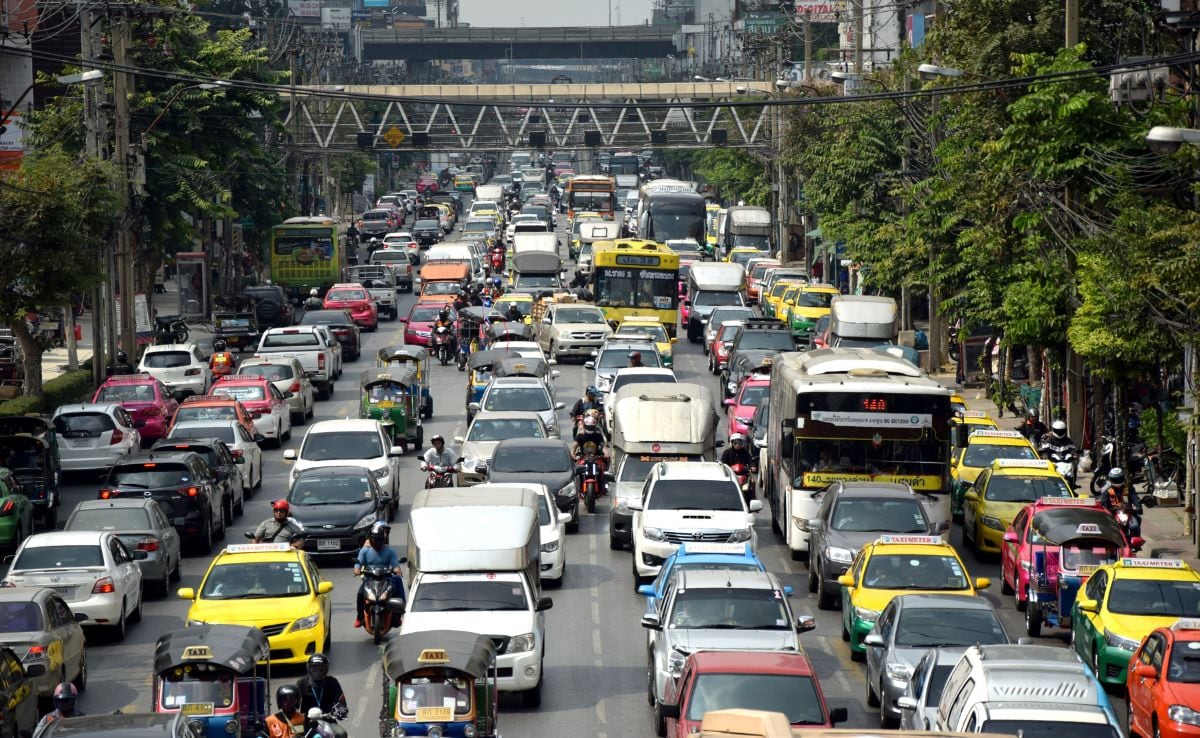
Mumbai's traffic and pollution figures have raised alarm among urban planners and health experts.
Highlights
- BJP corporator Makarand Narwekar proposes congestion tax in Mumbai's central business districts
- Tax would target single-occupant cars during peak hours with Rs 50-100 charges per entry
- Fees to be collected using FASTag and ANPR systems at entry points automatically
Mumbai :
A senior Bharatiya Janata Party (BJP) corporator from Mumbai has renewed debate over tackling traffic chaos and worsening air quality in India's financial capital with a proposal to introduce a congestion tax in central business districts.
Colaba corporator Makarand Narwekar has written to the Brihanmumbai Municipal Corporation (BMC) commissioner urging the civic body to design and pilot a congestion pricing scheme for single-occupant private vehicles entering high-traffic zones such as south Mumbai, including Fort, Nariman Point and Colaba, especially during peak hours.
Under Narwekar's proposal, private cars with only the driver could face a levy of Rs 50-Rs 100 per entry during morning (8 am-11 am) and evening (5 pm-8 pm) commuter peaks. Fees would be collected automatically using existing FASTag and CCTV or ANPR (Automatic Number Plate Recognition) systems at entry points.
Narwekar in the proposal stated, "A congestion tax policy would discourage unnecessary private vehicle trips, shift commuters toward public transport, reduce congestion and lower emissions, a growing concern as Mumbai's air quality has hovered in the moderate to unhealthy range in recent weeks and months."
He also points to projections that a congestion tax could raise Rs 200-300 crore annually, funds that could be channelled into initiatives to improve air quality and sustainable transport.
Why the push now? Traffic, pollution and policy context
Mumbai's traffic and pollution figures have raised alarm among urban planners and health experts. Vehicle density in the city continues to rise year after year, contributing significantly to air quality woes, with many monitoring stations reporting unhealthy or at-risk air quality levels.
In his letter to BMC, Narwekar referenced recent recommendations in India's Economic Survey supporting congestion pricing as a tool for urban mobility management, reflecting wider recognition in policy circles of the need to shift away from car-centric urban planning.
His proposal calls for a pilot in south Mumbai, arguing that focused implementation would allow planners to assess feasibility, operational challenges and public reaction before wider roll-out.
Global and domestic comparisons, lessons from abroad and India
Congestion pricing is not novel globally. Cities such as London, Stockholm, Singapore, and New York have long used pricing schemes to curb car traffic in crowded cores, with studies showing measurable reductions in congestion and, in some cases, improved air quality and transit use.
In London, drivers pay a daily charge to enter designated central zones during business hours. Stockholm's congestion tax, introduced after public referendums, has been credited with lowering rush-hour traffic and boosting public transit ridership. Similar systems use technology to automatically bill vehicle owners based on entry and exit times in designated areas.
In India, some discussions around congestion pricing have surfaced in other cities too. Mobility experts in Bengaluru recently discussed using FASTag-based tolling on high-traffic corridors such as the Outer Ring Road, though the state government later clarified no congestion tax was officially planned.
Karnataka's example highlights that while the concept is floated among planners, it has yet to be put into force in Indian metros. Many argue that charging drivers without improving public transport options could unfairly burden commuters. The BMC and Maharashtra state authorities have not yet formally responded to the corporator's proposal, and any implementation would likely require detailed policy design, public consultations and legal vetting before being included in the civic body's next budget.
Published: February 09, 2026 15:23 IST
 Reported by Reet Kaur Sahni | Friday August 07, 2026
As per the ministry, prior Environmental Clearance becomes mandatory for data centres depending on their physical footprint under Schedule 8 of the EIA Notification, 2006.
- Written by Sambhav Kumar | Thursday August 06, 2026
Keerthy Suresh's 41-hour no-sleep stretch highlights the intense demands many professionals face, but experts warn that prolonged sleep deprivation should never become routine.
- Written by Sambhav Kumar | Wednesday August 05, 2026
Preliminary evidence suggests the blood filtration treatment could reduce some microplastic particles, though findings are limited and require more study.
- Monday August 03, 2026 , New Delhi
Study reveals black crust from pollution weakens Humayuns Tomb sandstone
- Written by Debosmita Ghosh | Saturday August 01, 2026
Lung cancer is often diagnosed at an advanced stage because its early symptoms are easy to overlook. A persistent cough is among the most commonly ignored warning signs.


................................ Advertisement ................................
Blog | Well Done, Delhi. You've Turned Lung Sacrifice Into A Badge Of HonourSaikat Kumar Bose
Monday November 10, 2025Till some years back, Delhiites would ask angry questions to those in power about the capitals annual tryst with toxic air. This has changed. Those in the driving seat dont see the need to answer now.
Opinion | Why Indians Have Just Given Up On Air Pollution CrisisTanushree Ganguly
Friday December 20, 2024While some may argue that people in Delhi are now more aware of air pollution than they were a decade back, my rebuttal would be that awareness does not mean that people are concerned.
Opinion | You Must Outrage Over Filthy Air More Than Once A YearJyoti Pande Lavakare
Tuesday December 10, 2024Delhi welcomed us with monsoon rains and mangos. We were home. Fast forward a couple of years, in the winter of 2012, I found myself in denial about something other parents, mostly expats, were calling toxic air.
Opinion | Delhi's Air Pollution Situation Is Like A Bad MarriageNishtha Gautam
Friday November 22, 2024On a good day, such as today, the AQI reading in Delhi is 407. We are jubilant at the sickly sunshine trickling through the slightly dissipated smog. At least its not 1600.
दिवाली... पराली... सियासी जुगाली!Ashwini kumar
Monday November 18, 2024दिल्ली-एनसीआर में प्रदूषण का समाधान तो आज तक मिला नहीं. हर साल चिंतित होकर हम-आप सांसों की तकलीफ के साथ-साथ दिल और ब्लड प्रेशर के मरीज भी क्यों बनें?


