


- Home/
- India's Solar Power Output May Fall By 600 GW By 2041, Predicts IIT Delhi Study
India's Solar Power Output May Fall By 600 GW By 2041, Predicts IIT Delhi Study
| Updated: March 17, 2025 20:48 IST
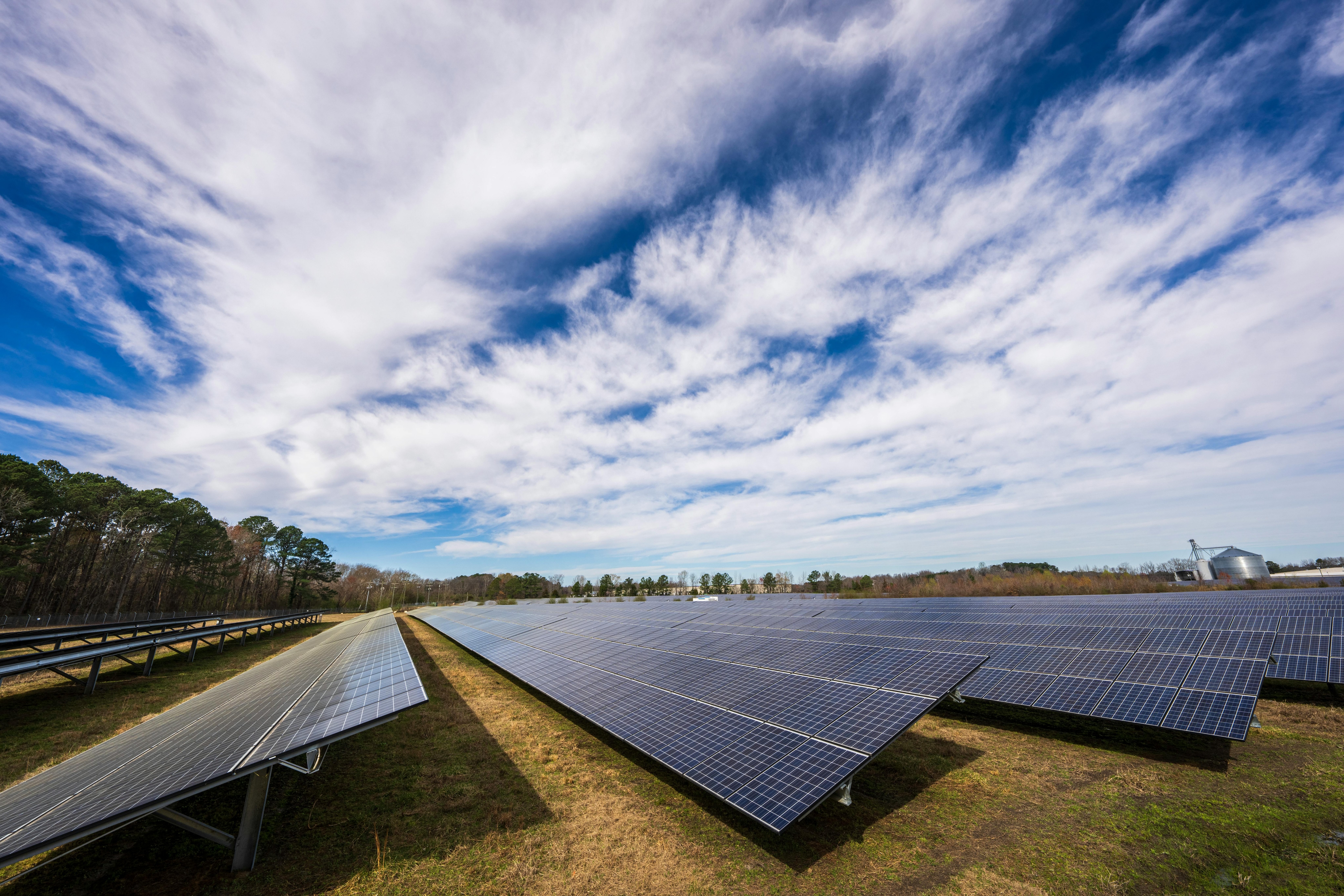
According to the team that conducted the study, solar cells would need to be innovated for future assessments looking into India's solar power potential. (Photo Source: Mark Stebnicki/Pexels)
India's capacity to generate solar power could fall by 600-800 gigawatt-hour before mid-century due to air pollution and climate change, a study has projected.
The researchers from the Indian Institute of Technology, Delhi, found that northern, western and southern power grids—where most solar parks are currently located—will experience significant challenges in maintaining performance due to climate change.
Pollutants in the air can absorb and scatter sunlight, thereby lowering the intensity of the sun's radiation reaching the earth's surface.
Further, generating solar power relies heavily on weather and climate, and is, therefore, vulnerable to the effects of climate change.
The findings, published in the journal Environmental Research Letters, "highlight the need for combined climate and pollution mitigation efforts to boost India's photovoltaic potential and secure a sustainable, resilient energy future".
Despite being endowed with abundant solar resources—India receives nearly 300 clear-sky days every year—the country has seen a persistent decline in incoming solar radiation, a phenomenon known as 'dimming', the authors said.
Using global climate models, the team projected the country's solar power potential by mid-century (2041-2050) under two scenarios—one with moderate air pollution and climate change, and the other in which climate change is weakly tackled and air pollution strongly controlled.
The results of the analysis suggested that the national average potential for generating solar power could fall by 2% two to nearly 4%, compared to that during 1985-2014, mainly due to a reduced radiation and increased temperatures.
Further, temperatures of solar cells could be expected to rise by 1.5–2 degrees Celsius, resulting in efficiency losses and an additional of about 18 days of efficiency de-rating, especially in solar-rich regions.
Based on data of solar power generated during 2023-24, loss in generation capacity was projected to range from 600 gigawatt-hours, under moderately controlled air pollution and climate change, to up to 840 gigawatt-hours, under a weak climate action with strong air pollution control, according to the study.
Solar cells—used in making solar panels and for converting sunlight into electricity—would need to be innovated for future assessments looking into India's solar power potential, the team said.
They called for robust measures for controlling air pollution and urgent climate action to mitigate losses in generating solar power.
Further, rapidly transitioning to renewable energy is crucial to mitigating both air pollution and climate change, the authors said.
NTPC Green Energy's 105 MW Shajapur Solar Project Now Fully OperationalPublished: March 17, 2025 20:48 IST
also read
Kolkata More Polluted Than Delhi, Mumbai? Indian Cities Feature In Global Pollution Top 10 List Today
Author: Vishesh NagarNot Delhi Or Mumbai, This Indian City Is The World's Second Most Polluted Today
Author: Vishesh NagarAir Pollution Alert: Mumbai Struggles With Unhealthy AQI; Delhi Air Quality Turns Severe
Author: Sandhya Nambudiri
 Written by Vishesh Nagar | Friday October 23, 2026
IQAir's live ranking puts Dakar and Lahore ahead of Kolkata, while Delhi and Mumbai also feature among the world's 10 most polluted cities.
- Edited by Nikhil Pandey | Friday October 23, 2026
A new study warns that expanding AI data centres in Texas could reverse decades of air quality improvements, with harmful emissions rising sharply unless cleaner energy sources are adopted.
- Written by NDTV Auto Desk | Friday October 23, 2026
Having a valid PUC is going to be mandatory in Delhi to get petrol at the fuel pumps, with the restrictions in place to control air pollution.
- Written by Vishesh Nagar | Thursday October 22, 2026
Check the top 10 most polluted major cities and their AQI levels, according to IQAir's live ranking.
- Reported by Ishika Verma | Thursday October 22, 2026 , New Delhi
Trouble began when AAP councillors demanded the immediate release of development funds for their wards, before discussions shifted to Delhi's worsening air pollution, and chaos broke out.




................................ Advertisement ................................




Opinion: Why Delhi's Smog Can't Be Fixed From SpaceDavid Fickling, Bloomberg
Monday October 19, 2026The clearest sign that Delhi is on a path to cleaner air would be a decline in the amount of paddy grown nearby, and therefore the acreage liable to be burned each year.
Don't Normalise Air Purifiers As Delhi Chokes | The Reason Why
Thursday December 11, 2025More than 90 cities in the world's top 100 polluting list are in India. With every passing year, the AQI is rising, reaching 'hazardous' levels.
Blog | Well Done, Delhi. You've Turned Lung Sacrifice Into A Badge Of HonourSaikat Kumar Bose
Monday November 10, 2025Till some years back, Delhiites would ask angry questions to those in power about the capitals annual tryst with toxic air. This has changed. Those in the driving seat dont see the need to answer now.
Opinion | Why Indians Have Just Given Up On Air Pollution CrisisTanushree Ganguly
Friday December 20, 2024While some may argue that people in Delhi are now more aware of air pollution than they were a decade back, my rebuttal would be that awareness does not mean that people are concerned.
Opinion | You Must Outrage Over Filthy Air More Than Once A YearJyoti Pande Lavakare
Tuesday December 10, 2024Delhi welcomed us with monsoon rains and mangos. We were home. Fast forward a couple of years, in the winter of 2012, I found myself in denial about something other parents, mostly expats, were calling toxic air.


Comments
