


- Home/
- Stubble Burning In Punjab, Haryana, Worsening Delhi Air, Top Court Told
Stubble Burning In Punjab, Haryana, Worsening Delhi Air, Top Court Told
Press Trust of India | Updated: November 11, 2025 18:49 IST

Delhi recorded first severe air quality day today.
New Delhi:
Stubble burning has commenced in a big way with impunity in Punjab and Haryana, leading to further worsening of air quality levels in Delhi-NCR, the Supreme Court was told on Tuesday.
A bench headed by Chief Justice B R Gavai, which is scheduled to hear the air pollution case on Wednesday, was urged by senior advocate Aprajita Singh, who is assisting the bench as an amicus curiae, that a response be sought from the governments of Punjab and Haryana.
Singh referred to NASA satellite images to buttress her point that stubble burning in these two states has commenced, and it is contributing to already severe air pollution levels in Delhi-NCR.
"The apex court orders are being flouted with impunity," she said, adding that these states should respond to the present situation.
"We will pass some orders on Wednesday," the CJI said.
Earlier on November 3, the top court directed the Commission for Air Quality Management (CAQM) to file an affidavit detailing the steps it has taken so far to prevent air pollution in Delhi-NCR from peaking further.
The bench, also comprising Justice K Vinod Chandran, was hearing the M C Mehta case and had said that the authorities must act proactively and not wait for pollution levels to reach a "severe" stage.
Amicus curiae Singh had flagged media reports indicating that several air quality monitoring stations in Delhi were not functioning during the Diwali period.
"There are newspapers after newspapers saying that monitoring stations are non-functional. If the monitoring stations are not even functioning, we don't even know when to implement GRAP (graded response action plan)... Out of 37 monitoring stations, only nine were functioning continuously on the day of Diwali," she said.
The amicus urged the bench to ensure that CAQM submits clear data and an action plan.
She said the earlier orders mandated pre-emptive measures, rather than reactive steps, once pollution worsened.
"The CAQM is required to place on record an affidavit as to what steps are proposed to be taken to prevent the pollution from turning severe," the bench said in its order.
The counsel for the CAQM said that the Central Pollution Control Board is responsible for monitoring data.
However, Additional Solicitor General Aishwarya Bhati assured the bench that the agencies concerned will file the required report.
On October 15, the CJI-led bench permitted the sale and bursting of green firecrackers in Delhi-NCR during Diwali with conditions aimed at balancing tradition with environmental and health concerns.
The court had made it clear that use of green crackers will be confined to specific hours on Diwali and a day before. The sale of green crackers was permitted from October 18 to 20.
It had also made clear that the relaxation was only on a "test case basis and it shall be only for the period specified".
Significantly, the bench had said, "The Central Pollution Control Board, in consultation with the State Pollution Control Boards and their respective regional offices within the districts coming under the NCR, shall monitor the air quality index in their respective jurisdictions starting from October 14, till October 25 and file a report before this court, specifying the air quality of each day indicated hereinabove...
"Along with such monitoring, the Regional Offices of the State Pollution Control Boards shall also take samples of sand and water from sites with more density of use for analysis," the bench had said.
(Except for the headline, this story has not been edited by NDTV staff and is published from a syndicated feed.)
Published: November 11, 2025 18:49 IST
 Reported by Reet Kaur Sahni | Friday August 07, 2026
As per the ministry, prior Environmental Clearance becomes mandatory for data centres depending on their physical footprint under Schedule 8 of the EIA Notification, 2006.
- Written by Sambhav Kumar | Thursday August 06, 2026
Keerthy Suresh's 41-hour no-sleep stretch highlights the intense demands many professionals face, but experts warn that prolonged sleep deprivation should never become routine.
- Written by Sambhav Kumar | Wednesday August 05, 2026
Preliminary evidence suggests the blood filtration treatment could reduce some microplastic particles, though findings are limited and require more study.
- Monday August 03, 2026 , New Delhi
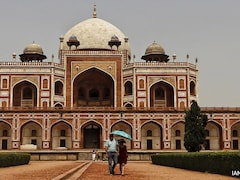
Study reveals black crust from pollution weakens Humayuns Tomb sandstone
- Written by Debosmita Ghosh | Saturday August 01, 2026
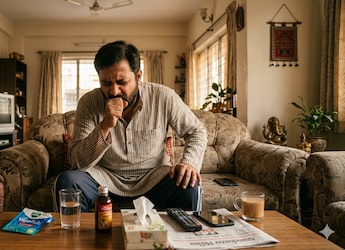
Lung cancer is often diagnosed at an advanced stage because its early symptoms are easy to overlook. A persistent cough is among the most commonly ignored warning signs.


................................ Advertisement ................................

Blog | Well Done, Delhi. You've Turned Lung Sacrifice Into A Badge Of HonourSaikat Kumar Bose
Monday November 10, 2025Till some years back, Delhiites would ask angry questions to those in power about the capitals annual tryst with toxic air. This has changed. Those in the driving seat dont see the need to answer now.
Opinion | Why Indians Have Just Given Up On Air Pollution CrisisTanushree Ganguly
Friday December 20, 2024While some may argue that people in Delhi are now more aware of air pollution than they were a decade back, my rebuttal would be that awareness does not mean that people are concerned.
Opinion | You Must Outrage Over Filthy Air More Than Once A YearJyoti Pande Lavakare
Tuesday December 10, 2024Delhi welcomed us with monsoon rains and mangos. We were home. Fast forward a couple of years, in the winter of 2012, I found myself in denial about something other parents, mostly expats, were calling toxic air.
Opinion | Delhi's Air Pollution Situation Is Like A Bad MarriageNishtha Gautam
Friday November 22, 2024On a good day, such as today, the AQI reading in Delhi is 407. We are jubilant at the sickly sunshine trickling through the slightly dissipated smog. At least its not 1600.
दिवाली... पराली... सियासी जुगाली!Ashwini kumar
Monday November 18, 2024दिल्ली-एनसीआर में प्रदूषण का समाधान तो आज तक मिला नहीं. हर साल चिंतित होकर हम-आप सांसों की तकलीफ के साथ-साथ दिल और ब्लड प्रेशर के मरीज भी क्यों बनें?


