


- Home/
- Tehran's Toxic Skies: When Iran War Begins To Resemble Chemical Warfare
Tehran's Toxic Skies: When Iran War Begins To Resemble Chemical Warfare
Written by Amit Chaturvedi | Updated: March 25, 2026 11:53 IST
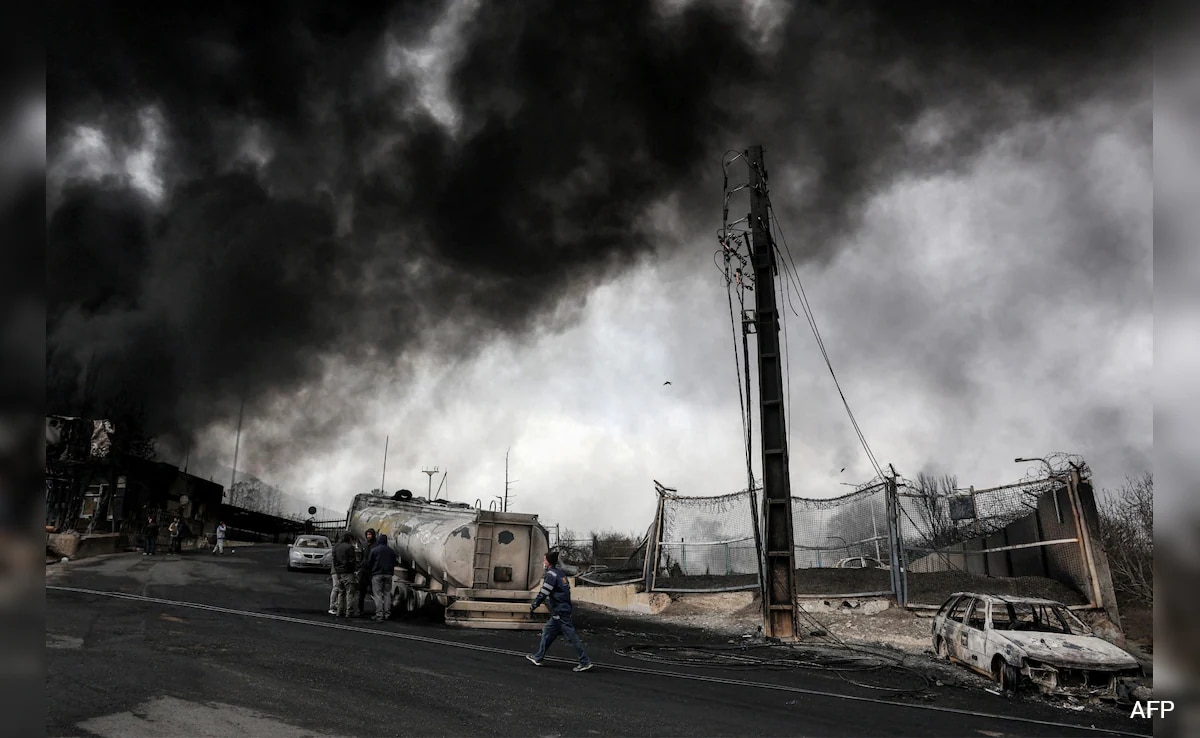
Tehran is seen covered in thick smoke after the strike on oil depots
Highlights
- Thick smoke and black rain followed strikes on Tehran's oil depots and refinery
- Air pollution includes soot, oil particles, and sulphur dioxide causing health issues
- Black rain occurs when pollutants mix with precipitation, spreading toxic chemicals
Thick plumes of smoke rising from burning fuel depots, darkened skies and reports of "black rain" - these are some of the scenes from Tehran as described by reporters, social media users and others after the recent strikes on oil facilities. Iran's capital has been left grappling with an air quality emergency that experts warn could have serious health consequences. Satellite images show fires at multiple sites - including the Shahran depot and Tehran refinery - continuing for days after the attacks. Residents described headaches, eye irritation and breathing difficulties as smoke containing soot, oil particles and sulphur dioxide spread across the Tehran.
Also Read | Iran Says US, Israel Attacked Its Nuclear Facility Again
While Israel has acknowledged targeting fuel infrastructure, the longer-term impact of such strikes is now drawing attention. The United Nations Environment Programme (UNEP) has warned that smoke from burning oil can be directly inhaled by civilians, including children, raising concerns about both immediate and lasting health effects.
What Is Happening In The Air?
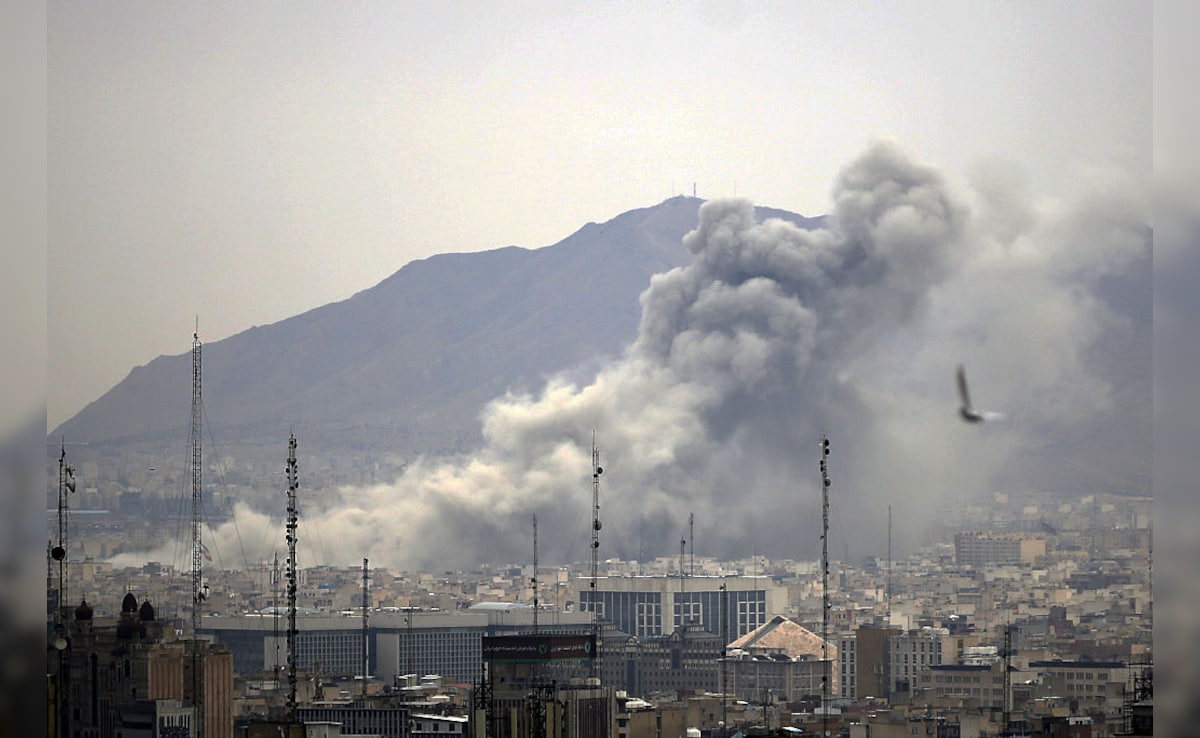
Tehran sky after the attack on oil fields. (Getty)
Experts say the phenomenon being reported, which is being described as "black rain", is not unusual in large-scale fires involving fossil fuels. According to research cited in Nature, black rain occurs when airborne pollutants mix with precipitation, effectively pulling toxic particles down to the ground.
These pollutants can include chemicals such as benzene and toluene, both linked to cancer risks. The research further notes that raindrops act like "sponges", absorbing contaminants as they fall - a process that can explain reports from Tehran residents of oily, dark rainfall and residue settling on streets, cars and even water sources.
Tehran's geography may be worsening the situation. Nestled near the Alborz mountains, the city is prone to temperature inversions, a meteorological condition that traps polluted air close to the ground, preventing it from dispersing. This means contaminants from the fires can linger longer and at higher concentrations.
Health Risks: Immediate And Long-Term
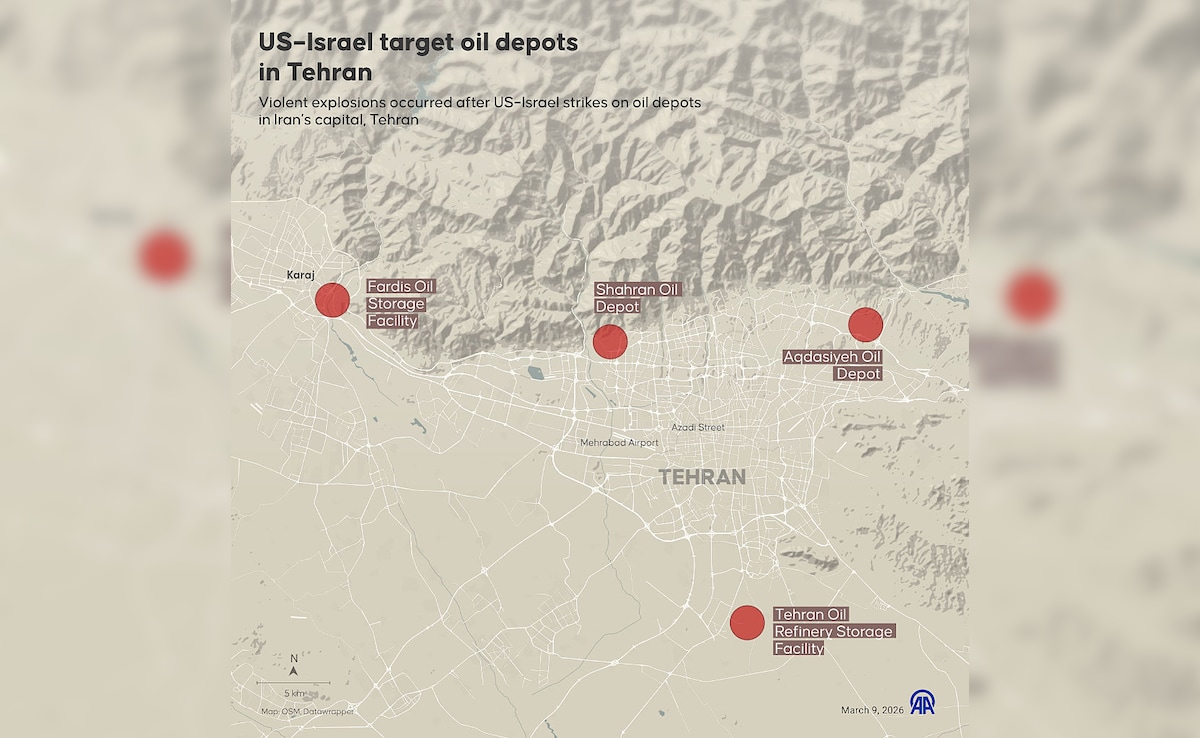
Iran's oil fields attacked during the war. (Getty)
Medical experts say exposure to such air can have both short- and long-term consequences. Symptoms reported by residents, such as breathing difficulty and skin irritation, are consistent with exposure to pollutants released by oil fires.
Narges Bajoghli, Associate Professor of Middle East Studies at Johns Hopkins University, told Al Jazeera that fine particles can lodge deep in the lungs, where they may remain for months or even years. "In the lungs, they will create conditions that will make it difficult for you to breathe, and over time, can lead to development of cancer", adding that children an elderly are particularly vulnerable.
Scientists cited in the Nature report add that inhaling such polluted air can also trigger cardiovascular issues, including heart attacks and strokes, especially in those with pre-existing conditions. There are also concerns about longer-term effects such as cognitive impairment and DNA damage.
Beyond the air, environmental risks are also emerging. The UNEP has warned that pollutants from the fires can seep into soil and water systems, potentially contaminating crops and groundwater.
A Question Of Classification
The unfolding situation has also sparked a broader debate: When does environmental destruction in Iran war begin to resemble something more?
Analysts like Bajoghli argue that while such incidents are not classified as chemical weapons use under international law - which requires the deliberate deployment of toxic agents - the impact on civilians can be strikingly similar. The comparison has been drawn to historical cases such as the use of Agent Orange during the Vietnam War, where long-term health damage followed chemical exposure.
However, under international humanitarian law, energy infrastructure such as oil depots can be considered legitimate military targets if they contribute to an adversary's war effort and offer a clear military advantage, even though such attacks can result in significant environmental and civilian harm.
Living With The Fallout
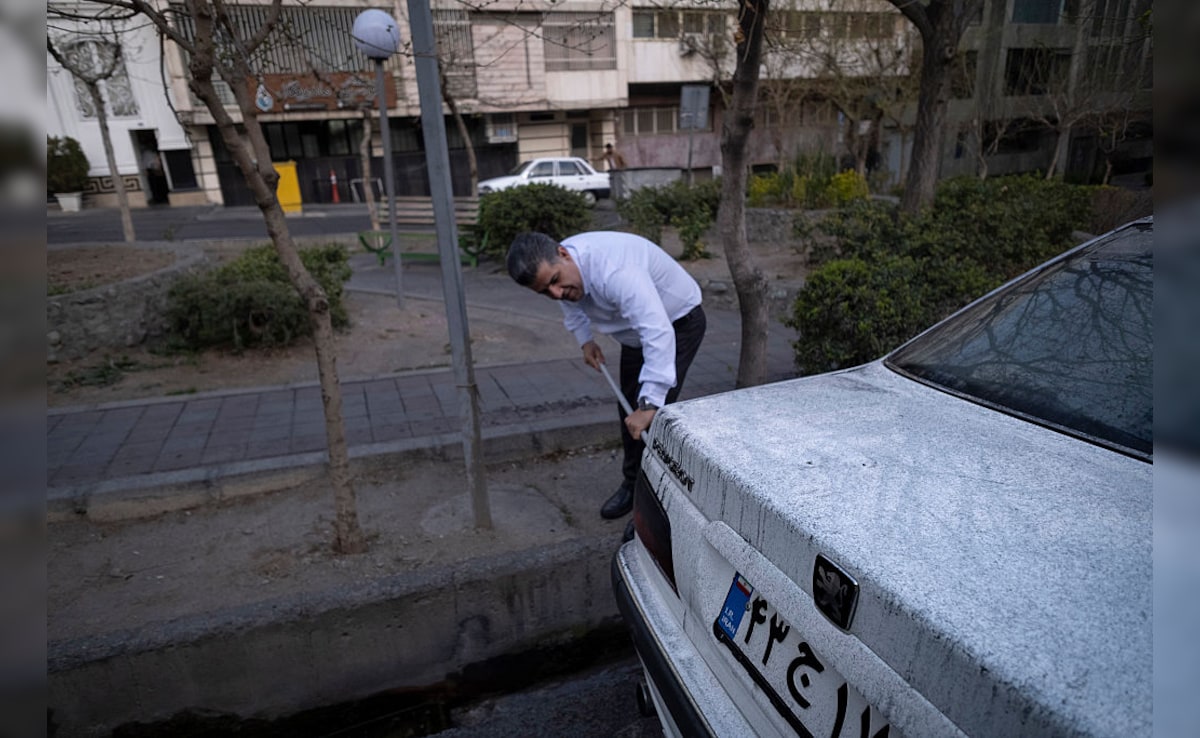
A man cleaning his car covered with oil-soot residue in Tehran. (Getty)
For residents of Tehran, the distinction may matter less than the reality on the ground. Reports of "unbreathable" air, blackened streets and contaminated rainwater point to a city dealing not just with the immediate effects of conflict, but with a growing public health concern.
According to IQ Air, the concentration of PM2.5 - the pollutant that poses the greatest threat to health - in Tehran's air is 20.2 micrograms per cubic metre, four times the World Health Organisation's annual limit weeks after the attack on the oil refineries.
Doctors have advised people to stay indoors, use protective masks and avoid exposure to rain - precautions that underscore the seriousness of the situation.
Published: March 25, 2026 11:49 IST
also read
 Written by Dr Sabine Kapasi | Tuesday September 29, 2026
Air pollution is often discussed as a cause of respiratory disease, but its effects extend to the heart and blood vessels.
- Edited by Debanish Achom | Monday September 28, 2026 , New Delhi
The steps include doubling parking charges, a complete ban on construction and demolition activity and work-from-home for government and private employees
- Written by Debosmita Ghosh | Friday September 25, 2026
Air purifiers are mainly designed to clean pollutants that are suspended in the air. A HEPA filter can trap very small particles and may help reduce indoor levels of particulate matter, dust, pollen and some other airborne particles. However, the performance of a purifier depends on several factors.
- Written by Dr Ankit Kumar Sinha | Friday September 25, 2026
To improve respiratory health, it is important to minimise exposure to polluted air, enhance indoor ventilation, adhere to workplace safety regulations, and promote physical activity.
- Tuesday September 22, 2026 , Mumbai
The court had on Monday taken suo motu (on its own) cognizance of the issue of severe noise and air pollution caused during processions.
................................ Advertisement ................................

Blog | Well Done, Delhi. You've Turned Lung Sacrifice Into A Badge Of HonourSaikat Kumar Bose
Monday November 10, 2025Till some years back, Delhiites would ask angry questions to those in power about the capitals annual tryst with toxic air. This has changed. Those in the driving seat dont see the need to answer now.
Opinion | Why Indians Have Just Given Up On Air Pollution CrisisTanushree Ganguly
Friday December 20, 2024While some may argue that people in Delhi are now more aware of air pollution than they were a decade back, my rebuttal would be that awareness does not mean that people are concerned.
Opinion | You Must Outrage Over Filthy Air More Than Once A YearJyoti Pande Lavakare
Tuesday December 10, 2024Delhi welcomed us with monsoon rains and mangos. We were home. Fast forward a couple of years, in the winter of 2012, I found myself in denial about something other parents, mostly expats, were calling toxic air.
Opinion | Delhi's Air Pollution Situation Is Like A Bad MarriageNishtha Gautam
Friday November 22, 2024On a good day, such as today, the AQI reading in Delhi is 407. We are jubilant at the sickly sunshine trickling through the slightly dissipated smog. At least its not 1600.
दिवाली... पराली... सियासी जुगाली!Ashwini kumar
Monday November 18, 2024दिल्ली-एनसीआर में प्रदूषण का समाधान तो आज तक मिला नहीं. हर साल चिंतित होकर हम-आप सांसों की तकलीफ के साथ-साथ दिल और ब्लड प्रेशर के मरीज भी क्यों बनें?


