


- Home/
- Vehicles Main Cause Of Delhi-NCR Air Pollution: Air Quality Body
Vehicles Main Cause Of Delhi-NCR Air Pollution: Air Quality Body
Press Trust of India | Updated: January 21, 2026 19:29 IST
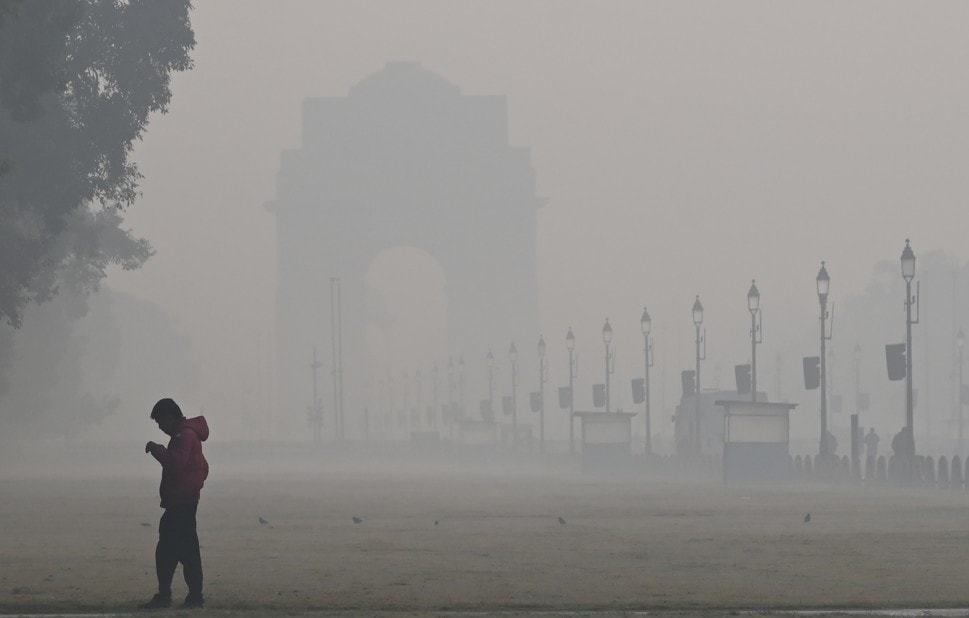
CAQM recommended time-bound phasing out of polluted vehicles.
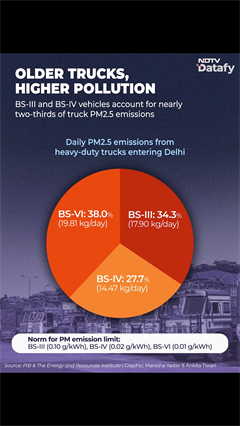
The Commission for Air Quality Management (CAQM)told the Supreme Court on Wednesday that vehicular pollution is the highest contributor to air pollution in Delhi-NCR and recommended 15 long-term measures to improve the worsening Air Quality Index (AQI).
Appearing for CAQM, Additional Solicitor General Aishwarya Bhati told a bench comprising Chief Justice of India Surya Kant and Justices Joymalya Bagchi and Vipul M Pancholi that a meta-analysis of studies from 2015 to 2025 attributes PM2.5 in Delhi to a mix of primary emissions and secondary particulate formation from sources within the National Capital Region (NCR).
The CAQM recommended the following measures to be introduced in a phased manner:
*Time-bound phasing out of polluted vehicles from Delhi-NCR based on emission potential.
*Strengthening of PUC 2.0 and monitoring of on-road vehicles with remote sensing devices.
*Augmenting Regional Rail Transport and Metro Rail network with more lines and stations in Delhi and NCR.
*Developing Multi-Modal Transport hubs connecting Metro, Regional Rapid Transit System.
*Ensuring last-mile connectivity along with a real-time passenger information system with location-based tracking of public transport.
*Reviewing and revising respective electric vehicle policies to accelerate the transition of all vehicles to zero tailpipe emission vehicles in Delhi-NCR. Giving higher incentives to owners for scrapping their old vehicles.
*Expanding EV charging infrastructure including swappable battery stations expeditiously commensurate with vehicle growth.
*Permitting retrofitting of vehicles to EV certification by ARAI/ICAT.
*Augmenting city public bus service through E-buses/ CNG according to model yardsticks and service level benchmark of Ministry of Housing and Urban Administration (MoHUA) based on population.
*Developing a plan for CNG/ LNG fuelling network in NCR and on highways to shift long-haul trucking and other commercial vehicles to gas.
*Installing ANPR cameras and automated RFID ensuring Multi-Lane Free Flow enabled Toll/ Cess collection at all border entry points of Delhi.
*Deploying integrated traffic management system in Delhi and other major urban agglomerates, particularly Noida, Greater Noida, Ghaziabad, Meerut, Gurugram, Faridabad and Sonipat for smooth and improved traffic movement.
*Implementing parking area management plans in Delhi and NCR.
*Imposing higher environmental protection charges.
*Intensifying enforcement through technology-based solutions such as automatic number plate recognition, radio frequency identification, remote sensing techniques, AI-driven surveillance etc.
(Except for the headline, this story has not been edited by NDTV staff and is published from a syndicated feed.)
Published: January 21, 2026 19:29 IST
 Reported by Reet Kaur Sahni | Friday August 07, 2026
As per the ministry, prior Environmental Clearance becomes mandatory for data centres depending on their physical footprint under Schedule 8 of the EIA Notification, 2006.
- Written by Sambhav Kumar | Thursday August 06, 2026
Keerthy Suresh's 41-hour no-sleep stretch highlights the intense demands many professionals face, but experts warn that prolonged sleep deprivation should never become routine.
- Written by Sambhav Kumar | Wednesday August 05, 2026
Preliminary evidence suggests the blood filtration treatment could reduce some microplastic particles, though findings are limited and require more study.
- Monday August 03, 2026 , New Delhi
Study reveals black crust from pollution weakens Humayuns Tomb sandstone
- Written by Debosmita Ghosh | Saturday August 01, 2026
Lung cancer is often diagnosed at an advanced stage because its early symptoms are easy to overlook. A persistent cough is among the most commonly ignored warning signs.


................................ Advertisement ................................

Blog | Well Done, Delhi. You've Turned Lung Sacrifice Into A Badge Of HonourSaikat Kumar Bose
Monday November 10, 2025Till some years back, Delhiites would ask angry questions to those in power about the capitals annual tryst with toxic air. This has changed. Those in the driving seat dont see the need to answer now.
Opinion | Why Indians Have Just Given Up On Air Pollution CrisisTanushree Ganguly
Friday December 20, 2024While some may argue that people in Delhi are now more aware of air pollution than they were a decade back, my rebuttal would be that awareness does not mean that people are concerned.
Opinion | You Must Outrage Over Filthy Air More Than Once A YearJyoti Pande Lavakare
Tuesday December 10, 2024Delhi welcomed us with monsoon rains and mangos. We were home. Fast forward a couple of years, in the winter of 2012, I found myself in denial about something other parents, mostly expats, were calling toxic air.
Opinion | Delhi's Air Pollution Situation Is Like A Bad MarriageNishtha Gautam
Friday November 22, 2024On a good day, such as today, the AQI reading in Delhi is 407. We are jubilant at the sickly sunshine trickling through the slightly dissipated smog. At least its not 1600.
दिवाली... पराली... सियासी जुगाली!Ashwini kumar
Monday November 18, 2024दिल्ली-एनसीआर में प्रदूषण का समाधान तो आज तक मिला नहीं. हर साल चिंतित होकर हम-आप सांसों की तकलीफ के साथ-साथ दिल और ब्लड प्रेशर के मरीज भी क्यों बनें?


