


- Home/
- Why Delhi's New EV Policy Aims At Two And Three Wheelers
Why Delhi's New EV Policy Aims At Two And Three Wheelers
Reported by Subham Singh | Updated: July 02, 2026 06:31 IST
Two-wheelers account for 25 per cent of vehicular PM2.5 pollution.
Delhi's newly approved EV Policy is poised to cut Delhi's air pollution significantly. The policy targets to curb pollution from vehicle categories that contribute the most to transport-related pollution.
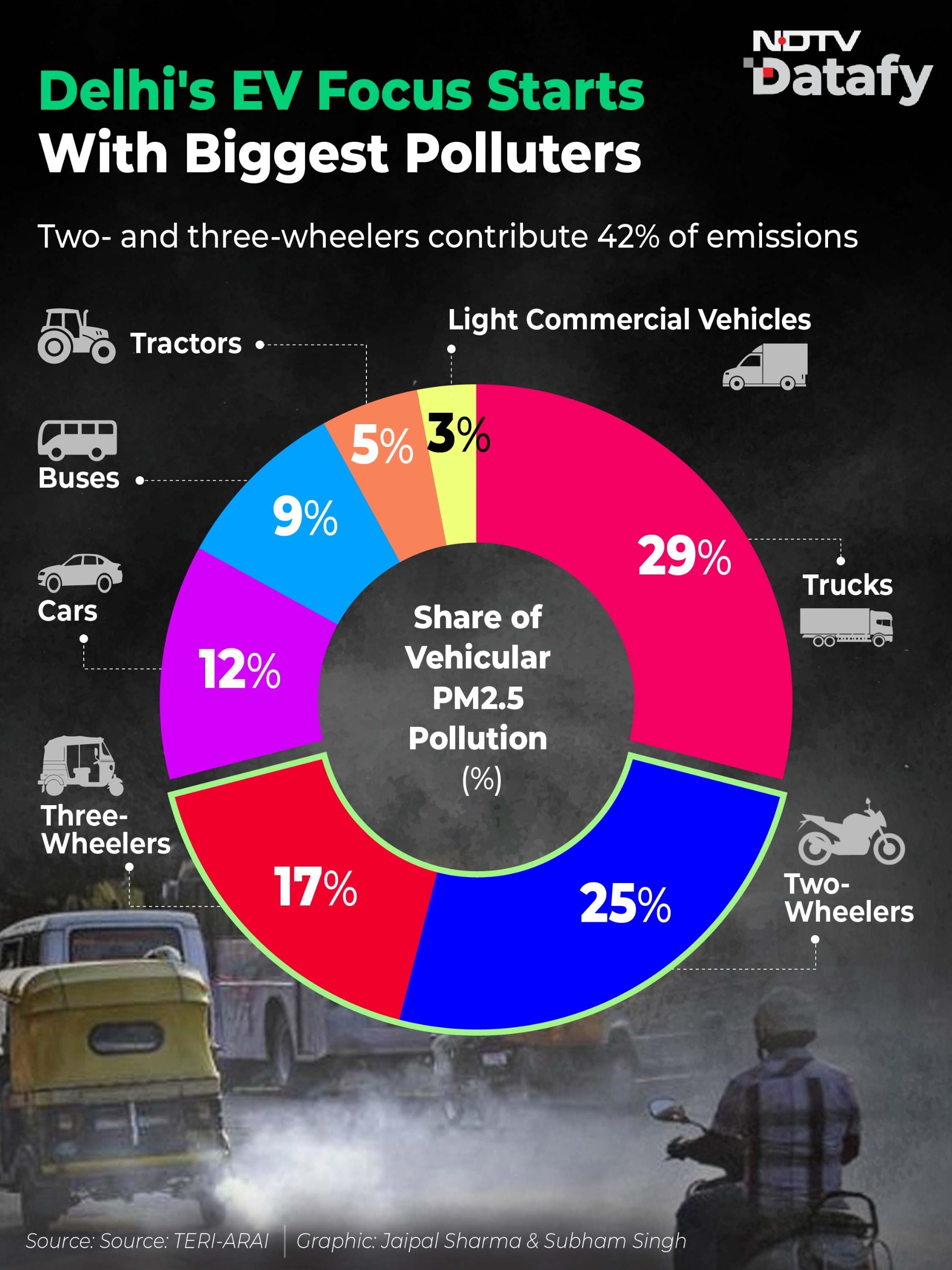
Two-wheelers account for 25 per cent of vehicular PM2.5 pollution, while three-wheelers contribute another 17 per cent. Together, these two categories make up 42 per cent of pollution from the transport sector, making them the largest targets for any pollution-control strategy, according to a TERI-ARAI study on PM2.5 emissions from automobiles in Delhi-NCR.
The new policy proposes to stop the registration of new petrol-powered two-wheelers from April 2028 and restrict new registration of CNG-powered three-wheelers from the end of this year.
Data from the Vahan dashboard shows that Delhi's two-wheeler market continues to be dominated by petrol vehicles. In 2025, more than 4.92 lakh petrol two-wheelers were registered in the capital, compared to around 37,000 electric two-wheelers. Even in 2026 till June, petrol vehicles account for the majority of new registrations, with over 2.54 lakh petrol two-wheelers registered so far against 25,424 EVs. Petrol-powered category consistently accounted for more than half of all new two-wheeler registrations between 2020 and 2026, highlighting why the segment remains a major focus of the policy.
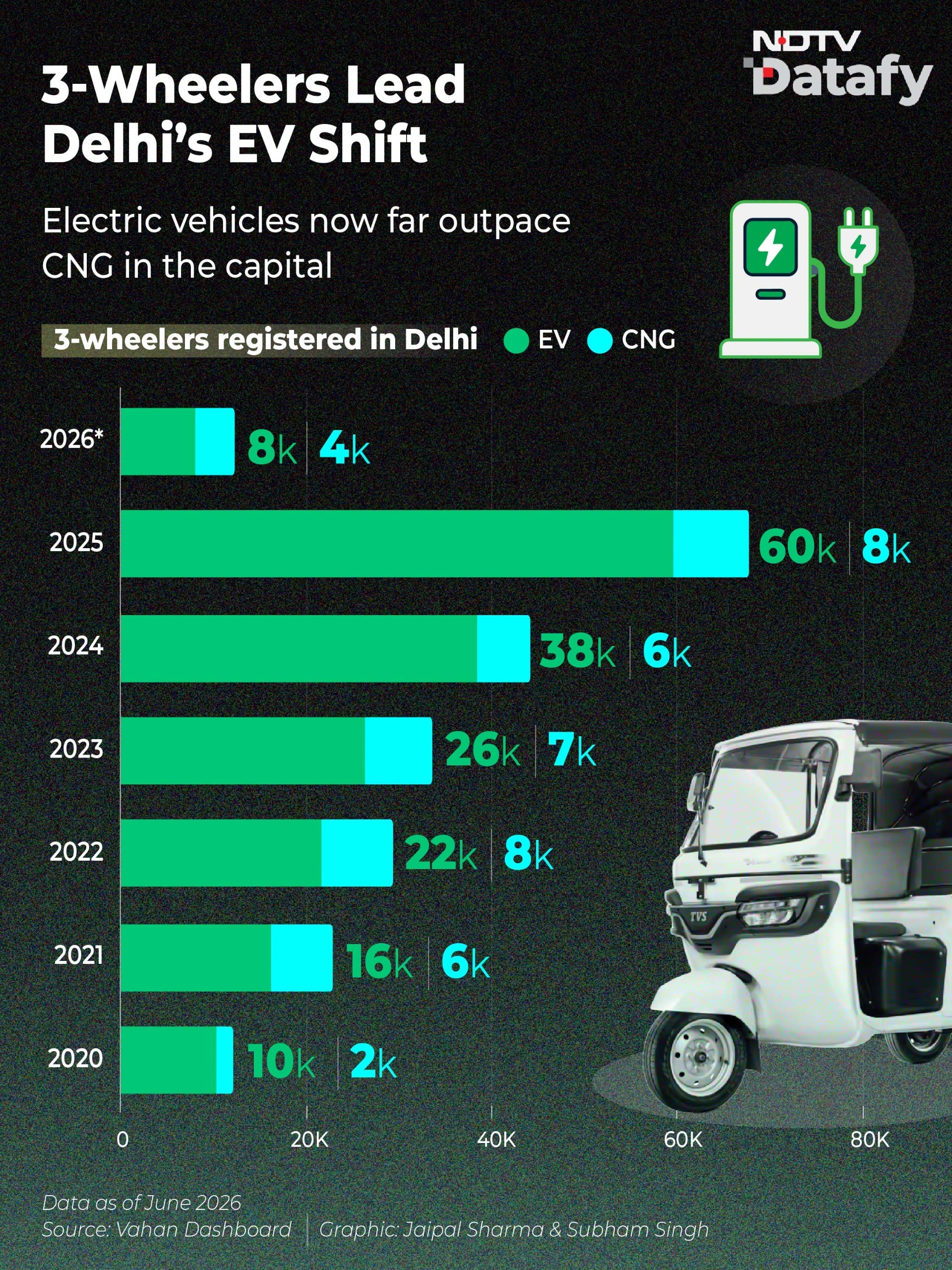
The picture is quite different in the three-wheeler segment, where the transition towards electric mobility is already underway. In 2025, Delhi registered 59,543 electric three-wheelers, compared to just 8,180 CNG three-wheelers. The trend was visible even earlier, with electric registrations surpassing CNG registrations every year since 2020. In 2026, electric three-wheeler registrations stand at 8,005, nearly double the 4,237 CNG vehicles registered during the same period.
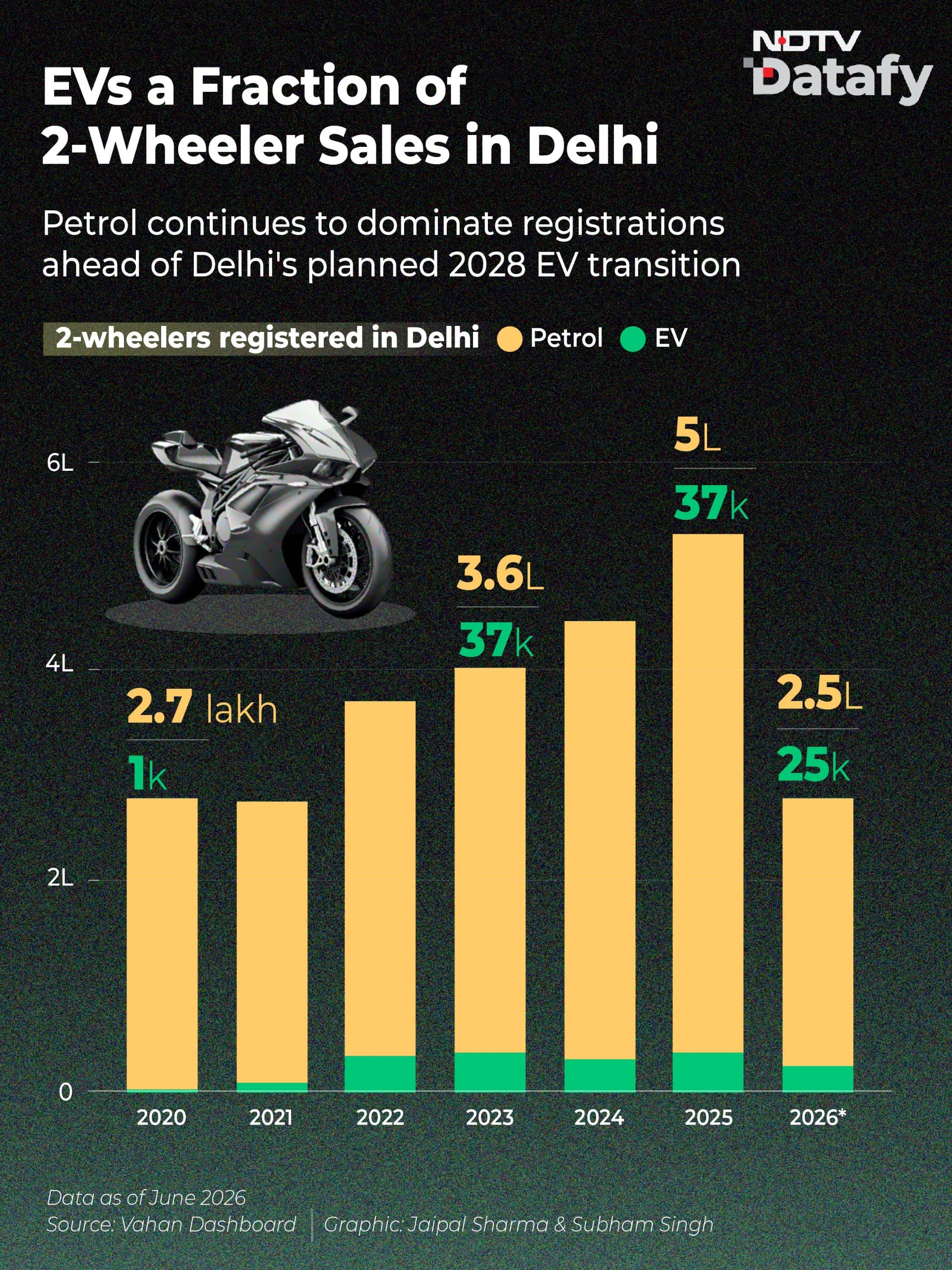
Delhi's registration data reveals two contrasting trends. The shift to electric vehicles is already underway among three-wheelers, where EV registrations now far outnumber CNG vehicles. However, the two-wheeler market remains heavily dependent on petrol, with EVs still accounting for a small fraction of new registrations. That is precisely where Delhi's new EV policy is placing its biggest bet on transforming the vehicle segment that contributes 25 per cent of transport-related PM2.5 pollution.
Published: July 02, 2026 02:03 IST
 Reported by Reet Kaur Sahni | Tuesday September 29, 2026
Starting November 1, petrol and diesel vehicles registered outside Delhi and not meeting BS-VI standards will be banned from entering the city, though CNG and electric vehicles are exempt.
- Written by Dr Sabine Kapasi | Tuesday September 29, 2026
Air pollution is often discussed as a cause of respiratory disease, but its effects extend to the heart and blood vessels.
- Edited by Debanish Achom | Monday September 28, 2026 , New Delhi
The steps include doubling parking charges, a complete ban on construction and demolition activity and work-from-home for government and private employees
- Written by Debosmita Ghosh | Friday September 25, 2026
Air purifiers are mainly designed to clean pollutants that are suspended in the air. A HEPA filter can trap very small particles and may help reduce indoor levels of particulate matter, dust, pollen and some other airborne particles. However, the performance of a purifier depends on several factors.
- Written by Dr Ankit Kumar Sinha | Friday September 25, 2026
To improve respiratory health, it is important to minimise exposure to polluted air, enhance indoor ventilation, adhere to workplace safety regulations, and promote physical activity.



................................ Advertisement ................................

Blog | Well Done, Delhi. You've Turned Lung Sacrifice Into A Badge Of HonourSaikat Kumar Bose
Monday November 10, 2025Till some years back, Delhiites would ask angry questions to those in power about the capitals annual tryst with toxic air. This has changed. Those in the driving seat dont see the need to answer now.
Opinion | Why Indians Have Just Given Up On Air Pollution CrisisTanushree Ganguly
Friday December 20, 2024While some may argue that people in Delhi are now more aware of air pollution than they were a decade back, my rebuttal would be that awareness does not mean that people are concerned.
Opinion | You Must Outrage Over Filthy Air More Than Once A YearJyoti Pande Lavakare
Tuesday December 10, 2024Delhi welcomed us with monsoon rains and mangos. We were home. Fast forward a couple of years, in the winter of 2012, I found myself in denial about something other parents, mostly expats, were calling toxic air.
Opinion | Delhi's Air Pollution Situation Is Like A Bad MarriageNishtha Gautam
Friday November 22, 2024On a good day, such as today, the AQI reading in Delhi is 407. We are jubilant at the sickly sunshine trickling through the slightly dissipated smog. At least its not 1600.
दिवाली... पराली... सियासी जुगाली!Ashwini kumar
Monday November 18, 2024दिल्ली-एनसीआर में प्रदूषण का समाधान तो आज तक मिला नहीं. हर साल चिंतित होकर हम-आप सांसों की तकलीफ के साथ-साथ दिल और ब्लड प्रेशर के मरीज भी क्यों बनें?


