


- Home/
- Yamuna Still Toxic Despite Above-Normal Rainfall In Delhi: Report
Yamuna Still Toxic Despite Above-Normal Rainfall In Delhi: Report
Reported by Ishika Verma | Updated: May 12, 2026 21:36 IST
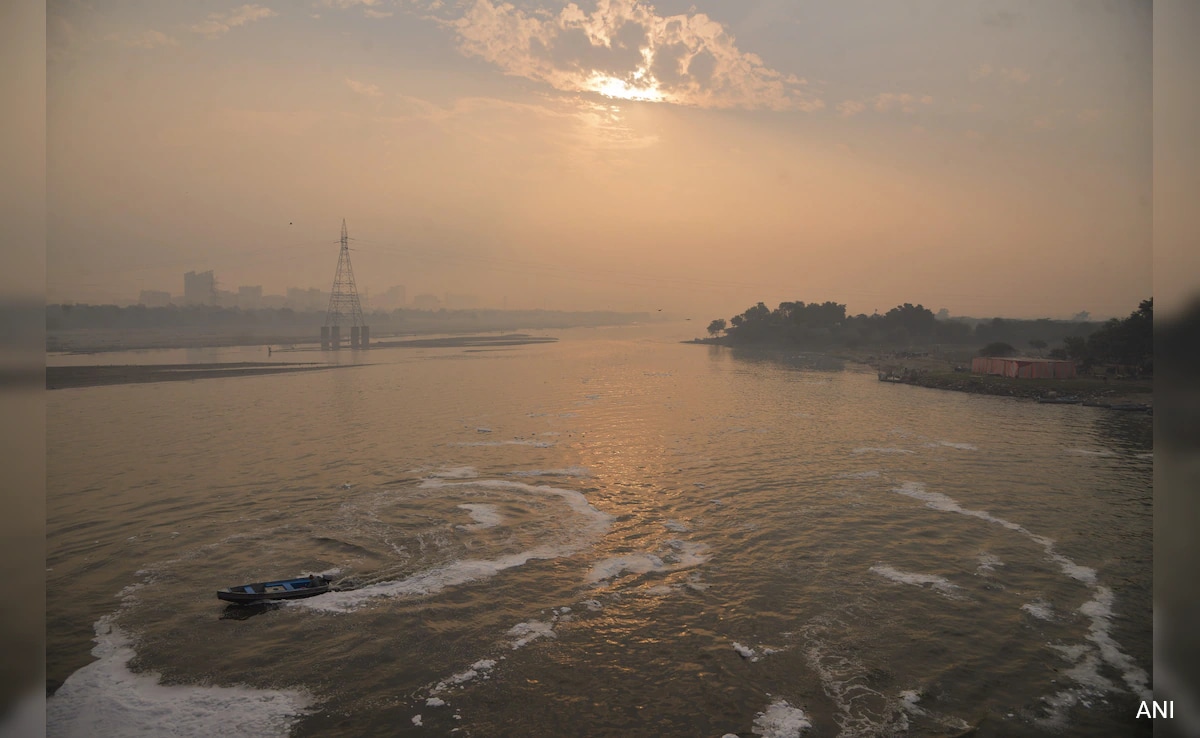
Yamuna's condition worsens sharply as it moves deeper into Delhi.
Highlights
- Delhi saw one of its wettest Aprils in recent years. But the extra rain has done little to clean the Yamuna
- While a few stretches showed improvement, pollution levels across downstream sections continue to remain high
- At Palla, the entry point of the river into the capital, water quality remained comparatively better
New Delhi :
Delhi saw one of its wettest Aprils in recent years. But the extra rain has done little to clean the Yamuna.
Fresh data released by the Delhi Pollution Control Committee (DPCC) shows that large stretches of the river flowing through the capital remain severely polluted.
The latest “Water Quality Status of River Yamuna” report, based on samples collected on April 7, 2026, paints a grim picture of the river despite above-normal rainfall during March and April.
While a few stretches showed marginal improvement compared to April 2025, pollution levels across most downstream sections of the Yamuna continue to remain far above permissible limits.
According to India Meteorological Department (IMD) data, Delhi had already recorded 28.2 mm rainfall by mid-April, nearly 147 per cent above normal and the city's highest April rainfall since 2010.
From Cleaner Waters At Palla To Toxic Stretches Downstream
The contrast in Yamuna's condition begins almost immediately after the river enters Delhi.
At Palla, the entry point of the river into the capital, water quality remained comparatively better. It was also the only stretch where dissolved oxygen (DO) levels met the prescribed standard required to support aquatic life.
The DO level at Palla stood at 5.2 mg/l in April 2026, slightly lower than 5.4 mg/l recorded in April 2025, but still above the minimum standard of 5 mg/l.
The Biological Oxygen Demand (BOD) level at Palla also improved from 4 mg/l last year to 3 mg/l this year, indicating lower organic pollution.
But the river's condition worsens sharply as it moves deeper into Delhi.
Wazirabad To ITO: The River Starts Choking
At Wazirabad:
BOD improved slightly from 6 mg/l in 2025 to 5 mg/l in 2026.
DO levels rose marginally from 3.4 mg/l to 4.6 mg/l, but still remained below safe standards.
Faecal coliform levels, an indicator of sewage contamination, jumped sharply from around 5,400 MPN/100 ml to nearly 9,200 MPN/100 ml.
The situation turned far worse at the ISBT Bridge stretch.
According to the DPCC report:
BOD surged from 33 mg/l in 2025 to 48 mg/l in 2026.
DO levels remained “NIL” in both years.
Faecal contamination continued to remain extremely high.
At ITO Bridge, there was virtually no improvement:
BOD remained critically high at 40 mg/l.
DO again remained “NIL”.
Sewage contamination levels continued to remain in lakhs.
At Nizamuddin Bridge:
BOD reduced slightly from 38 mg/l to 34 mg/l.
DO remained absent.
Pollution levels continued to stay extremely high.
Hindon Cut, Okhla, And Asgarpur Among Worst Stretches
Further downstream, the Yamuna continues to deteriorate.
Hindon Cut remained among the most polluted stretches of the river, recording “NIL” dissolved oxygen and BOD levels of 84 mg/l.
At Okhla Barrage:
BOD reduced marginally from 46 mg/l to 44 mg/l.
DO levels remained “NIL”.
At Asgarpur:
BOD increased further from 56 mg/l in 2025 to 58 mg/l in 2026.
Faecal coliform levels reached nearly 3.1 lakh MPN/100 ml, many times higher than permissible limits.
The Biggest Warning Sign: No Oxygen In The River
The most alarming finding in the report is the continued absence of dissolved oxygen across several stretches of the Yamuna inside Delhi.
ISBT Bridge, ITO Bridge, Nizamuddin Bridge, Hindon Cut, Okhla Barrage, and Asgarpur all recorded “NIL” dissolved oxygen levels this year, similar to last year's findings.
Environmental experts say such conditions make the survival of fish and other aquatic organisms nearly impossible.
Under DPCC standards:
BOD should remain at 3 mg/l or below.
DO should be 5 mg/l or higher.
Faecal coliform levels should ideally remain below 500 MPN/100 ml.
Most stretches of the Yamuna inside Delhi continue to exceed these limits by a massive margin.
Years Of Cleanup Plans, Little Visible Change
For years, untreated sewage, industrial discharge and polluted drains flowing into the Yamuna have remained at the centre of Delhi's river pollution crisis.
Multiple governments have announced cleanup drives and sewage treatment projects, but the latest data suggests the river's ecological health remains critically weak.
Environmental experts have repeatedly pointed to inadequate sewage treatment capacity and poor drainage management as major reasons behind the continuing crisis.
Why Heavy Rainfall Has Not Been Enough
The comparison between April 2025 and April 2026 indicates that higher rainfall and increased river flow alone have not been enough to significantly improve water quality.
Experts continue to call for:
- Expansion of sewage treatment infrastructure,
- Better treatment of drains entering the river,
- Stricter monitoring of industrial discharge, and
- Long-term river restoration measures.
Published: May 12, 2026 21:36 IST
also read
Bhopal Unveils Futuristic 'Algae Tree' That Can Absorb As Much CO2 As 25 Trees, Sparks Buzz
Edited by Ritu SinghGreat Pacific Garbage Patch Fuels Microplastics, Contributing To Climate Change
Edited by Srishti Singh SisodiaChildhood Asthma On The Rise: Causes, Triggers, And Management Strategies
Written by Debosmita Ghosh
 Edited by Ritu Singh | Monday May 11, 2026
A single algae tree unit is claimed to be as effective as 25 adult trees in absorbing carbon dioxide and releasing oxygen.
- Edited by Srishti Singh Sisodia | Thursday May 07, 2026
As plastic tumbles against itself, it fragments, and a new study shows those fragments don't stay in the water.
- Written by Debosmita Ghosh | Tuesday May 05, 2026
Childhood asthma arises from a mix of genetic predisposition and environmental factors that inflame and narrow airways in children.
- Written by Dr Sharad Joshi | Tuesday May 05, 2026
Most people tend to look outside for reasons behind their worsening asthma symptoms, blaming factors like pollution, pollen, or changes in the weather.
- Friday May 01, 2026 , New Delhi
Climate change poses an escalating threat to brain health, with extreme heat, rapid humidity shifts and exposure to dust and sandstorms increasing the risk of having a stroke, according to a scientific statement by experts from the World Stroke Organ




................................ Advertisement ................................

Blog | Well Done, Delhi. You've Turned Lung Sacrifice Into A Badge Of HonourSaikat Kumar Bose
Monday November 10, 2025Till some years back, Delhiites would ask angry questions to those in power about the capitals annual tryst with toxic air. This has changed. Those in the driving seat dont see the need to answer now.
Opinion | Why Indians Have Just Given Up On Air Pollution CrisisTanushree Ganguly
Friday December 20, 2024While some may argue that people in Delhi are now more aware of air pollution than they were a decade back, my rebuttal would be that awareness does not mean that people are concerned.
Opinion | You Must Outrage Over Filthy Air More Than Once A YearJyoti Pande Lavakare
Tuesday December 10, 2024Delhi welcomed us with monsoon rains and mangos. We were home. Fast forward a couple of years, in the winter of 2012, I found myself in denial about something other parents, mostly expats, were calling toxic air.
Opinion | Delhi's Air Pollution Situation Is Like A Bad MarriageNishtha Gautam
Friday November 22, 2024On a good day, such as today, the AQI reading in Delhi is 407. We are jubilant at the sickly sunshine trickling through the slightly dissipated smog. At least its not 1600.
दिवाली... पराली... सियासी जुगाली!Ashwini kumar
Monday November 18, 2024दिल्ली-एनसीआर में प्रदूषण का समाधान तो आज तक मिला नहीं. हर साल चिंतित होकर हम-आप सांसों की तकलीफ के साथ-साथ दिल और ब्लड प्रेशर के मरीज भी क्यों बनें?


