
- Home/
- USHA x NDTV: From Uttar Pradesh To Bihar, Corporate Partnerships Drive Financial Freedom For Rural Women
USHA x NDTV: From Uttar Pradesh To Bihar, Corporate Partnerships Drive Financial Freedom For Rural Women
Team NDTV | Updated: December 26, 2025 17:05 IST
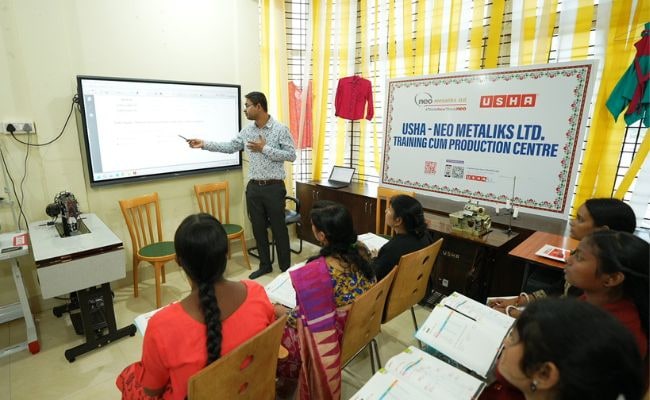
New Delhi:
A sewing machine is quietly changing lives in rural India and giving women a chance to earn and stand on their own feet. This story highlights how Usha Silai School is working with purpose-driven companies to support women in rural India. From Uttar Pradesh to Bihar, the focus is on one goal: give women the skills and confidence to earn with dignity. The training covers sewing, tailoring, basic business knowledge and emotional resilience. With new income and respect at home, women are gaining agency, families are becoming more balanced and villages are seeing real progress.
New Model Of Shared Prosperity
Across India's villages, the centuries-old belief that a man must earn while a woman tends to the home is slowly being challenged. As skill training reaches deeper rural pockets, women are not only stepping into income generation but are also becoming decision-makers within their households. This change has been made possible through corporate and community partnerships that work to build empowerment at the grassroots. Usha International is among the organisations shaping this shift.
Why Tata Power Joined Hands With Usha
Tata Power partnered with Usha International to combine their strengths and create impact where it matters. Usha brings experience in sewing and women's skill training, while Tata Power supports with community reach and on-ground networks. Together, they have built a model that focuses not just on learning a craft, but on overall empowerment. Women are trained in tailoring, basic life skills, digital and financial literacy and emotional well-being. From Training To Enterprise The programme's model encourages continuity over dependency. Once a woman completes her training, she receives an Usha sewing machine and is supported to start a micro-business in her village. She then trains others, triggering a chain reaction that spreads across communities. It is something like an ever-expanding circle, where, if one woman trains five more, and those five train 10 each, the effect becomes exponential.
Ahimsa Bharti: Homemaker To Business Owner
In Uttar Pradesh, 33-year-old Ahimsa Bharti's life changed within months of joining a 20-day training programme. Earlier, she relied on her husband's income, which was never enough to run the household without conflict. Today, her home has become a sewing centre where she trains other women and takes in tailoring orders. She now earns between Rs 7,000 and Rs 8,000 a month. The financial independence has altered the dynamics inside her home. Earlier, she says, nobody paid attention to her opinions. Now, her mother-in-law consults her about household decisions, and relatives treat her with respect. She also held a summer camp for teenage girls, where 13 students learned basic stitching lessons. One of them dreams of starting her own brand someday.
CSR Framework Supports Continuity
The initiative runs under CSR, but it is built to continue even after funding ends. Tata Power provides local reach and infrastructure, while Usha supplies machines, training material, and ongoing support. Training is standardised and monitored, so progress can be tracked with data. Since 2022, 756 women have benefited from the Usha-Tata Power partnership. The goal is to add 1,000 to 2,000 more women every year without losing quality.
Bihar Joins In
Bihar is seeing similar momentum. Magadh Sugar & Energy Ltd., part of the KK Birla Group, has partnered with Usha International to support women living in sugar mill neighbourhoods. Their training programme runs for 25 days and focuses on helping women build home-based tailoring units. Company representatives say the decision to collaborate with Usha was driven by one factor: proof of impact. When women earn, the entire village participates in that progress.
A Social Shift
What stands out across these case studies is that the most powerful transformation is not financial, it is emotional and social. Women learn to speak up in family discussions, daughters see their mothers as role models and households that once dismissed the idea of women working now depend on them for stability.
Vision Grows Stronger
What began as short-term sewing training has expanded into a movement that is redefining what rural livelihoods can look like. From one woman easing her family's burden to hundreds standing independently and thousands planning for futures that were once unimaginable, the model is proving that development rooted in dignity is development that lasts. Corporate partnerships like these are not just building skills, they are building futures.
Published: December 26, 2025 16:58 IST
 Team NDTV | Monday February 16, 2026
Odisha's Suchismita Sahu, Rajasthan's Preeti Prajapat, Manipur's Akhirun—Usha Silai School's Kushalta Ke Kadam celebrates these awardees, from homemakers to master trainers earning accolades
- Team NDTV | Thursday February 12, 2026
From Ladakh peaks to Assam fringes, Usha Silai School trains tribal women in Turtuk, Kargil & Dakhinkuchi—crafting livelihoods with armed forces, NHPC & NGOs. Stitching national resilience
- Team NDTV | Thursday January 29, 2026
From West Bengal's transgender tailors to Telangana's tribal seamstresses and Meghalaya's embroidery revivalists, Usha Silai School's Kushalta Ke Kadam partners with NIRDPR and state governments
- Team NDTV | Tuesday February 03, 2026
In Odisha's mining heartlands, Mahanadi Coalfields Limited teams with Usha Silai School's Kushalta Ke Kadam and Gram Utthan, empowering tribal women turning them into entrepreneurs
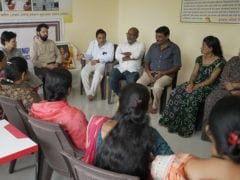
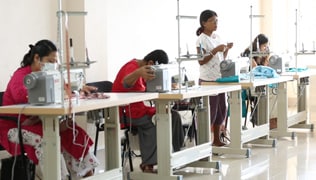
Do you want to be a part of the huge change that Usha Silai School is bringing about in the lives of millions of rural women? With just a simple click of a button, you can now contribute towards the opening of an Usha Silai School or support various other aspects of the school.
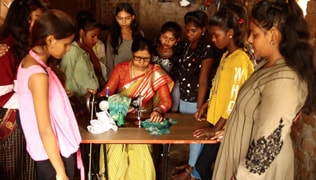
Kushalta Ke Kadam, an initiative by USHA Silai School and NDTV has entered its eighth season. The aim is to empower more women across rural India by teaching them sewing skills and helping them open new doors of opportunities for themselves. The initiative encourages rural women to become financially independent and entrepreneurs by taking up sewing and training others in their respective communities.
Since 2011, the USHA Silai School initiative has trained more than 12 lakh rural women through over 33,000 Silai schools, spanning over 20,751 villages across India.
The women earn Rs. 4,000 – 5,000 per month on an average, with the highest recorded monthly earning being Rs. 84,000 in a month. This earning works as a catalyst towards building their self-confidence, reducing gender inequities, and raising their stature within their families and in society at large.
Kushalta ke Kadam: Aiming for Independence Through Stitching
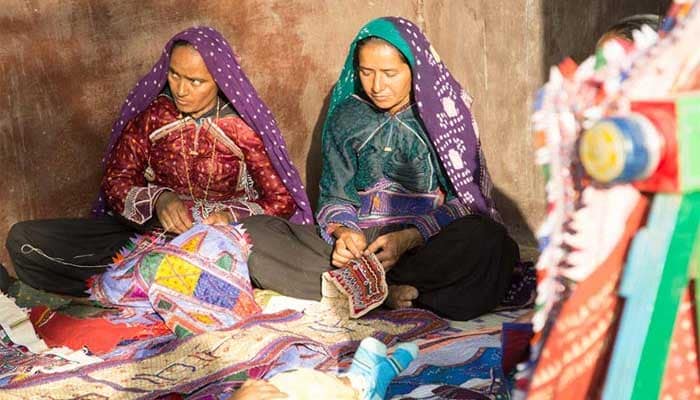
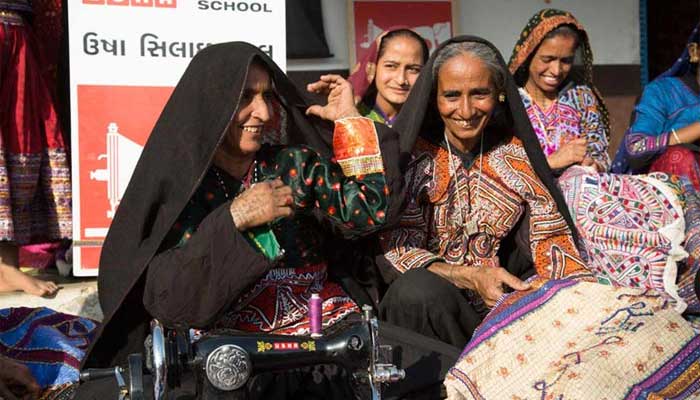
Rebari girls grow up learning traditional embroidery, which along with their new found sewing skills developed at Usha Silai Schools, is helping them earn a living.
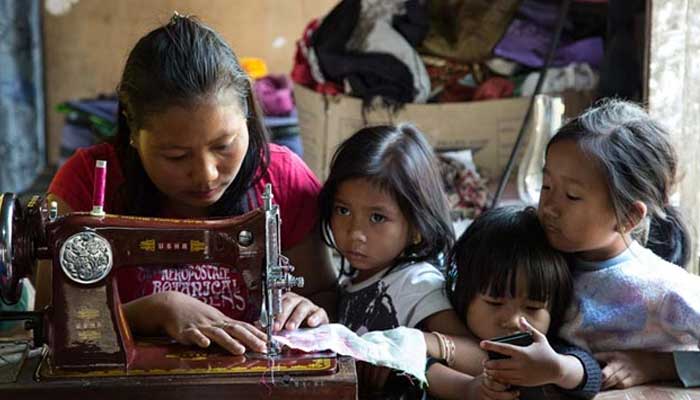
Usha Silai School has empowered many rural women to support their family and send their children to school.
The Usha Silai School, established in a small nondescript village that goes by the name of Kottai, is helping empower people from varied communities.
The all-inclusive Usha Silai School Programme covers the entire nation from hamlets tucked between hills to villages cast by the sea.
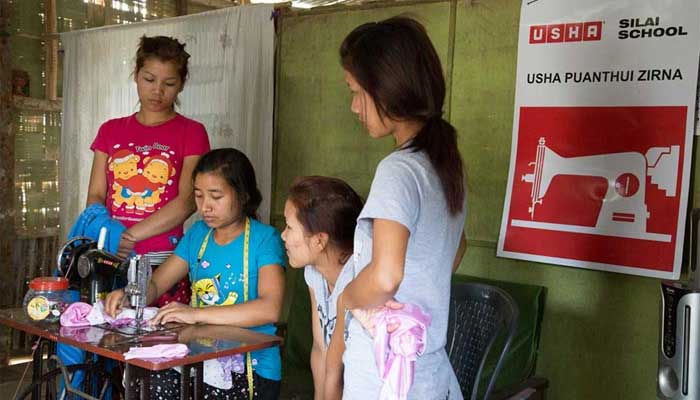
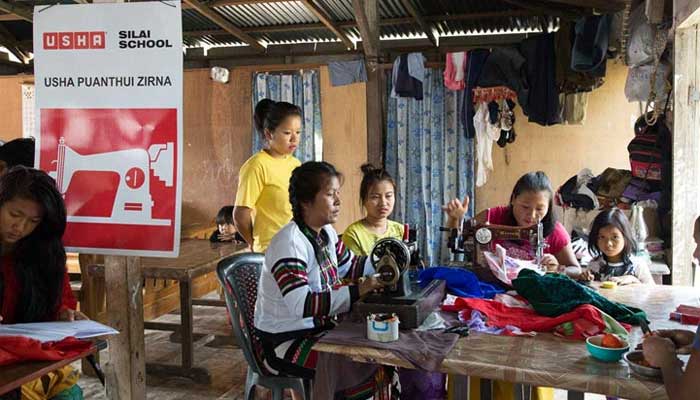
Vegetables farmers from the Mizoram hills earn very little given the topography of the area. Usha Silai Schools have played an important part in this region by skilling women to financially contribute towards their households.
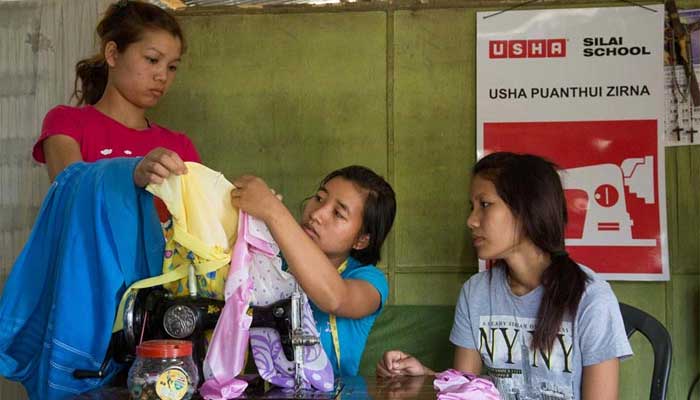
Usha Silai School learner Lucy has trained seven other women in her community, helping them to become financially independent.
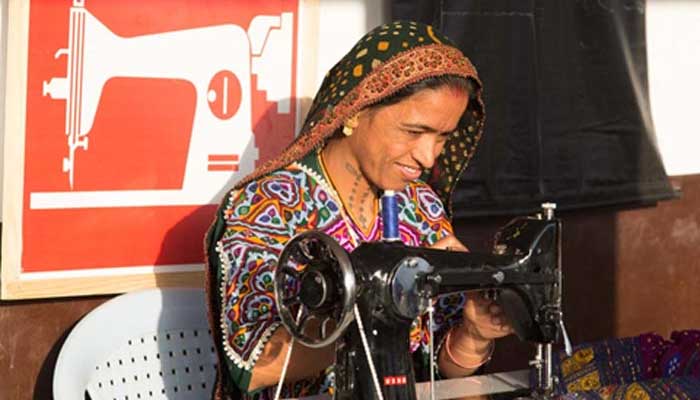
Women like Kaviben from the nomadic Rebari community are finally laying down their roots as they begin to gain financial independence and thereby stability through Usha Silai School.
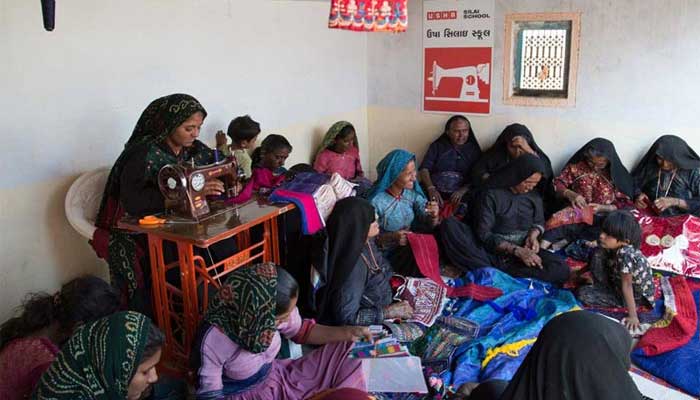
Usha Silai School, located in the Gujarat's Bhuj village, is enabling rural women to earn as much as Rs. 2,500-4,000 each month.
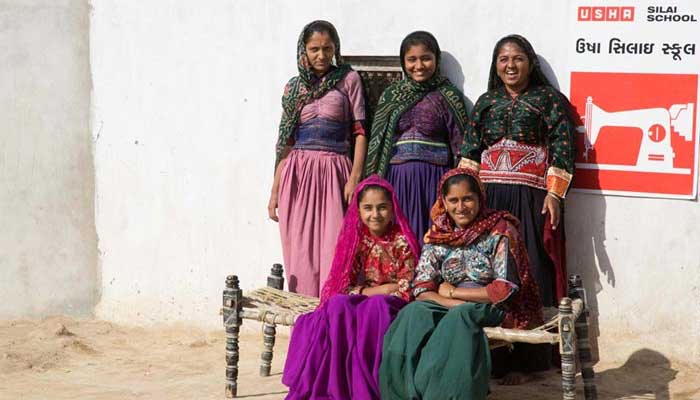
Usha Silai School, in association with a Gujarat based NGO called Kala Raksha, is trying to bring about a Silai revolution in Bhuj.
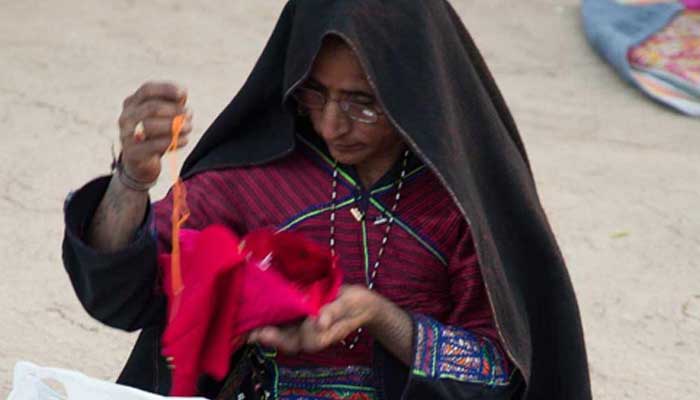
Besides training other women from their community, many Usha Silai School learners have become entrepreneurs in their own right.
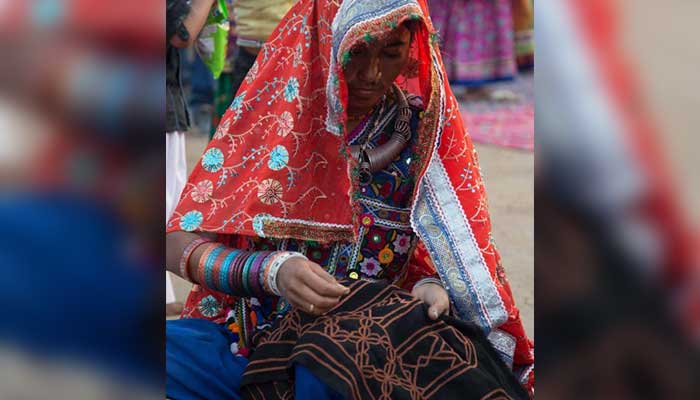
With sewing becoming easily accessible and lucrative, the silai schools are also helping revive traditional motifs and designs.
