




- Home/
- Here's How Lajjawati From Uttar Pradesh Is Battling Gender Inequalities
Here's How Lajjawati From Uttar Pradesh Is Battling Gender Inequalities
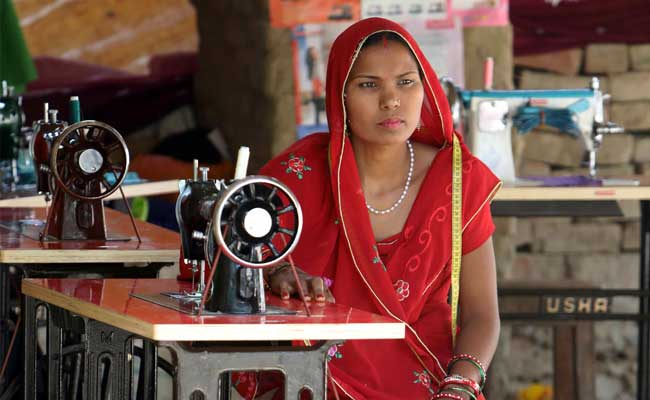
Puredev Khan Village, Barabanki District, Uttar Pradesh: The rate of women employment is extremely low in parts of Uttar Pradesh. Even for someone with a degree finding a job is a struggle, as Lajjawati found out. A resident of Puredev Khan village in the Barabanki district of Uttar Pradesh, Lajjawati completed her graduation, but that did not ensure her a suitable employment nor did it improve her life. Hardly any income, a dilapidated house that could barely shelter the family from rains, Lajjawati's tough life was getting tougher everyday.
Under these circumstances, Lajjawati was married off to a labourer who worked on a meager wage. Life did not get any better, for Lajjawati. The newlyweds were waging a daily battle of survival. Gradually, the financial strain intensified. From being a couple struggling to make ends meet, they were now parents, trying to cope with poverty and its related ailments that their children were suffering from. Their came a time when then had to raise money by selling their daily grocery items to foot the bills of the medicines.
It was at this juncture that government's Rajiv Gandhi Mahila Vikas Paiyojana that has been taking many women under its wing to help them start their own business, came to Lajjawati's rescue. The Usha Silai School, which has affiliation with the government proagramme, has deepened its network to help kick start the careers of as many women as possible simply by honing their basic skills of sewing and embroidery.
(Rajiv Gandhi Mahila Vikas Pariyojana) informed us about the Usha Silai School. They asked every woman, who knew how to sew, to join the 7-day training program, said Lajjawati.
As part of the program, women who completed the training receive the basic raw materials to start their own Silai schools.
Though, at first, it was challenging to convince the village men to allow their wives and daughter to come to her sewing center. She soon had regular students and subsequently, a regular income.
Now, it's been five years since she started her school and has trained over 60 women and young girls. Charging them each Rs 50 for a class, Lajjawati now earns approximately Rs 1500 monthly.
Having a regular source of income, Lajjawati has even managed to provide education to her children, renovate her house and expand her school by bringing in more sewing machines.
Yet, more than that, Lajjawati has changed the landscape of gender inequality in her village.
This changed when Lajjawati became one of the few women in the village who were self-employed. Women from her villages felt that learning sewing and stitching garments from home is a good way to earn extra income without having to actually step outside the house.
"There were times when I felt like committing suicide due to extreme poverty. But after seeing Lajjawati I was motivated to learn and joined the Silai School. Within two years I opened my own Silai School and today I have a steady income," says Babli, one of the students.
The new era of the Barabanki district of Uttar Pradesh sees blurred lines of gender inequality where more and more working women are receiving the same respect that is given to the working men.
Also Read: After She Lost Her Son Kalpana Kamadi Decided To Reinvent Herself
Even though I have a Bachelor of Arts, I used to live the life of an illiterate"said Lajjawati. The house we lived in was also falling to pieces. It was hard to live in it, especially, when it rained and we had to take cover under an umbrella even indoor.
Under these circumstances, Lajjawati was married off to a labourer who worked on a meager wage. Life did not get any better, for Lajjawati. The newlyweds were waging a daily battle of survival. Gradually, the financial strain intensified. From being a couple struggling to make ends meet, they were now parents, trying to cope with poverty and its related ailments that their children were suffering from. Their came a time when then had to raise money by selling their daily grocery items to foot the bills of the medicines.
Finding work was difficult and even when we did work for a couple of days, we would never get paid on time. The money would only be given to us 4-5 days late said Lajjawati.
It was at this juncture that government's Rajiv Gandhi Mahila Vikas Paiyojana that has been taking many women under its wing to help them start their own business, came to Lajjawati's rescue. The Usha Silai School, which has affiliation with the government proagramme, has deepened its network to help kick start the careers of as many women as possible simply by honing their basic skills of sewing and embroidery.
(Rajiv Gandhi Mahila Vikas Pariyojana) informed us about the Usha Silai School. They asked every woman, who knew how to sew, to join the 7-day training program, said Lajjawati.
As part of the program, women who completed the training receive the basic raw materials to start their own Silai schools.
We were each given a sewing machine said Lajjawati. I opened my own sewing center after that. Soon, I began practicing and training the women who came to learn from me.
Though, at first, it was challenging to convince the village men to allow their wives and daughter to come to her sewing center. She soon had regular students and subsequently, a regular income.
Now, it's been five years since she started her school and has trained over 60 women and young girls. Charging them each Rs 50 for a class, Lajjawati now earns approximately Rs 1500 monthly.
Having a regular source of income, Lajjawati has even managed to provide education to her children, renovate her house and expand her school by bringing in more sewing machines.
Yet, more than that, Lajjawati has changed the landscape of gender inequality in her village.
Earlier (women) did not receive the financial or education backing from others in the village she said. We had plenty of restrictions.
This changed when Lajjawati became one of the few women in the village who were self-employed. Women from her villages felt that learning sewing and stitching garments from home is a good way to earn extra income without having to actually step outside the house.
"There were times when I felt like committing suicide due to extreme poverty. But after seeing Lajjawati I was motivated to learn and joined the Silai School. Within two years I opened my own Silai School and today I have a steady income," says Babli, one of the students.
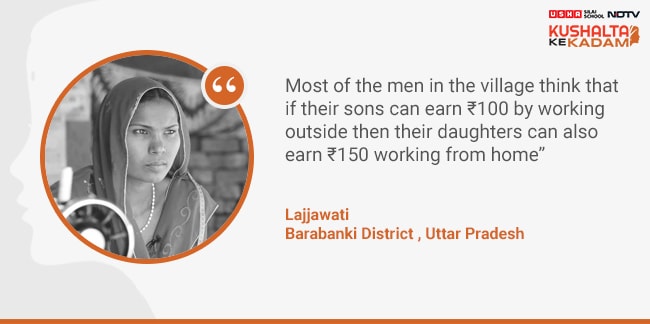
Men from her village not only allow their women to work but also encourage them to use their newly acquired stitching skills and take orders or open their own Silai School.Since I started my sewing centre, people have changed their mindset. Now we are seen the same as men who hold a job
The new era of the Barabanki district of Uttar Pradesh sees blurred lines of gender inequality where more and more working women are receiving the same respect that is given to the working men.
Also Read: After She Lost Her Son Kalpana Kamadi Decided To Reinvent Herself
Published: June 07, 2017 20:12 IST
also read
In Karnataka's Chikkballapur, Nutritional Rehabilitation Centres Are Pulling Children Out Of Malnutrition
Reported by Maya Sharma, Written by Aastha Ahuja#Reimagine Telethon: How Can We Protect The Vulnerable Children Affected By COVID-19? Experts, Social Workers & Celebrities Discuss
Written by Anisha BhatiaHow Odisha Government Is Taking The School To Children's Home, Ensuring Learning During COVID-19 Pandemic
Reported by Saurabh Gupta, Written by Aastha Ahuja
Comments