




- Home/
- Leaving Behind Civil War Memories, Sri Lankan Women Get Back On Their Feet
Leaving Behind Civil War Memories, Sri Lankan Women Get Back On Their Feet
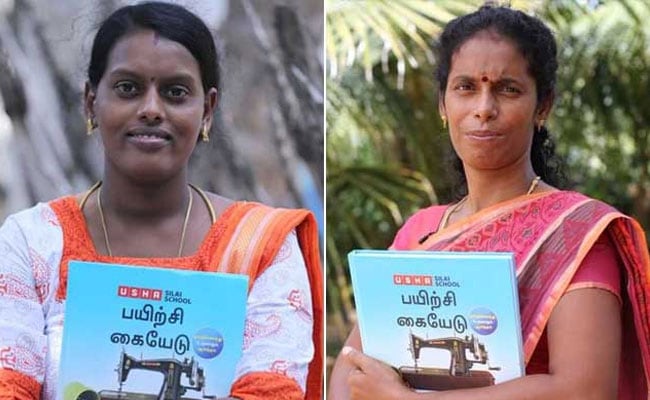
Sri Lanka: The Sri Lankan civil war which began in 1983 and lasted 25 years, displaced hundreds of families living in the country. According to the United Nations High Commissioner for Refugees (UNHCR) overview of the war published in 2013, the internal armed conflict and communal violence displaced as many as 8,00,000 people and killed nearly 1,00,000 people. By the end of 2012, thousands of people remained in need of protection and assistance and many of the refugees faced challenges in receiving basic requirements such as food and clothing.
Even though, today, the country shows robust economic recovery, the families residing in the countryside haven't fully recovered from the decades of violence to rebuild their lives. After the war ended, many of the displaced families made their way back to their country, from India where they had taken temporary shelter. However, due to a shortage of jobs and opportunities, especially for poor Tamil women, like Nagawani and Jermegini, life remained as hard as it had been. Says, Nagawani who returned to her home country from India after she was married,
"When they (Usha Silai School coordinators) came to talk to me about the school, they asked me about my work. Impressed, they asked me to join the training programme," she said.
Usha International has set up small training schools across India, Sri Lanka and Nepal teaching underprivileged women sewing and embroidery.
"The training was conducted in Thoranamalai, and I studied with 20 other women. They taught us how to take measurements, cut and stitch" she said. "Even though I have been stitching for a long time, their techniques were new and helpful" she said. Today, her business is continuing to grow and she is earning Rs 6000 per month, and even more during festivals.
Ask her the best thing that stitching has given her, and she talks about the gift she managed to buy from her savings for her new born daughter, a gold chain. Thanks to her own earnings from tailoring.
Like Nagawani, Jermegini, 26, living in the Pannankattikottu village in Mannar District had her own share of troubles. During the entire period of the civil war, Jermegini and her parents had often moved back and forth from Sri Lanka to India. When she finally returned to Sri Lanka in 2013, she had come home with Bachelor's degree in Business Management, hoping that her qualification would help her find a job. Unfortunately for her, things didn't turn out to be easy as finding a job was proving to be an uphill task.
Jermgini has begun earning nearly Rs 25,000 to Rs 30,000 on an average per month.

On her mother's insistence, they stayed back and her father began selling fish in the market. "Usually, for fisher-folks, the sea is the main family occupation," she said explaining the hardships they had to go through because of lack of opportunities.
Also Read: Gomi Devi: Lifting Up The Veil To Pick Up The Reins Of Her Life
Even though, today, the country shows robust economic recovery, the families residing in the countryside haven't fully recovered from the decades of violence to rebuild their lives. After the war ended, many of the displaced families made their way back to their country, from India where they had taken temporary shelter. However, due to a shortage of jobs and opportunities, especially for poor Tamil women, like Nagawani and Jermegini, life remained as hard as it had been. Says, Nagawani who returned to her home country from India after she was married,
Nagawani's husband is a house painter by profession and her parents are daily-wage laborers. Since, their combined income was never sufficient, Nagawani decided to contribute towards the household income by tailoring garments.In the 90s, Sri Lanka was in turmoil. We were three siblings and our parents had moved us to India to escape from the war. As I didn't do well academically, I dropped out of school. That's when I learned sewing and started tailoring.
"When they (Usha Silai School coordinators) came to talk to me about the school, they asked me about my work. Impressed, they asked me to join the training programme," she said.
Usha International has set up small training schools across India, Sri Lanka and Nepal teaching underprivileged women sewing and embroidery.
"The training was conducted in Thoranamalai, and I studied with 20 other women. They taught us how to take measurements, cut and stitch" she said. "Even though I have been stitching for a long time, their techniques were new and helpful" she said. Today, her business is continuing to grow and she is earning Rs 6000 per month, and even more during festivals.
Ask her the best thing that stitching has given her, and she talks about the gift she managed to buy from her savings for her new born daughter, a gold chain. Thanks to her own earnings from tailoring.
Like Nagawani, Jermegini, 26, living in the Pannankattikottu village in Mannar District had her own share of troubles. During the entire period of the civil war, Jermegini and her parents had often moved back and forth from Sri Lanka to India. When she finally returned to Sri Lanka in 2013, she had come home with Bachelor's degree in Business Management, hoping that her qualification would help her find a job. Unfortunately for her, things didn't turn out to be easy as finding a job was proving to be an uphill task.
The Organisation For Eelam Refugee Rehabilitation - Ceylon (OfERR) came into being in 1984 as a voice for the Sri Lankan Tamil refugees who moved to India for refuge during the period of the war. The organisation has since then helped millions of victims to regain the control of their life and receive their fundamental right to live peacefully with dignity in their own country. In Jermegini's village, the NGO introduced the Usha Silai School and helped many like her who had no sustainable source of income to earn their livelihood.When I got back, I didn't know what to do. I got to know about the Usha (Silai School) tailoring course from OfERR Ceylon NGO."
Like Nagawani, Jermgini has made sewing her main source of livelihood. "Initially, I thought I would only earn Rs 3,000 a month from stitching garments for women. But now that I have a formal training, more of my friends have started placing their orders with me."When my friends and I got to know about the training course, we were hesitant about it at first. Eventually, we were convinced and decided to go for their selection interview, she says. After going through the complete training, I learned to stitch various garments.
Jermgini has begun earning nearly Rs 25,000 to Rs 30,000 on an average per month.
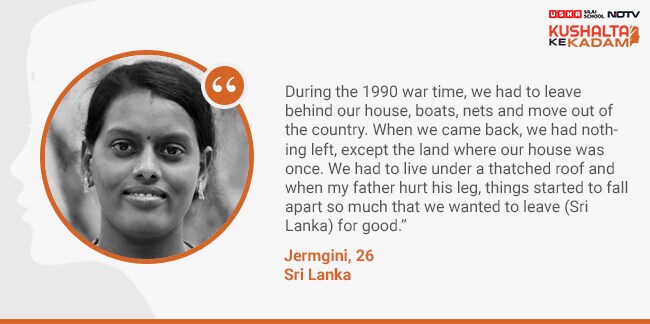
Echoing Jermgini's thoughts Nagawani too, believes that "finding employment is a big problem for women in Sri Lanka" and "tailoring is a good skill to acquire." For both these women and many more who have gotten back on their feet in their own country after turmoil ended, Usha Silai School has played a major role in helping rebuilding lives.Now that I have completed the training course, I see more women considering me as their role model. They, too, want to learn sewing and pursue tailoring as a career.
Also Read: Gomi Devi: Lifting Up The Veil To Pick Up The Reins Of Her Life
Published: July 19, 2017 17:45 IST
also read
In Karnataka's Chikkballapur, Nutritional Rehabilitation Centres Are Pulling Children Out Of Malnutrition
Reported by Maya Sharma, Written by Aastha Ahuja#Reimagine Telethon: How Can We Protect The Vulnerable Children Affected By COVID-19? Experts, Social Workers & Celebrities Discuss
Written by Anisha BhatiaHow Odisha Government Is Taking The School To Children's Home, Ensuring Learning During COVID-19 Pandemic
Reported by Saurabh Gupta, Written by Aastha Ahuja
Comments