




- Home/
- Life After Silai School: Women In Nagaland Are Now Sewing Their Own Destinies
Life After Silai School: Women In Nagaland Are Now Sewing Their Own Destinies
Delhi:
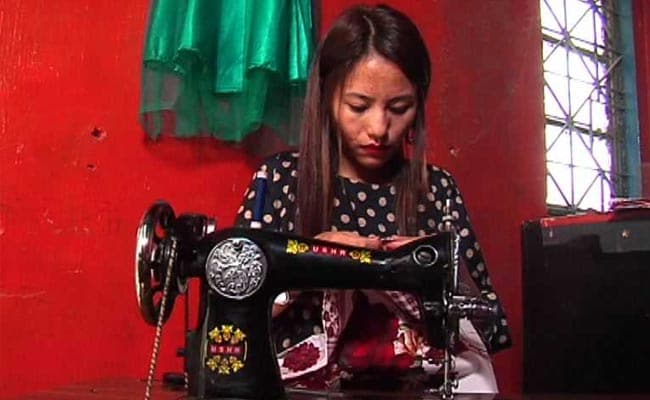
A land so diverse in its culture, Nagaland is where traditions are as old as the hills themselves and flora and fauna find place not only in the forests but also in the intricate weaves of the hand. It is here where USHA International has set up more than 60 sewing training schools. Spread across the city of Dimapur and the state's capital Kohima, these training institutes were set up in 2013 and has since then helped many women become self-dependent.
My name is Melavino and I live in Dimapur she said, perched outside her shop where she not only sells garments but also provides sewing training to young women in her neighborhood.
I studied till class 10 before opting to drop out and take up gardening as a vocational occupation said the 31-year-old. However, since I felt I needed to do more, I decided to try my hand at stitching.
She enrolled in the Silai school programme in 2013 and opened her own institute from which she earns nearly Rs. 6,000 a month.
"I have taught around 40 to 45 women till now and some of them have gone ahead to open their own Silai school" she said. "I feel good that I can earn my own livelihood and no longer have to depend on others."
Melavino's story is one of many that highlight impact of skill development and vocational training that the Silai school has been providing all across the country.
In Dimapur, currently, there are 25 Silai schools and training is conducted through the 'Training of Trainers' model. The model works in a way where Usha Silai School teaches a couple of women from an area who then go on to open Silai school cum sales center where they teach more women.
This chain of change leads to building a self-containing society where each one can thrive in their areas and rely on their skills to make ends meet.
"The girls who have taken the training from Usha Silai School have started earning and sustaining their families" said Medono Viswentso, coordinator, EDITI, a non-governmental organisation in Nagaland.
In Nagaland, most girls migrate to other states but those who stay back try to pave their way into getting a government job he said.
However, since many don't get to clear the exams, they struggle financially. USHA Silai Schools have helped in shaping the future of such girls and making them self-reliant.
"I learnt stitching from EDITI in 2012," said Nongsano Naleo who single-handedly takes care of her orphaned nieces after her siblings passed away.
"Before I started stitching I was a teacher. However, my earnings were not enough and it was difficult to commit to a full-time job," she said. "USHA Silai School helped me start something of my own that gave me the opportunity to help more women like me."
Just like Naleo, Xunili K Wotsa, 33, too found a way to help her family out financially through sewing.
"Before joining the Silai school, I was not able to take care of my children" said the mother of seven children and wife of a daily wage laborer. Since, income was less the couple struggled to pay house rent and fund their children's education.
Ever since she joined the training center in 2013, Xunili, has opened her own school where she has trained more then 52 students. With her monthly income of around Rs. 6,000, she is now able to contribute and manage her household expenses.
Given political uncertainty and lack of opportunities, finding a viable livelihood option in Nagaland is difficult for many in the northeastern state. However, with Usha Silai School targeting and honing the creative skills of those in rural parts of the state, the initiative has become a vital force for skill development.
Despite being a small endeavor, the initiative has taken significant steps that has helped marginal groups in India break shackles of poverty and move to a life of dignity and self-reliance.
Also Read: Silai School Initiative Extends Support To Men From Tamil Nadu
Published: May 28, 2018 09:24 IST
also read
In Karnataka's Chikkballapur, Nutritional Rehabilitation Centres Are Pulling Children Out Of Malnutrition
Reported by Maya Sharma, Written by Aastha Ahuja#Reimagine Telethon: How Can We Protect The Vulnerable Children Affected By COVID-19? Experts, Social Workers & Celebrities Discuss
Written by Anisha BhatiaHow Odisha Government Is Taking The School To Children's Home, Ensuring Learning During COVID-19 Pandemic
Reported by Saurabh Gupta, Written by Aastha Ahuja
Comments