




- Home/
- Santosh From Rajasthan Is On A Mission To Financially Empower The Women In Her Village
Santosh From Rajasthan Is On A Mission To Financially Empower The Women In Her Village
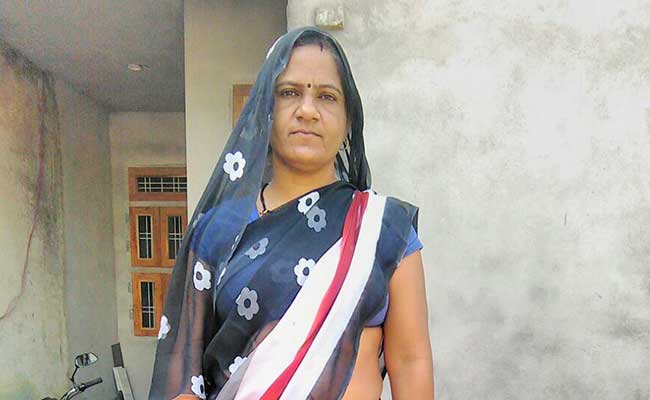
Mumbai: In parts of India, especially its rural belt, the identity of a woman is limited to motherhood and whether or not she can bear children. It is a make belief notion that is hard to uproot, since being a mother is seen to be the sole purpose of a woman, an honour that is bestowed on her by nature and completes her. This narrow interpretation of womanhood also means that when a woman fails to bear children she is looked down open, humiliated and in some cases even ostracised by the community.
Something 34-year-old Santosh Kumawat's of Kaladera village, Jaipur district, had to suffer first hand. Santosh and her family were isolated by the community members as she was unable to bear children post her marriage.
Life became difficult to sustain for Santosh and her husband, Chiranji Lal, a daily wage labourer, as there was no regular source of livelihood and there were days when the family had to skip meals. It was in 2013, when Santosh came across USHA Silai School programme and joined the Silai school to learn sewing. Little did she know that her sewing skills would one day not just pull her out of the rut of humiliation and earn her the honour of being on the stage of country's prestigious fashion show,
Lakme Fashion Week 2018 in Mumbai.
With financial stability comes peace of mind. Santosh has paid off all the debts, and no longer has to rely on others to meet her family's needs - be it her mother-in-law's medicines or a piece of land to open her own school.
Today, a day in Santosh's life is packed from morning to night where home and work find equal importance. Wake up early in the morning to finish household chores, complete her stitching orders by afternoon and take sewing classes in the evening. Working as a resource training person, sometimes she also visits neighbouring villages to impart training and encourage other women to join the Silai movement.
For her talent and hardwork she got an opportunity to work on the production of a clothing line for a fashion label which was launched at Lakme Fashion Week 2018.
Summing up her Silai journey, Santosh says,
Something 34-year-old Santosh Kumawat's of Kaladera village, Jaipur district, had to suffer first hand. Santosh and her family were isolated by the community members as she was unable to bear children post her marriage.
Life became difficult to sustain for Santosh and her husband, Chiranji Lal, a daily wage labourer, as there was no regular source of livelihood and there were days when the family had to skip meals. It was in 2013, when Santosh came across USHA Silai School programme and joined the Silai school to learn sewing. Little did she know that her sewing skills would one day not just pull her out of the rut of humiliation and earn her the honour of being on the stage of country's prestigious fashion show,
Lakme Fashion Week 2018 in Mumbai.
After undergoing the seven day training programme, Santosh learnt the basics of stitching and soon started imparting her knowledge by conducting classes of her own in her village.Our lives were in shambles. It was extremely difficult for us to find jobs that would sustain for long periods. We were also unable to repay the loans we had taken. There was no alternative but to continue working hard, sometimes in someone else's fields and sometimes as a domestic help. Fortunately, the Silai school came to my rescue, recalls Santosh.
Five years ago she began by training 4-5 women, now over 100 women have been trained by her. Initially she charged Rs 200 per student which has now increased to Rs 1,000.Learning sewing skills helped me get back in the community and as people came to know about the programme. They showed interest and hence I opened my own school to pass on the knowledge and skills. However, my fundamental aim is to open the Silai school was to not let any other women from my village undergo the hardships I have been through, says Santosh.
With financial stability comes peace of mind. Santosh has paid off all the debts, and no longer has to rely on others to meet her family's needs - be it her mother-in-law's medicines or a piece of land to open her own school.
Today, a day in Santosh's life is packed from morning to night where home and work find equal importance. Wake up early in the morning to finish household chores, complete her stitching orders by afternoon and take sewing classes in the evening. Working as a resource training person, sometimes she also visits neighbouring villages to impart training and encourage other women to join the Silai movement.
For her talent and hardwork she got an opportunity to work on the production of a clothing line for a fashion label which was launched at Lakme Fashion Week 2018.
Summing up her Silai journey, Santosh says,
When I had first joined the school, my stitching patterns were irregular and raw. And now I can make clothes with different designs. From kurtas, suits, salwars to T-shirts, I can confidently stitch clothes. My next goal is to train atleat 5-6 women who can stitch high level designer clothes.
Also Read: 35-Year-Old Sunita Triumphed Over Financial Battles And Perfected The Art Of Sewing Clothes
Published: April 19, 2018 10:43 IST
also read
In Karnataka's Chikkballapur, Nutritional Rehabilitation Centres Are Pulling Children Out Of Malnutrition
Reported by Maya Sharma, Written by Aastha Ahuja#Reimagine Telethon: How Can We Protect The Vulnerable Children Affected By COVID-19? Experts, Social Workers & Celebrities Discuss
Written by Anisha BhatiaHow Odisha Government Is Taking The School To Children's Home, Ensuring Learning During COVID-19 Pandemic
Reported by Saurabh Gupta, Written by Aastha Ahuja
Comments