




- Home/
- USHA Silai Hero: Here Is How Prabha Dhanga, A Tribal Woman From Jharkhand Has Emerged As A Leader
USHA Silai Hero: Here Is How Prabha Dhanga, A Tribal Woman From Jharkhand Has Emerged As A Leader
Written by Barkha Mathur | Updated: December 30, 2021 02:12 IST
New Delhi:
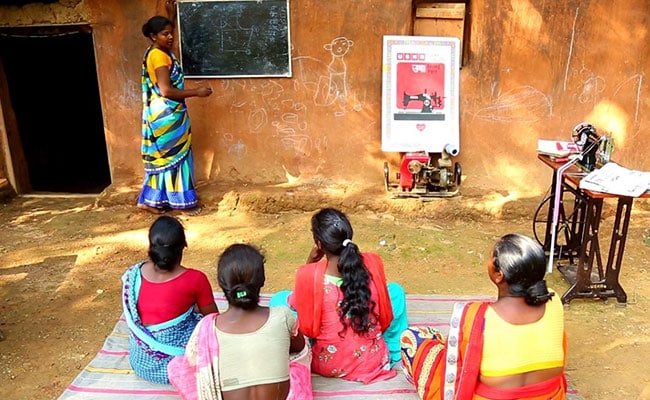
New Delhi: USHA International Limited's ‘Tribal Exclusive USHA Silai School Initiative' has been working in the remote tribal areas of Jharkhand. It aims to support the women from tribal communities in becoming financially independent. Along with building capacities of the tribal women, the initiative also helps in preserving the tribal art and craft and link rural artisans with wider market space. This has encouraged tribal women to overcome barrier, make a living for themselves and uplift other women of their tribe. Here is the story of one such woman- Prabha Dhanga who lives inside the deep forests in Sirijang village, West Singhbhum District, Jharkhand.
Also Read: Meet Phemo Manham, USHA Silai Hero From Arunachal Pradesh Who Has Become An Inspiration For Many
The USHA Silai School program became a turning point in Ms Dhanga life. She became a master trainer, started earning well and has been helping other women of her village. She said,
Nobody was earning in my house. When I came here after marriage, all the responsibility fell on my shoulders, and it was very difficult to run the family. We do farming, and sell those vegetables to earn our living. In February, I was called for a seven-day training in sewing and stitching, I went there thinking that I would learn more, as I already knew little bit of sewing. After the training we got a sewing machine, and we were told to train the others as well. People from the village migrate to bigger towns and cities to earn a living, and I have always wanted to do something about it. With a Silai School here in the village those who wanted to learn sewing and stitching could come to me instead of going to some other city. So far, 12 people have trained here, of which three were men. Currently, I am not taking classes, as it is harvest time in our fields. I will resume classes, once that is over.
According to her, even though her income from agriculture was not enough, the training she received with the USHA Silai Institute was definitely a turning point in her life. Although most of her students are currently out working in the fields, Prabha Dhanga says the villagers accepted her initiative wholeheartedly, with even the men are coming forward to take advantage of the opportunity to double their income. She said,
My income increased due to the Silai School. The quality of my stitching also improved, and I learnt new designs, that included making bags. I made a few bags and sold them. My income and my stitching, both have improved after joining the Silai School.
She says that now with a rise in her income, and a change in her lifestyle, she plans to get more machines. Not just to train other villagers, but also to grow her business.
Now I want to expand my work and train more people. People in villages do not have the money to buy machines, so I have taken a few machines on rent. I have told my students to make clothes and then I want to supply them to shops. It is not possible to open my own shop so soon, so I tell my students that we will make readymade garments and supply them to existing shops. After training with USHA, I get more orders and more work. I do give training, but there is a constant stream of new designs. So, I face some problems, but then I teach only what I have learned. It would be better if I got to learn about more designs. In villages, even the fees for training is very less. It is only Rs. 300 per month. If I could provide this training in some town, then my income would increase.
The area where she lives is affected by Naxalism and according to her, many people find difficulty in running businesses smoothly but she says that with more help from USHA, the fate of the tribals and the reputation of the area can be changed for the better.
Also Read: USHA Silai School Ensured Sustenance To Bihar's Kalawati Devi Even During Covid
Published: December 30, 2021 02:12 IST
also read
In Karnataka's Chikkballapur, Nutritional Rehabilitation Centres Are Pulling Children Out Of Malnutrition
Reported by Maya Sharma, Written by Aastha Ahuja#Reimagine Telethon: How Can We Protect The Vulnerable Children Affected By COVID-19? Experts, Social Workers & Celebrities Discuss
Written by Anisha BhatiaHow Odisha Government Is Taking The School To Children's Home, Ensuring Learning During COVID-19 Pandemic
Reported by Saurabh Gupta, Written by Aastha Ahuja
Comments