

- Home/
- Opinion | Why Kerala Is A Do-Or-Die Battle For Congress And CPI(M)
Opinion | Why Kerala Is A Do-Or-Die Battle For Congress And CPI(M)
| Updated: April 09, 2026 12:17 IST

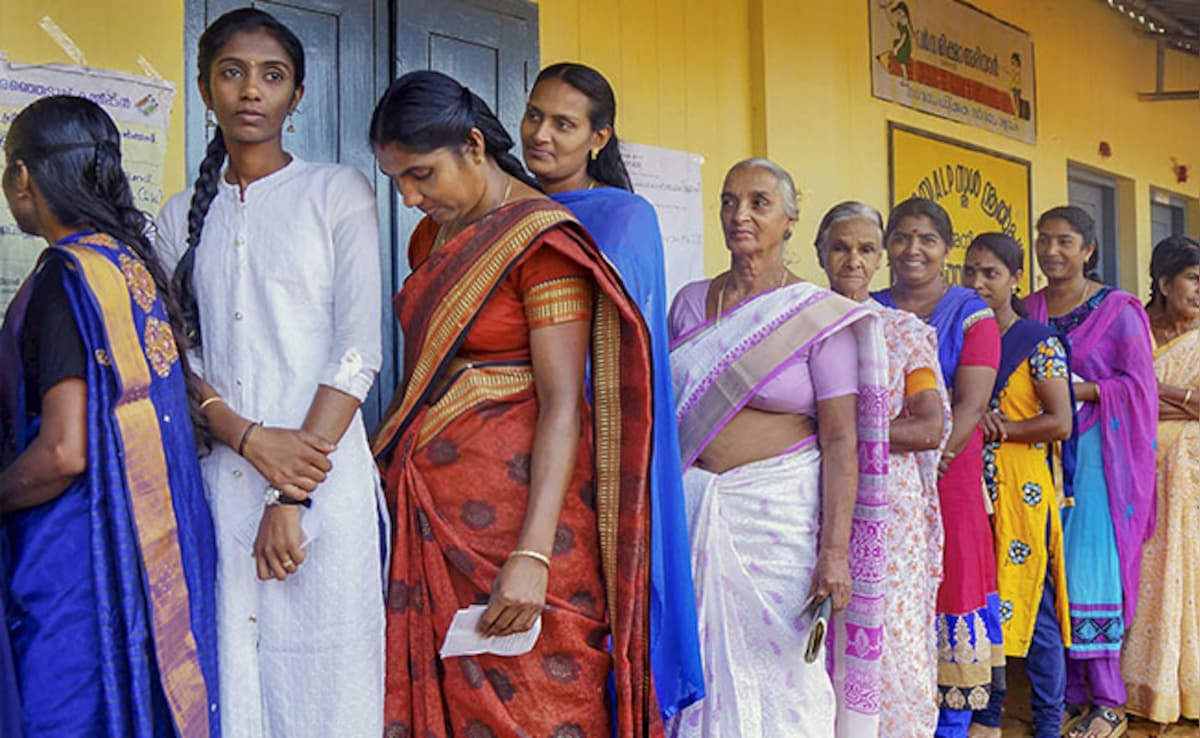
Even as the world waits anxiously as to how Donald Trump will keep or not keep the ceasefire declared with Iran for two weeks, voters in Kerala are lining up to elect a new government. For the last 10 years, the Left Democratic Front (LDF), helmed by the CPI(M), has been in the government. In 2021, the LDF, led by Pinarayi Vijayan, surprised even supporters and critics by winning a second consecutive term to rule the state, a feat that had not been achieved in Kerala for about five decades or more.
Kerala has been an interesting state. In both the 2019 and the 2024 Lok Sabha elections, the United Democratic Front (UDF), led by the Congress, had virtually swept the state, winning almost all the 20 seats on offer for the Lok Sabha. In contrast, the CPI(M)-led LDF won the Vidhan Sabha elections in 2016 and in 2021. As of now, opinion polls, political commentary and anecdotal evidence suggest that there is strong anti-incumbency against the LDF government, and that it might lead to a clear victory for the UDF after 10 long years. However, a once virtually non-existent National Democratic Alliance (NDA), led by the Bharatiya Janata Party (BJP), has an even chance of reaching the 20% vote share milestone. All bets are on whether that would happen.
But then, there is a very, very clear message in the elections in Kerala: they are a do-or-die contest for both the CPI(M) and the Congress.
It is easy to understand and analyse why this is so for the CPI(M). Back in 2004, the Left Front, led by the CPI(M), had won 54 seats in the Lok Sabha and was an instrumental factor in the formation of the UPA government at the Centre with Dr Manmohan Singh as the Prime Minister. But since then, the Left has been in terminal decline and has been losing not just major states but also seats in states where it was not in the majority but had significant influence.
Take West Bengal. It lost the state in 2011 after ruling it for 34 years since 1977. As of today, the vote share of the CPI(M) in West Bengal is less than 5%, and the projected figures, even for the current elections, are not higher than 5%.
In 2018, Tripura was ruled by the CPI(M)-led Left Front. It had a vote share of more than 50%, and the BJP was virtually non-existent in the state, with just about 1.54% votes. But in 2018, the tables turned, and the BJP increased its vote share by about 44%, while that of the Left declined by about 6%. This led to the formation of the first BJP government in Tripura. Many thought it was a fluke, but that was not the case. In the 2023 elections, the Trinamool Congress emerged as a strong third force in the state and reduced the CPM to a vote share of just about 23%. Of course, the BJP retained power in the state by winning more than 40% of the votes.
So, Kerala is the last bastion for the CPM.
Even for the Congress, the battle in Kerala is very, very critical. Winning the state is crucial for it for two reasons. One, the Congress is an insignificant player in Tamil Nadu and is completely dependent on the DMK for the number of seats it wins. In West Bengal, like the CPI(M), it has been reduced to a vote share of just about 5% and has virtually no chance of winning more than a couple of seats. In Assam, too, the Congress, which once won three consecutive elections between 2001 and 2016, has not been able to defeat the BJP. If the latter wins again, it will be the third consecutive time that the Congress will lose an Assembly election in the state.
That is a very clear warning bell for the Grand Old Party, because wherever the Congress starts losing assembly elections for a third consecutive time, it becomes virtually impossible for it to come back to power on its own or as a leading ally in an alliance. It started with Tamil Nadu in 1967, when it lost to the Dravidian parties. Then came West Bengal, where it lost to the Left Front in 1977 and has never come back to power. Then came big states like Uttar Pradesh and Bihar in 1989 and 1990; it has never come back to power as a major partner since then in either state. Then there was Gujarat, where the Congress lost power in 1995 and has never come back to power.
Of course, the more recent example is Odisha, where the Congress last won elections in 1995 and has not come back to power since then, and has become a very, very insignificant player despite its best efforts. Haryana is yet another example where the Congress has lost three consecutive assembly elections. The 2024 assembly election was the most shocking one for the Congress, because everyone expected the party to not just win the assembly elections but sweep the state. And of course, there is Maharashtra, where an alliance led by the Congress and the NCP last won elections in 2009. Since then, despite a brief period where an artificial alliance with the Shiv Sena made the Congress come back to power for a year or so, the party has never won an election in Maharashtra at the state level.
Then there are the heartland states like Jharkhand, where the Congress has formed a government as a junior alliance partner at best. In Madhya Pradesh and Chhattisgarh, there was a victory in 2018, but that now becomes a distant memory.
So, for both Congress and the CPI(M), the elections in Kerala are a key acid test. For the Left, it is a battle for existence. For the Congress, it is about breaking the habit of losing elections despite being in a position to win them.
(Yashwant Deshmukh is the Founder & Editor-in-Chief of CVoter Foundation, and Sutanu Guru is Executive Director)
Disclaimer: These are the personal opinions of the author
Published: April 09, 2026 12:13 IST
NDTV in partnership with UBER is launching a sustained campaign 'Roshan Dilli' to try and raise safety standards in India's capital, New Delhi.
Our focus is to try and improve lighting in public spaces in the city. Lighting is a key factor in shaping women's perceptions of safety
The initiative will provide a platform for all stakeholders to discuss our goal of improving safety standards, to start a conversation about safety of women in the country
It will also highlight various interventions and solutions that help to make women safe and put the spotlight on what more can be done.
The campaign will accentuate the need for Safety to be a shared responsibility
The need for gender sensitization and how law enforcement and civil society through checks and education can try and make women safer
We hope you will join us and help make New Delhi a safer city for women.


