

- Home/
- The Shakeela Wave: When Kerala's Small Theatres Picked One Actor Over Mohanlal and Mammootty
The Shakeela Wave: When Kerala's Small Theatres Picked One Actor Over Mohanlal and Mammootty
Edited by NDTV Movies News Desk | Updated: August 14, 2026 08:42 IST
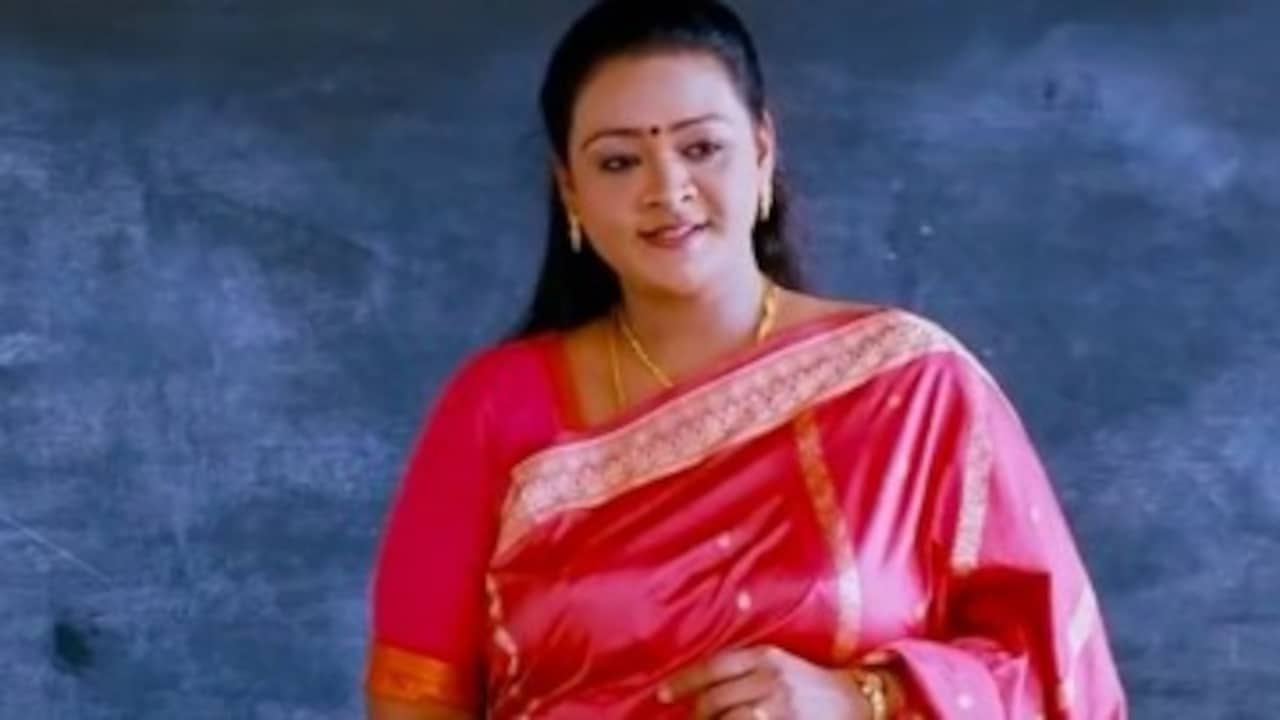
Shakeela
Highlights
- Her 2000 film Kinnarathumbikal was made for Rs 10-12 lakh and earned around Rs 4 crore
- In 2001, Shakeela starred in 30 of 97 Malayalam films, about one-third of releases that year
- Her low-budget films dominated a parallel Malayalam market with over 70% of releases in 2001
Shakeela recently returned home from hospital wearing a neck collar after undergoing surgery that she said cost Rs 3 lakh. The actor has attributed the serious neck problem to prolonged mobile-phone use, including hours spent playing games while lying on one side.
Nearly 25 years ago, Shakeela was carrying a very different weight. At the height of her career, audiences across a parallel theatrical market were choosing her films even when Malayalam cinema belonged, almost unquestionably, to Mohanlal and Mammootty.
The two superstars were not fading. Mohanlal's Narasimham and Mammootty's Valiyettan were major hits in 2000. Their star power remained intact. But one or two blockbusters could not sustain every producer, distributor and small theatre in Kerala.
Parts of the Malayalam theatrical market were under commercial pressure, particularly smaller exhibitors seeking inexpensive releases that could reliably bring in crowds. Several conventional releases, including comedies, were struggling to maintain business during the period.
Then came Shakeela
In 2000, Malayalam cinema did not need another superstar entrance. It needed audiences in theatres. Shakeela supplied them.
The turning point was Kinnarathumbikal. Made on a reported budget of roughly Rs 10 lakh to Rs 12 lakh, the film is estimated to have collected about Rs 4 crore. The figures are historical trade estimates rather than audited box-office accounts, but the scale of its success is not in doubt: it transformed Shakeela into an exceptionally saleable name.
For producers facing costly failures and exhibitors desperate for business, the arithmetic was irresistible. A modest production carrying Shakeela's name could generate returns that bigger-budget films struggled to match.
The success created a commercial template.
Her films could be produced quickly, acquired cheaply and promoted almost entirely around her. The male lead, director and plot often became secondary. Her name on the poster was the advertisement, the selling point and, increasingly, the financial guarantee.
"I was the hero, heroine and the story," Shakeela later said, describing the years when entire films were marketed around her.
It was not an exaggeration.
In 2001, Shakeela appeared in 30 of the 97 Malayalam films released that year. She was present in nearly one out of every three releases, an extraordinary concentration for any performer.
The larger production ecosystem shifted with her. One count places softcore titles at 57 of 89 Malayalam releases in 2001, while other estimates put the genre at more than 70% of films produced that year. The totals differ because some count films produced and others count films released. But both indicate the same larger reality: this was no longer a marginal side business.
Malayalam cinema had entered the Shakeela tharangam: the Shakeela wave.
Her real power was not prestige. It was economics.
These films were often made on very low budgets, with some productions estimated in the Rs 20 lakh to Rs 25 lakh range. They were also dubbed and circulated in other languages, extending Shakeela's commercial reach beyond Kerala.
For B and C-centre theatres, that mattered. A Shakeela film was comparatively inexpensive to acquire, came with a readily identifiable audience and could begin generating revenue without an elaborate publicity campaign.
In parts of this parallel circuit, viewers could skip a conventional star vehicle and queue for Shakeela instead. Her extraordinary output also meant that when one title left a theatre, another carrying her name was rarely far behind.
She did not simply star in a trend. For a brief period, she became its industrial engine.
Shakeela did not become a bigger cultural figure than either superstar, nor did she replace them at the centre of mainstream Malayalam cinema. Their successful films commanded larger budgets, wider family audiences and far greater prestige.
But Shakeela created a market that did not need either of them.
For smaller producers and exhibitors, she offered something even the biggest male stars could not provide with the same frequency: a constant supply of inexpensive films attached to an immediately marketable name. She was not bigger than Mohanlal or Mammootty in every sense, but across a parallel theatrical economy, she could be the more urgent box-office proposition.
The revival was powerful but unstable. Producers copied the formula so aggressively that the market became repetitive and oversupplied. Shakeela faced stigma, exploitation, censorship pressure and growing social opposition even as the industry continued to profit from her image.
By 2002, opposition to the genre was intensifying. Cable television and pirated VCDs offered audiences alternative ways to access similar content at home. As internet access expanded later, the theatre-based adult-film market weakened further.
The Shakeela wave faded almost as quickly as it had risen.
Shakeela did not save Malayalam cinema as a whole, and she did not make Mohanlal or Mammootty irrelevant. But when a significant part of Kerala's theatrical economy was under commercial pressure, her films brought in audiences and provided a vital revenue stream.
For a brief period, she was not simply the woman on the poster. She was the business.
Published: August 14, 2026 08:17 IST
NDTV in partnership with UBER is launching a sustained campaign 'Roshan Dilli' to try and raise safety standards in India's capital, New Delhi.
Our focus is to try and improve lighting in public spaces in the city. Lighting is a key factor in shaping women's perceptions of safety
The initiative will provide a platform for all stakeholders to discuss our goal of improving safety standards, to start a conversation about safety of women in the country
It will also highlight various interventions and solutions that help to make women safe and put the spotlight on what more can be done.
The campaign will accentuate the need for Safety to be a shared responsibility
The need for gender sensitization and how law enforcement and civil society through checks and education can try and make women safer
We hope you will join us and help make New Delhi a safer city for women.


