


- Home/
- Opinion | US Has No 'Election Commission'. Trump Is Testing What That Can Mean
Opinion | US Has No 'Election Commission'. Trump Is Testing What That Can Mean
| Updated: November 02, 2026 19:33 IST
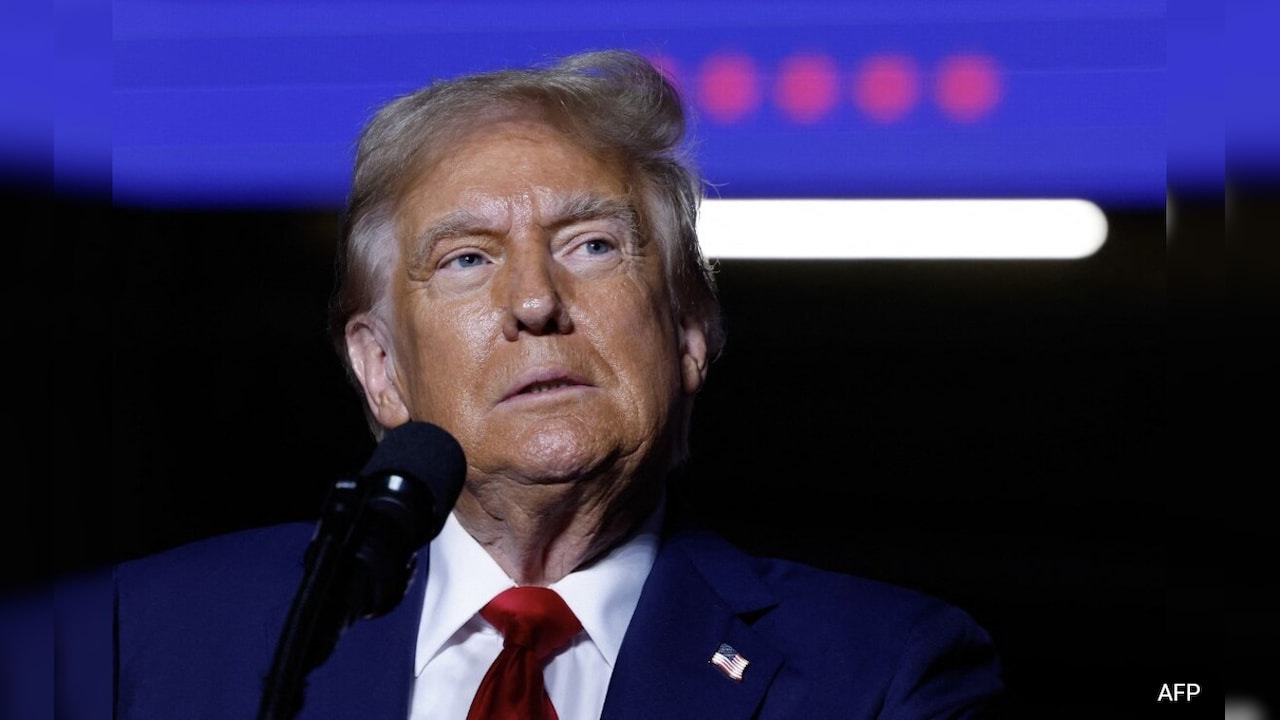
On October 23, a federal court ruled that President Trump broke the law by taking control of California's National Guard, despite Governor Gavin Newsom's objections. As the midterm elections on November 3 approach, the ongoing conflict between the two has escalated towards Voting Day. "I expect the worst with Trump because he's done the worst," Newsom said in May. He attacked the President as he signed the first of several laws aimed at keeping the federal government out of California's elections. This dispute is part of a larger battle: the Trump administration has tried to change voting rules, with Republican-led states mostly supporting these moves and Democratic-led states opposing them.
How America Runs Its Elections
India has a single Election Commission that oversees all elections, prepares voter lists, and announces results. In contrast, the United States does not have a central election authority that centrally undertakes these critical functions. Each of the 50 states sets its own election laws, even for Congressional elections. States decide who can register, what identification is needed, how postal ballots are counted, and how voting districts (electoral constituencies) are formed. In India, a Delimitation Commission sets constituency boundaries, but in most American states, the party in control of the state assembly draws them.
The party that controls a state also controls its voting rules, and there is no national authority to ensure uniform rules. On November 3, Americans will essentially vote in fifty different elections, each with its own set of rules.
When Trump Praised India
The first move was an executive order in March 2025. Its aims: require voters to prove their citizenship with a passport or birth certificate when registering; stop states from counting postal ballots that arrive after election day; and permit the federal government more access to state voter lists. Trump's order praised India, saying, "India and Brazil are tying voter identification to a biometric database", while Americans only declare their citizenship. Federal judges struck down most of the order, ruling that the President cannot change rules that belong to Congress and the states.
The second step demanded every state's full electoral roll, including voters' private details, so the Justice Department could check it against federal records for non-citizens. Indian readers will recognise the idea from the Special Intensive Revision of electoral rolls. Some states complied, while roughly two dozen refused and were taken to court.
Washington has also tried to change how electoral districts are formed. Usually, American states redraw district boundaries every ten years after the census. But in 2025, Mr Trump urged Texas Republicans to redraw their districts early to gain five more seats in the House of Representatives.
Federal investigators have also stepped in. Earlier this year, the FBI seized the 2020 ballots from Fulton County, Georgia, the county at the centre of Mr Trump's claim that the 2020 election was stolen, and the responsible election staff have come under pressure. And in July, the administration linked certain federal security grants to conditions requiring states to verify voters' citizenship.
How Republican States Joined In
Texas, Alabama, and Mississippi are among the states that agreed to share their voter lists with the Justice Department. South Dakota and Utah now require documentary proof of citizenship to register for state elections. The biggest change, however, comes from redrawing constituencies. Florida, Ohio, North Carolina, Tennessee, and Louisiana followed Texas, and by Ballotpedia's estimate, the new boundaries give Republicans a net advantage of about nine seats before polling day.
Why A Voter ID Is Contested In America
For most Indians, asking voters to prove their identity seems reasonable. Every Indian voter has an Election Commission identity card, and almost everyone has Aadhaar. So why do many Americans see these as checks stopping people from voting?
The first reason is who carries the burden. In India, the state does the work: booth-level officers go from house to house to enrol voters, and the voter identity card is issued free. America has no national identity card and no document like Aadhaar. Registering is the voter's responsibility. Proving citizenship means producing a passport costing over $160, or a birth certificate ordered from the state of one's birth. A woman who took her husband's surname often holds a birth certificate in a name that no longer matches her other papers. A 2023 Brennan Centre survey found that about 2.13 crore voting-age citizens, more than 9 per cent, lack ready access to such documents, and citizens of colour are more likely to lack them.
The second reason is history. For almost a hundred years after the Civil War, southern states used literacy tests and poll taxes to stop Black citizens from voting, until the Voting Rights Act of 1965 banned these practices. Any new obstacle to voting is seen in light of that history.
The third reason is evidence. Voting by non-citizens is a crime and is very rare. A 2024 Georgia audit found 20 non-citizens among 82 lakh registered voters. When Kansas required proof of citizenship from 2013 to 2018, it blocked more than 31,000 eligible citizens. The state could show only 39 non-citizens registered over the previous 13 years, and federal courts struck the law down.
The fourth reason is politics. Citizens least likely to hold these papers, the poor, the young, and minorities, lean Democratic, so Democrats see a partisan agenda. Republicans respond that the rules protect the integrity of the vote. And polls show that large majorities of Americans support photo identification at polling booths.
How Democratic States Have Pushed Back
California has gone furthest in opposing these measures. A law signed in May prevents anyone, including federal agents, from accessing voter lists or voting machines without a court order. In September, Mr Newsom signed two more. The first made it a felony to seize ballots, election records, or voting machines before results are certified. The other mandated local officials to alert the state within a day of any warrant for election records, so that it can be challenged in court.
The seizure law came after a February case in which Riverside County Republican sheriff Chad Bianco seized about 6.5 lakh ballots, citing claims of irregularities. The election officials called it unfounded, and in September, the California Supreme Court unanimously ruled the seizure unlawful and ordered the ballots returned.
California also responded to Texas through a referendum. In November 2025, its voters approved new constituency boundaries, known as Proposition 50, which are expected to give the Democrats five more seats. Elsewhere, Democratic states have relied on the courts and so far, won their battles over voter lists. In Michigan, a judge appointed by Mr Trump himself ruled that no federal law required the state to share its lists.
What It Means For Voters
Now, an American's experience of the same election depends on where she lives. A first-time voter in Utah must show a birth certificate or passport to register for state elections. At the same time, a voter in California is protected by a law that makes seizing her ballot a felony. Control of the next House could depend on districts redrawn by a few state assemblies. For Mr Newsom, who leaves office in January and has said he may run for president, this fight has made him the main Democratic voice against Mr Trump on election issues.
In India, these kinds of disputes can be decided by the Election Commission centrally for the entire country. In America, they are being decided state by state and court by court, a process that is likely to be mired in confusion, controversy, and condemnation.
(The author is a Research Fellow in the Geostrategy Program at the Takshashila Institution)
Disclaimer: These are the personal opinions of the author
Published: November 02, 2026 15:43 IST


