


- Home/
- 4 Trunk Drains In Rekha Gupta's Plan To Fix Delhi's Waterlogging Issue
4 Trunk Drains In Rekha Gupta's Plan To Fix Delhi's Waterlogging Issue
Asian News International | Updated: January 12, 2026 00:20 IST
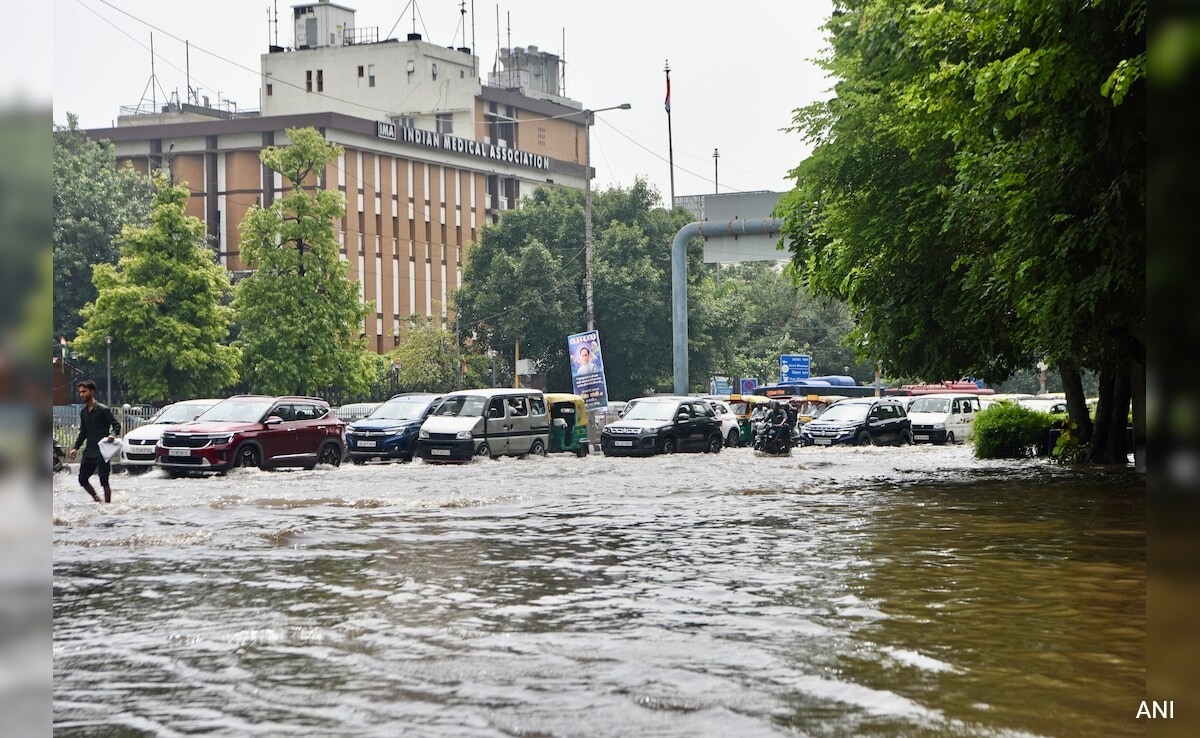
The Delhi government has accelerated the construction and expansion work of these major trunk drains.
Delhi Government, under the leadership of Chief Minister Rekha Gupta, has taken a major and far-reaching step to strengthen the city's drainage system as part of its resolve to develop Delhi into a modern, global and developed capital.
Four major drains, Mundka Halt-Supplementary Drain, MB Road Storm Water Drain, Kirari-Rithala Trunk Drain, and the Storm Water Drain along Rohtak Road (NH-10) are being developed as key components of the 'Drainage Master Plan'.
The Delhi government has accelerated the construction and expansion work of these major trunk drains.
The Chief Minister informed that the 'Drainage Master Plan' for Delhi's sewerage and drainage system was originally prepared in the 1970s. Despite rapid population growth and large-scale construction activity, the plan did not undergo the required revisions, resulting in an increasingly severe drainage situation over the years.
She said that the present government has introduced effective changes keeping in view Delhi's geographical conditions, recurring waterlogging and population pressure, and drainage infrastructure is now being constructed accordingly, so that the national capital does not face waterlogging and related problems in the future.
CM Gupta believes that the true identity of any metropolis lies in a robust, scientific and forward-looking drainage system. With this vision, the Delhi Government has prioritised those areas of the capital where residents have long suffered from waterlogging, overloaded sewer lines and related issues. These long-standing problems will now be resolved, bringing relief to the people of Delhi.
To address drainage issues in the Kirari, Mundka, Bawana and Nangloi Assembly constituencies of West Delhi, a 4.5-kilometre-long trunk drain is proposed to be constructed parallel to the railway line. The project is being implemented by the Irrigation and Flood Control Department.
The estimated cost of the drain is Rs. 220.93 crore, and it is designed to handle rainwater from a catchment area of 1,520 acres. The discharge capacity of the drain has been fixed at 760 cusecs to ensure uninterrupted drainage even during peak monsoon rainfall.
The drain will originate near Mundka Halt Station and will run along the railway corridor before merging with the Supplementary Drain. A key feature of this project is the water from several secondary drains along the route will also be integrated into it, creating a unified and streamlined drainage system for the entire area.
The work is proposed within railway land limits, for which an MoU has already been signed with the Railways. Administrative and financial approvals are expected shortly, after which the project is targeted to be completed within 15 months.
Waterlogging has been a persistent and serious issue in South Delhi, particularly in the stretch from Lado Sarai T-Point to Pul Prahladpur. Keeping this in view, the MB Road Storm Water Drain project has been incorporated into the 'Drainage Master Plan'. Under this project, the total road length is 11.38 kilometres, while the combined length of drains on both sides will be 22.76 kilometres.
The estimated cost of the project is Rs. 387.84 crore, and it is scheduled to be completed within 2.5 years, including six months of pre-construction and two years of construction. The project is being executed by the Public Works Department (PWD) of the Delhi Government.
This project is particularly important as existing stormwater drains in several locations are either inadequate in capacity or have been damaged during other construction activities. Additionally, provisions have been made for the transplantation or felling of around 500 trees, construction of footpaths, and shifting of electricity, Delhi Jal Board and other utility services.
Another significant project is the construction of a 7,200-metre-long trunk drain from Kirari to Rithala (near Rohini) in North-West Delhi. This Delhi Development Authority (DDA) project has an estimated cost of Rs. 250.21 crore, with a designed discharge capacity of 1,160 cusecs. At present, approximately 600 metres of construction work has been completed. The remaining work had been stalled due to pending permission for the felling of 84 trees, an issue that has now been resolved.
In addition, improvement work on the stormwater drain along Rohtak Road (NH-10) is being carried out on a war footing to strengthen the drainage system. Under this PWD project, construction and improvement of drains on both sides are underway from Kirari Suleman Drain near Nangloi Railway Metro Station to Hirankudna Drain (from Metro Pillar No. 428 to 626), and from Tikri Border to Hirankudna Drain (from Metro Pillar No. 753 to 626).
The estimated cost of this project is Rs. 184 crore, out of which the Government of India has provided Rs. 105 crore in 2025-26 under the 'Special Assistance to States for Capital Investment (SASCI)' scheme. The project is targeted for completion by March 2026.
The Chief Minister stated that Delhi's 'Drainage Master Plan' has been prepared keeping in view the city's rapid urbanisation, climate change and population pressure. Its objective is to enhance the capacity of major trunk drains to ensure safe and swift discharge of rainwater into the Yamuna, reduce pressure on the sewerage system, and provide a permanent solution to the problem of waterlogging.
She added that these efforts represent a concrete and decisive step towards making Delhi's drainage infrastructure future-ready. Once completed, these projects will provide lasting relief to large parts of the capital from recurring monsoon waterlogging.
(Except for the headline, this story has not been edited by NDTV staff and is published from a syndicated feed.)
Published: January 12, 2026 00:19 IST
also read
 Edited by Astitva Raj | Monday January 12, 2026
In the video, Evans, known as "Aussie Bhai" on Instagram, was seen removing the filter from his air purifier.
- Press Trust of India | Friday January 09, 2026 , New Delhi
The PM2.5 assessment for 2025 ranks Byrnihat (Assam), Delhi, and Ghaziabad (Uttar Pradesh) as India's top three most polluted cities with annual concentrations of 100 g/m, 96 g/m, and 93 g/m, respectively.
- Written by Shreya Goswami | Wednesday January 07, 2026
A study by Jawaharlal Nehru University finds that Delhi's polluted winter air carries high levels of antibiotic-resistant bacteria or superbugs far above safe limits, posing public health risks, especially for vulnerable groups and those with chronic
- Reported by Nupur Dogra | Tuesday January 06, 2026 , New Delhi
The Commission for Air Quality Management or CAQM, was strongly reprimanded by the Supreme Court today, which said the pollution body was not taking the issues raised by the court seriously.
- Written by Shreya Goswami | Tuesday January 06, 2026
Bronchial asthma often worsens in winter due to cold air, pollution and infections.



................................ Advertisement ................................
Blog | Well Done, Delhi. You've Turned Lung Sacrifice Into A Badge Of HonourSaikat Kumar Bose
Monday November 10, 2025Till some years back, Delhiites would ask angry questions to those in power about the capitals annual tryst with toxic air. This has changed. Those in the driving seat dont see the need to answer now.
Opinion | Why Indians Have Just Given Up On Air Pollution CrisisTanushree Ganguly
Friday December 20, 2024While some may argue that people in Delhi are now more aware of air pollution than they were a decade back, my rebuttal would be that awareness does not mean that people are concerned.
Opinion | You Must Outrage Over Filthy Air More Than Once A YearJyoti Pande Lavakare
Tuesday December 10, 2024Delhi welcomed us with monsoon rains and mangos. We were home. Fast forward a couple of years, in the winter of 2012, I found myself in denial about something other parents, mostly expats, were calling toxic air.
Opinion | Delhi's Air Pollution Situation Is Like A Bad MarriageNishtha Gautam
Friday November 22, 2024On a good day, such as today, the AQI reading in Delhi is 407. We are jubilant at the sickly sunshine trickling through the slightly dissipated smog. At least its not 1600.
दिवाली... पराली... सियासी जुगाली!Ashwini kumar
Monday November 18, 2024दिल्ली-एनसीआर में प्रदूषण का समाधान तो आज तक मिला नहीं. हर साल चिंतित होकर हम-आप सांसों की तकलीफ के साथ-साथ दिल और ब्लड प्रेशर के मरीज भी क्यों बनें?


