


- Home/
- 44% Indian Cities Face Chronic Air Pollution, Only 4% Under National Clean Air Programme
44% Indian Cities Face Chronic Air Pollution, Only 4% Under National Clean Air Programme
Press Trust of India | Updated: January 09, 2026 16:15 IST
New Delhi:
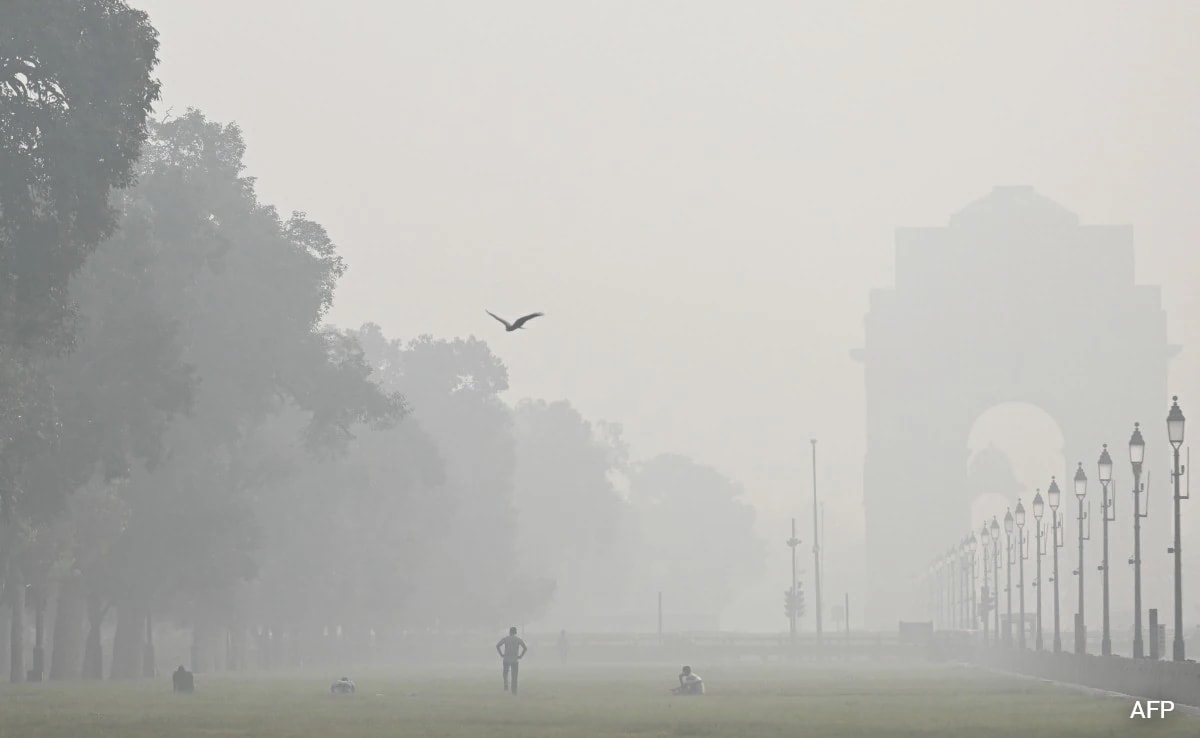
Nearly 44 per cent Indian cities face chronic air pollution, indicating a structural problem driven by persistent emission sources rather than short-term episodes, an analysis by the Centre for Research on Energy and Clean Air (CREA) has found.
However, only 4 per cent of these cities are covered under the National Clean Air Programme (NCAP), the report said.
Using satellite data, CREA assessed PM2.5 levels in 4,041 Indian cities.
"Out of 4,041, at least 1,787 cities exceeded the national annual PM2.5 standard every year across five recent years (2019-2024), excluding the COVID-affected year of 2020. This means nearly 44 per cent of Indian cities face chronic air pollution, indicating a structural problem driven by persistent emission sources rather than short-term episodes," the report said.
The PM2.5 assessment for 2025 ranks Byrnihat (Assam), Delhi, and Ghaziabad (Uttar Pradesh) as India's top three most polluted cities with annual concentrations of 100 µg/m³, 96 µg/m³, and 93 µg/m³, respectively.
Noida is the fourth on the list, followed by Gurugram, Greater Noida, Bhiwadi, Hajipur, Muzaffarnagar, and Hapur.
"Yet, India's flagship NCAP covers only a fraction of this burden. Just 130 cities were included under NCAP, and only 67 overlap with the 1,787 persistently non-attainment cities. As a result, NCAP currently addresses only 4 per cent of India's chronically polluted cities, leaving the vast majority outside targeted clean air action," it added.
Non-attainment cities are urban areas identified by the Central Pollution Control Board (CPCB) that consistently fail to meet the National Ambient Air Quality Standards (NAAQS) over several years.
The report noted that Uttar Pradesh tops the list with 416 non-attainment cities, followed by Rajasthan (158), Gujarat (152), Madhya Pradesh (143), Punjab and Bihar (136 each) and West Bengal (124).
Out of 130 NCAP cities, 28 still lack continuous ambient air quality monitoring stations (CAAQMS), and among the 102 cities with stations, 100 cities reported 80 per cent or higher PM10 levels.
"Progress on PM10 control remains mixed. Twenty-three cities have achieved the revised 40 per cent PM10 reduction target, 28 cities have recorded 21-40 per cent reduction, 26 cities show modest improvements of 1-20 per cent, while 23 cities have in fact experienced an increase in PM10 levels since the programme's inception," the report said.
"For PM10, Delhi tops the list with an annual average of 197 µg/m³, three times the national standard. Ghaziabad and Greater Noida follow with averages of 190 µg/m³ and 188 µg/m³, respectively.
Rajasthan has the highest number of cities in the Top 50 in terms of PM10 concentration, 18 in total, followed by Uttar Pradesh (10), Madhya Pradesh (5), and Bihar and Odisha (four each)," the report said.
According to Manoj Kumar, India Analyst, CREA, strengthening the country's air quality governance through targeted, science-based reforms may be the only way forward.
"This means prioritising PM2.5 and its precursor gases (sulphur dioxide and nitrogen dioxide) over PM10, revising the list of non-attainment cities under NCAP, setting stricter emission standards for industries and power plants, allocating funding based on source apportionment studies, and adopting an airshed-based approach to address air pollution at a regional scale," he said .
Since the programme's inception, Rs 13,415 crore has been released under the NCAP and 15th Finance Commission grants, of which Rs 9,929 crore (74 per cent) has been utilised.
Road dust management accounts for 68 per cent of spending, followed by transport (14 per cent) and waste and biomass burning (12 per cent), while industries, domestic fuel use, public outreach (each less than 1 per cent), and capacity building and monitoring (3 per cent) received limited allocations.
(Except for the headline, this story has not been edited by NDTV staff and is published from a syndicated feed.)
Published: January 09, 2026 15:43 IST
also read
 Written by Dr Pranay Sai Chandragiri | Saturday May 23, 2026
Research shows that high temperatures can worsen air pollution, increase ground-level ozone, trap harmful particles in the air, and trigger breathing emergencies. People with existing lung diseases are among the most vulnerable.
- Tuesday May 19, 2026
Pollution Curbs Under GRAP-I Imposed In Delhi-NCR In May As AQI Turns 'Poor'
- Thursday May 14, 2026 , New Delhi
The air quality was recorded in the 'moderate' category at 154. In the morning hours, the AQI stood at 134, the Central Pollution Control Board (CPCB) data showed.
- Edited by Ritu Singh | Monday May 11, 2026
A single algae tree unit is claimed to be as effective as 25 adult trees in absorbing carbon dioxide and releasing oxygen.
- Edited by Srishti Singh Sisodia | Thursday May 07, 2026
As plastic tumbles against itself, it fragments, and a new study shows those fragments don't stay in the water.


................................ Advertisement ................................

Blog | Well Done, Delhi. You've Turned Lung Sacrifice Into A Badge Of HonourSaikat Kumar Bose
Monday November 10, 2025Till some years back, Delhiites would ask angry questions to those in power about the capitals annual tryst with toxic air. This has changed. Those in the driving seat dont see the need to answer now.
Opinion | Why Indians Have Just Given Up On Air Pollution CrisisTanushree Ganguly
Friday December 20, 2024While some may argue that people in Delhi are now more aware of air pollution than they were a decade back, my rebuttal would be that awareness does not mean that people are concerned.
Opinion | You Must Outrage Over Filthy Air More Than Once A YearJyoti Pande Lavakare
Tuesday December 10, 2024Delhi welcomed us with monsoon rains and mangos. We were home. Fast forward a couple of years, in the winter of 2012, I found myself in denial about something other parents, mostly expats, were calling toxic air.
Opinion | Delhi's Air Pollution Situation Is Like A Bad MarriageNishtha Gautam
Friday November 22, 2024On a good day, such as today, the AQI reading in Delhi is 407. We are jubilant at the sickly sunshine trickling through the slightly dissipated smog. At least its not 1600.
दिवाली... पराली... सियासी जुगाली!Ashwini kumar
Monday November 18, 2024दिल्ली-एनसीआर में प्रदूषण का समाधान तो आज तक मिला नहीं. हर साल चिंतित होकर हम-आप सांसों की तकलीफ के साथ-साथ दिल और ब्लड प्रेशर के मरीज भी क्यों बनें?


