


- Home/
- 65% Of Delhi's Air Pollution In 2025 Came From Nearby Areas: Study
65% Of Delhi's Air Pollution In 2025 Came From Nearby Areas: Study
Press Trust of India | Updated: January 04, 2026 00:04 IST
New Delhi:
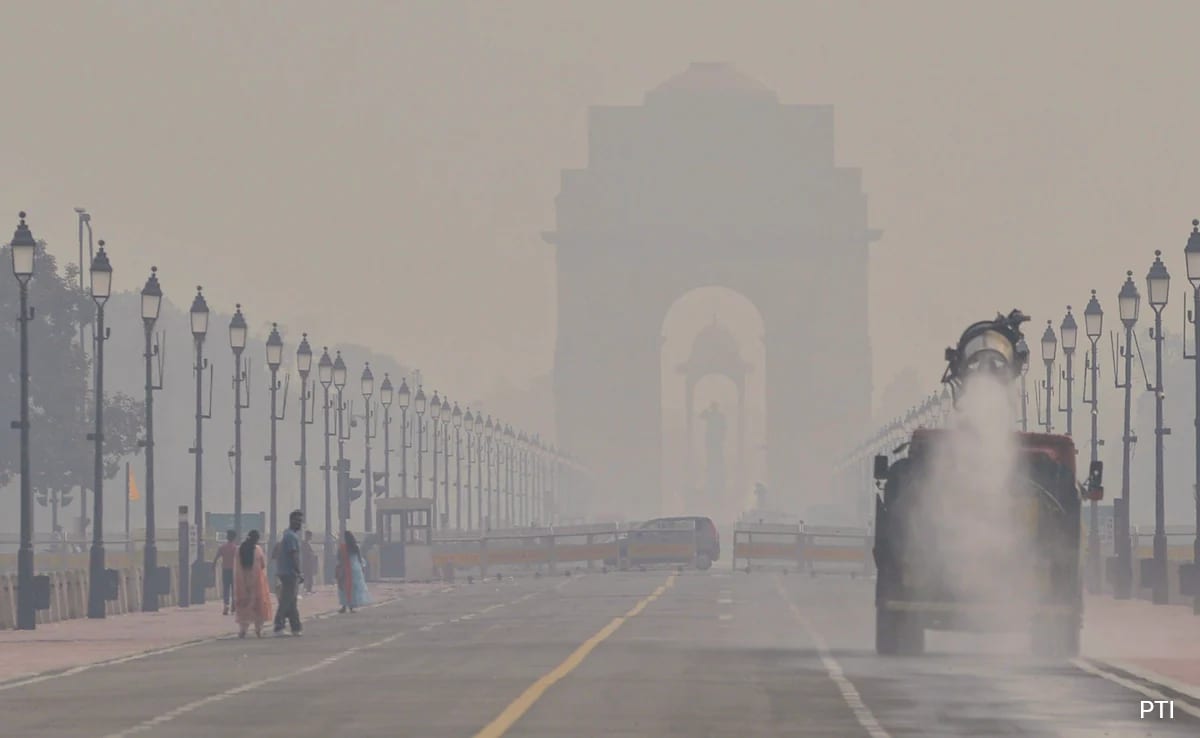
As much as 65 per cent of Delhi's air pollution in 2025 originated from outside the city, mainly from other NCR districts, while local sources accounted for the remaining 35 per cent, a study said.
According to an analysis by the Centre for Research on Energy and Clean Air (CREA), accessed by PTI, winter-period inputs from the Decision Support System indicated that pollution transported into the national capital outweighed emissions generated within the city during 2025.
Winter-period source attribution figures showed that vehicular emissions accounted for nearly half of Delhi's local PM2.5 pollution, surpassing contributions from industry, construction and other combustion sources, even as transboundary pollution remained the dominant overall contributor.
"Transboundary pollution from NCR districts and neighbouring states plays a major role in Delhi's air pollution. Delhi's geographical location also makes it vulnerable, as northerly and north-westerly winds carry polluted air from surrounding regions into the city. Addressing Delhi's pollution crisis therefore requires coordinated, airshed-level action rather than city-specific measures alone," said Manoj Kumar N, an analyst from CREA.
The data also showed a sharp reduction of about 10.6 per cent in the contribution of stubble burning to Delhi's PM2.5 levels during the 2025 winter season from the previous 2024 season.
During the October 15 to November 30 crop-residue-burning period, stubble burning contributed an average of 4.9 per cent to PM2.5 pollution in 2025, compared with 15.5 per cent during the same period in 2024, the figures indicated.
Daily figures showed that in 2025, the highest stubble burning contribution was recorded at 22.47 per cent on November 12, followed by 16.48 per cent on November 15 and 16.14 per cent on November 17.
In 2024, the contribution peaked significantly higher, with the figures reading 37.52 per cent on November 15, 35.18 per cent on November 1 and 33.33 per cent on November 14.
For PM2.5 concentrations, the data showed that Bahadurgarh emerged as the largest NCR contributor in 2025, recording the highest concentrations during January, October, November and December, with an annual average PM2.5 level of about 173 micrograms per cubic metre.
Within Delhi, the figures showed that November recorded the highest monthly PM2.5 concentration in 2025, at 215 micrograms per cubic metre.
In 2024, November had also been the most polluted month, with a higher monthly average of 249 micrograms per cubic metre, the figures noted.
On an annual basis, the data indicated that Delhi's average PM2.5 concentration declined to 96 micrograms per cubic metre in 2025, compared with 105 micrograms per cubic metre in 2024, reflecting a year-on-year reduction of about 8.6 per cent.
For PM10, the figures showed that Dharuhera in Haryana remained the largest external contributor in 2025, with an annual average concentration of around 278 micrograms per cubic metre, largely driven by elevated levels during October, November and December.
Monthly figures showed that November recorded the highest PM10 concentration in 2025, at 365 micrograms per cubic metre. In November 2024, PM10 levels had been higher at 395 micrograms per cubic metre, the figures read.
On an annual basis, the data showed that Delhi's average PM10 concentration declined to 197 micrograms per cubic metre in 2025, from 211 micrograms per cubic metre in 2024, marking a year-on-year drop of about 6.6 per cent.
Air quality category figures showed that Delhi's annual average AQI stood at 201 in 2025, with no 'good' air quality days recorded.
The city logged 79 satisfactory days, 121 moderate days, 86 poor days, 71 very poor days and eight severe days during the year.
In comparison, the figures for 2024 showed 66 satisfactory days and 17 severe days, while the number of very poor days remained nearly unchanged at 70.
The figures indicated that the improvement in 2025 was largely driven by better air quality during June and July, contributing to the marginal decline in the annual average AQI, the analysis said.
(Except for the headline, this story has not been edited by NDTV staff and is published from a syndicated feed.)
Published: January 03, 2026 17:55 IST
 Thursday July 30, 2026
Air pollution has links to health risks in pregnant woman as they can face reproductive issues. Here is how genetic and environmental factors could impact reproductive health.
- Written by Sambhav Kumar | Tuesday July 28, 2026
Heavy monsoon rains in Delhi-NCR may clear outdoor pollutants temporarily but increase indoor humidity and mould growth, affecting respiratory health.
- Written by Dr Ramanarayanan | Sunday July 26, 2026
Invasive fungal infections are rising in India, affecting more patients and showing resistance to treatments, posing serious health risks.
- Written by Ashwini Sehgal | Thursday July 23, 2026
The study included 85 adults and children with poorly controlled asthma who lived in homes or apartments with gas stoves. Asthma control was determined from responses to a standard questionnaire.
- Written by Rupashi Chhabra | Tuesday July 21, 2026
Dr Bhuvan Chugh explains how hidden environmental toxicants cause lung cancer in young non-smokers. Here is how fine air pollution triggers hidden mutations.



................................ Advertisement ................................


Blog | Well Done, Delhi. You've Turned Lung Sacrifice Into A Badge Of HonourSaikat Kumar Bose
Monday November 10, 2025Till some years back, Delhiites would ask angry questions to those in power about the capitals annual tryst with toxic air. This has changed. Those in the driving seat dont see the need to answer now.
Opinion | Why Indians Have Just Given Up On Air Pollution CrisisTanushree Ganguly
Friday December 20, 2024While some may argue that people in Delhi are now more aware of air pollution than they were a decade back, my rebuttal would be that awareness does not mean that people are concerned.
Opinion | You Must Outrage Over Filthy Air More Than Once A YearJyoti Pande Lavakare
Tuesday December 10, 2024Delhi welcomed us with monsoon rains and mangos. We were home. Fast forward a couple of years, in the winter of 2012, I found myself in denial about something other parents, mostly expats, were calling toxic air.
Opinion | Delhi's Air Pollution Situation Is Like A Bad MarriageNishtha Gautam
Friday November 22, 2024On a good day, such as today, the AQI reading in Delhi is 407. We are jubilant at the sickly sunshine trickling through the slightly dissipated smog. At least its not 1600.
दिवाली... पराली... सियासी जुगाली!Ashwini kumar
Monday November 18, 2024दिल्ली-एनसीआर में प्रदूषण का समाधान तो आज तक मिला नहीं. हर साल चिंतित होकर हम-आप सांसों की तकलीफ के साथ-साथ दिल और ब्लड प्रेशर के मरीज भी क्यों बनें?


