


- Home/
- Air Pollution Accelerating Decay Of Humayun's Tomb: IIT Study
Air Pollution Accelerating Decay Of Humayun's Tomb: IIT Study
| Updated: August 03, 2026 07:48 IST
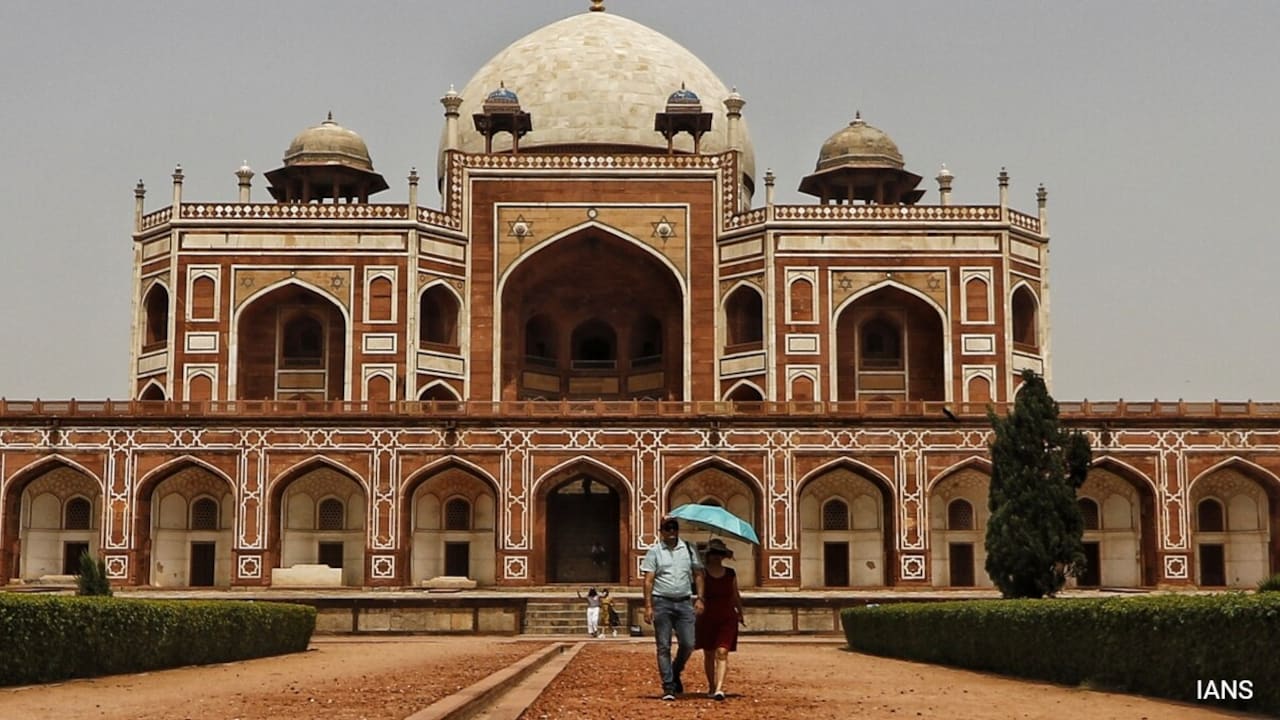
Humayun's Tomb, built in the 16th century by Empress Bega Begum in memory of Mughal emperor Humayun
Highlights
- Black crust on Humayuns Tomb sandstone formed by air pollution accelerates deterioration
- Gypsum in crust forms from sulphur dioxide reacting with calcium dust and moisture
- Thickest crust found in rain-sheltered areas; rain washes away pollutants on exposed surfaces
New Delhi:
A black crust formed on the sandstone of Humayun's Tomb in Delhi by years of exposure to air pollution is accelerating the deterioration of the UNESCO World Heritage Site, a joint study of IIT Roorkee and IIT Kanpur has found.
Published in the International Journal of Architectural Heritage, the study examined black crust samples collected from different parts of Humayun's Tomb using laboratory techniques to analyse their chemical composition, mineral content and microscopic structure.
The researchers found that the black crust is mainly made up of gypsum -- a mineral formed when sulphur dioxide in polluted air reacts with calcium-rich dust and moisture, the study showed.
The gypsum layer traps soot, dust and tiny metal particles from vehicle emissions, construction activities, road dust, biomass burning and industrial pollution, gradually forming a dark coating on the sandstone, it mentioned.
The study found that the thickest black crust developed in rain-sheltered parts of the monument, where pollutants accumulate over long periods, while more exposed surfaces had comparatively thinner deposits because rain naturally washes away some of the pollutants.
According to the researchers, the black crust is more than a surface stain. The chemical reactions that form the crust gradually weaken the sandstone, making it more vulnerable to weathering and long-term deterioration.
They said the findings provide scientific evidence linking air pollution to the deterioration of Humayun's Tomb and could help authorities plan conservation measures for the monument.
The study recommended periodic removal of the black crust using scientifically tested conservation methods, continuous monitoring of pollution around the monument and evaluation of protective coatings before their use.
It also suggested reducing pollution at the source through cleaner transport and lower-emission fuels to slow the formation of the damaging deposits.
The researchers said the findings could help conservation agencies prioritise preventive measures and develop site-specific strategies to protect Humayun's Tomb from further pollution-related deterioration.
Humayun's Tomb, built in the 16th century by Empress Bega Begum in memory of Mughal emperor Humayun, is regarded as India's first grand garden tomb.
The red sandstone and white marble monument introduced several architectural features that later influenced Mughal monuments, including the Taj Mahal.
The UNESCO World Heritage Site is one of Delhi's best-known historical monuments and attracts visitors from across the world.
(This story has not been edited by NDTV staff and is auto-generated from a syndicated feed.)
Published: August 03, 2026 07:48 IST
also read
"Dangerous, Causes Toxic Pollution": Court Bans Firecrackers On Mumbai Roads
Press Trust Of IndiaAnti-Pollution Crackdown Intensifies Across NCR, 150 Inspections In 15 Days
Reported by Reet Kaur SahniNo School Sports In Delhi-NCR In November-December? Check What Air Quality Panel Says
Reported by Ishika Verma, Edited by Aakanksha Singh
 Written by Debosmita Ghosh | Friday September 25, 2026
Air purifiers are mainly designed to clean pollutants that are suspended in the air. A HEPA filter can trap very small particles and may help reduce indoor levels of particulate matter, dust, pollen and some other airborne particles. However, the performance of a purifier depends on several factors.
- Written by Dr Ankit Kumar Sinha | Friday September 25, 2026
To improve respiratory health, it is important to minimise exposure to polluted air, enhance indoor ventilation, adhere to workplace safety regulations, and promote physical activity.
- Tuesday September 22, 2026 , Mumbai
The court had on Monday taken suo motu (on its own) cognizance of the issue of severe noise and air pollution caused during processions.
- Written by Sambhav Kumar | Tuesday September 22, 2026
Air pollution does not necessarily mean you have to give up physical activity. The key is to adapt your workout according to the conditions.
- Written by Sambhav Kumar | Friday September 18, 2026
While Bryan Johnson's highly structured approach may attract attention, experts caution against treating any celebrity's routine as a universal prescription





................................ Advertisement ................................

Blog | Well Done, Delhi. You've Turned Lung Sacrifice Into A Badge Of HonourSaikat Kumar Bose
Monday November 10, 2025Till some years back, Delhiites would ask angry questions to those in power about the capitals annual tryst with toxic air. This has changed. Those in the driving seat dont see the need to answer now.
Opinion | Why Indians Have Just Given Up On Air Pollution CrisisTanushree Ganguly
Friday December 20, 2024While some may argue that people in Delhi are now more aware of air pollution than they were a decade back, my rebuttal would be that awareness does not mean that people are concerned.
Opinion | You Must Outrage Over Filthy Air More Than Once A YearJyoti Pande Lavakare
Tuesday December 10, 2024Delhi welcomed us with monsoon rains and mangos. We were home. Fast forward a couple of years, in the winter of 2012, I found myself in denial about something other parents, mostly expats, were calling toxic air.
Opinion | Delhi's Air Pollution Situation Is Like A Bad MarriageNishtha Gautam
Friday November 22, 2024On a good day, such as today, the AQI reading in Delhi is 407. We are jubilant at the sickly sunshine trickling through the slightly dissipated smog. At least its not 1600.
दिवाली... पराली... सियासी जुगाली!Ashwini kumar
Monday November 18, 2024दिल्ली-एनसीआर में प्रदूषण का समाधान तो आज तक मिला नहीं. हर साल चिंतित होकर हम-आप सांसों की तकलीफ के साथ-साथ दिल और ब्लड प्रेशर के मरीज भी क्यों बनें?


