


- Home/
- Air Pollution: India Can Learn From London, Mexico City, Tokyo, Beijing | The Reason Why
Air Pollution: India Can Learn From London, Mexico City, Tokyo, Beijing | The Reason Why
| Updated: January 16, 2026 13:40 IST
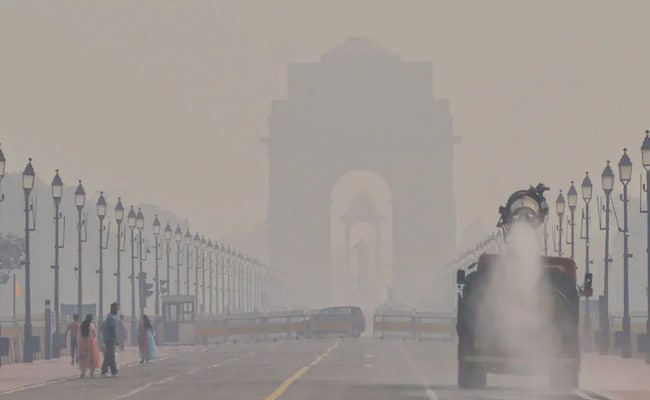
Bryan Johnson left Nikhil Kamath's podcast because of pollution, and more recently, Putin's cough made headlines for similar reasons. In 2017, Frank Hans Dannenberg Castellanos raised the issue with India's Ministry of External Affairs. If pollution in major cities continues to worsen, it may soon prompt expats, diplomats, and business leaders to avoid Delhi altogether.
Air pollution in India is a persistent issue, reflecting administrative shortcomings rather than mere weather effects. Cities like Beijing, London, Mexico City and Tokyo have improved their air quality by treating it as essential infrastructure and implementing sustained regulations. Let's understand what we can learn from these cities.
Beijing: Governance Matters (2025 Average AQI = 81)
Between 2013 and 2017, Beijing successfully reduced pollution. This came from China's Clean Air Action Plan that cut coal use, shut or moved dirty industries, scrapped millions of old vehicles, and pushed households from coal to gas.
The real driver wasn't technology. It was governance. Studies showed Beijing's worst smog came from the wider Beijing-Tianjin-Hebei industrial belt. China responded by treating the whole region as one airshed and imposing strict controls. It even used real-time monitoring, satellite checks and big data to speed up the process.
However, China's system is opaque. So it's hard to tell how things like job loss or family stress impacted people during the transition.
London: Slow & Steady (2025 Average AQI = 45)
London's pollution story begins with the Great Smog of 1952, which killed at least 4,000 people in a few days. After a few years, the government passed the Clean Air Act of 1956 - the world's first serious air-pollution law.
The cleanup was slow, as coal bans, smokeless zones, gas adoption, unleaded fuel, and stricter emissions rules were introduced gradually. Cutting key pollutants by over 75% took nearly fifty years.
London's deeper lesson is about persistence. The process was slow yet systematic - very British, one might say. What mattered was political commitment throughout multiple electoral cycles, and that regulation kept evolving with science.
Mexico City: Learning Through Failures (2025 Average AQI = 55)
Mexico City teaches what works and what doesn't in the pollution crisis. Labelled the world's most polluted city by the UN in 1992, it struggled with population growth, rapid industrialisation, migration, and emissions trapped by its mountainous, high-altitude basin.
In 1989, it tried to cut pollution by banning cars one day a week based on licence plates. It failed because richer families bought another car, mostly older and dirtier ones.
In the mid-1990s, the city launched ProAire, a long-term, multi-sector and adaptive programme which included the introduction of natural gas, unleaded petrol, and stricter vehicle standards, and expansion of public transport.
The payoff came gradually. But the story isn't a clean victory. Bureaucracy still falters while car use is also rising.
Tokyo: Early Actions (2025 Average AQI = 36)
Tokyo moved early on air pollution. Local factory regulations preceded national laws. Since the 1970s, carbon monoxide and sulphur dioxide levels have dropped significantly due to cleaner fuels and technologies. By the 2000s, roadside carbon monoxide matched general ambient levels.
Nitrogen dioxide was trickier. It rose again during the late-1980s bubble as traffic surged. In the early 2000s, Tokyo acted against diesel vehicles, leading to a steady drop in particulate levels.
But Tokyo also shows where city-led action runs out of road. Fine particulates remain above WHO guidelines, largely due to industrial emissions nearby.
The takeaway is sobering. Early regulation works and buys time - but without regional coordination, it eventually hits a ceiling.
Cross City Lessons for India
A few takeaways from the experiences of Beijing, London, Mexico City, and Tokyo are:
Regional collaboration is essential. Without a powerful airshed body, city-level efforts will fall short.
Quick fixes are ineffective.
Long-term, evolving strategies are key, as seen in London and Mexico City.
Data-driven enforcement and scientific studies are vital.
Robust monitoring, like Beijing's, ensures effective penalties.
Expanding public transport is more impactful than temporary bans.
Technology and standards only work with strong institutions.
On India's Fight Against Pollution
In India, pollution control is more of a drama and less of a policy. The enforcement is uneven, uncertain, and sometimes even unscientific.
Fighting for clean air is unfortunate, while the government's response in Delhi (2025 Average AQI = 180) highlights that clean air is still not given in society.
Which leaves three blunt questions for India, in order:
1. Does it want to clean its air? Voters don't seem interested, nor are politicians.
2. Will it build the institutional architecture needed to do so? Currently, India's pollution control boards are toothless.
3. Only then - Will people finally get clean air?
Disclaimer: The views expressed in this article are solely those of the author and do not necessarily reflect the opinion of NDTV Profit or its affiliates. Readers are advised to conduct their own research or consult a qualified professional before making any investment or business decisions. NDTV Profit does not guarantee the accuracy, completeness, or reliability of the information presented in this article.
Published: January 16, 2026 13:40 IST
also read
'Air Is A Luxury': Actor Saiyami Kher's Post On Mumbai's Alarming Pollution Levels Goes Viral
Edited by Anita Iyer, NDTV Profit NewsDelhi Air Pollution: CAQM Revokes Restrictions Under GRAP 2 As Air Quality Improves
Khushi MaheshwariDelhi: With Average AQI Of 307, 2026 Sees Second-Best January In Five Years
Press Trust of India
 Written by Shreya Goswami | Friday February 27, 2026
Rising air pollution in Mumbai is now being linked to 57% of lung cancer cases, the Maharashtra government told the state assembly.
- Reported by Rittick Mondal | Thursday February 26, 2026 , Kolkata
The Mamata Banerjee-led government plans to set up an 800-km long greeen corridor, which will work as a "bioshield" - a forested area that would act as a "Green Wall" - along the Jharkhand border to intercept pollutants entering Bengal.
- Agence France-Presse | Thursday February 26, 2026 , Paris
The United Nations announced the approval of the first carbon credits under a global market aimed at reducing emissions, a mechanism that has faced scrutiny over greenwashing concerns.
- Wednesday February 25, 2026 , New Delhi
Air pollution is a concern not just for Mumbai but for countries and cities around the world, Maharashtra Environment Minister Pankaja Munde told NDTV Wednesday, after the city woke this morning to a blanket of smog for an eighth straight day.
- Reported by Radhika Ramaswamy | Thursday February 26, 2026 , Mumbai
Mumbai woke up to yet another blanket of haze on Tuesday morning, with a grey veil hanging over the skyline from Bandra to South Mumbai.


................................ Advertisement ................................

Blog | Well Done, Delhi. You've Turned Lung Sacrifice Into A Badge Of HonourSaikat Kumar Bose
Monday November 10, 2025Till some years back, Delhiites would ask angry questions to those in power about the capitals annual tryst with toxic air. This has changed. Those in the driving seat dont see the need to answer now.
Opinion | Why Indians Have Just Given Up On Air Pollution CrisisTanushree Ganguly
Friday December 20, 2024While some may argue that people in Delhi are now more aware of air pollution than they were a decade back, my rebuttal would be that awareness does not mean that people are concerned.
Opinion | You Must Outrage Over Filthy Air More Than Once A YearJyoti Pande Lavakare
Tuesday December 10, 2024Delhi welcomed us with monsoon rains and mangos. We were home. Fast forward a couple of years, in the winter of 2012, I found myself in denial about something other parents, mostly expats, were calling toxic air.
Opinion | Delhi's Air Pollution Situation Is Like A Bad MarriageNishtha Gautam
Friday November 22, 2024On a good day, such as today, the AQI reading in Delhi is 407. We are jubilant at the sickly sunshine trickling through the slightly dissipated smog. At least its not 1600.
दिवाली... पराली... सियासी जुगाली!Ashwini kumar
Monday November 18, 2024दिल्ली-एनसीआर में प्रदूषण का समाधान तो आज तक मिला नहीं. हर साल चिंतित होकर हम-आप सांसों की तकलीफ के साथ-साथ दिल और ब्लड प्रेशर के मरीज भी क्यों बनें?


