


- Home/
- Anti-Smog Guns To Be Mandatory For High-Rise Buildings, Hotels In Delhi
Anti-Smog Guns To Be Mandatory For High-Rise Buildings, Hotels In Delhi
Press Trust of India | Updated: March 01, 2025 22:50 IST

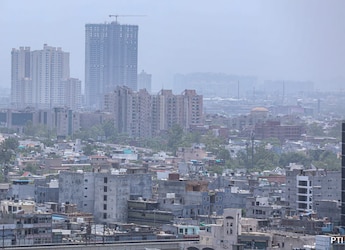
Rising air pollution has been a major issue in Delhi. (Representational)
New Delhi:
Delhi Environment Minister Manjinder Singh Sirsa on Saturday announced that all high-rise buildings, hotels, commercial complexes, major establishments such as airports and construction sites must install anti-smog guns to curb air pollution levels.
Stressing that Delhi has to put its house in order before seeking action from others, Manjinder Singh Sirsa directed all departments concerned to prepare a detailed roadmap to tackle pollution and sought data on the contribution of key sites, including Delhi Airport, to the city's air pollution.
Chairing a high-level meeting with the officials from the Municipal Corporation of Delhi (MCD) and the New Delhi Municipal Council (NDMC), Manjinder Singh Sirsa emphasised the need for stringent pollution control measures and said that if necessary, new laws would be introduced.
Rising pollution was a major election issue in Delhi and the BJP had accused the previous AAP government of failing to check it.
The MCD has been asked to provide a detailed list of existing and under-construction high-rise buildings, which will be subject to new pollution control norms. Existing buildings and upcoming projects will have separate guidelines, ensuring stricter compliance with environmental regulations, Manjinder Singh Sirsa said.
The minister also announced plans to transition all vehicles operating inside the airport to green alternatives and urged major establishments to actively contribute to pollution control by increasing greenery in their surroundings.
"By 2026, at least 10,000 electric vehicles will be introduced in Delhi, and steps will be taken to ensure a significant reduction in landfill waste, with parks and forests developed on cleaned landfill sites," Manjinder Singh Sirsa said.
Additionally, the minister highlighted the need for cloud seeding as a potential measure to combat pollution during peak smog months and said that all necessary permissions and formalities would be completed on a priority basis.
He also said that leading institutions like IIT Delhi and other Delhi-based colleges would be involved in pollution control efforts.
Manjinder Singh Sirsa stressed that before holding others accountable, Delhi must first reduce its pollution levels.
"Fifty per cent of Delhi's pollution comes from within the city itself. We need to fix our own problems first before seeking action from others," Manjinder Singh Sirsa added.
Bhavreen Kandhari, an environmentalist, said that the government should "focus on controlling emissions and addressing major sources of pollution such as industries, construction activities and fossil fuel plants located in the middle of the city that contribute significantly to air pollution".
Kandhari said that while anti-smog guns and water sprinkling help manage pollution to some extent, they are not complete solutions. Anti-smog guns are ineffective at construction sites, whereas water sprinkling can help control dust in such areas.
"Therefore, the government should introduce policies that bring impactful and lasting results," she added.
(Except for the headline, this story has not been edited by NDTV staff and is published from a syndicated feed.)
Published: March 01, 2025 22:50 IST
 Thursday July 30, 2026
Air pollution has links to health risks in pregnant woman as they can face reproductive issues. Here is how genetic and environmental factors could impact reproductive health.
- Written by Sambhav Kumar | Tuesday July 28, 2026
Heavy monsoon rains in Delhi-NCR may clear outdoor pollutants temporarily but increase indoor humidity and mould growth, affecting respiratory health.
- Written by Dr Ramanarayanan | Sunday July 26, 2026
Invasive fungal infections are rising in India, affecting more patients and showing resistance to treatments, posing serious health risks.
- Written by Ashwini Sehgal | Thursday July 23, 2026
The study included 85 adults and children with poorly controlled asthma who lived in homes or apartments with gas stoves. Asthma control was determined from responses to a standard questionnaire.
- Written by Rupashi Chhabra | Tuesday July 21, 2026
Dr Bhuvan Chugh explains how hidden environmental toxicants cause lung cancer in young non-smokers. Here is how fine air pollution triggers hidden mutations.



................................ Advertisement ................................

Blog | Well Done, Delhi. You've Turned Lung Sacrifice Into A Badge Of HonourSaikat Kumar Bose
Monday November 10, 2025Till some years back, Delhiites would ask angry questions to those in power about the capitals annual tryst with toxic air. This has changed. Those in the driving seat dont see the need to answer now.
Opinion | Why Indians Have Just Given Up On Air Pollution CrisisTanushree Ganguly
Friday December 20, 2024While some may argue that people in Delhi are now more aware of air pollution than they were a decade back, my rebuttal would be that awareness does not mean that people are concerned.
Opinion | You Must Outrage Over Filthy Air More Than Once A YearJyoti Pande Lavakare
Tuesday December 10, 2024Delhi welcomed us with monsoon rains and mangos. We were home. Fast forward a couple of years, in the winter of 2012, I found myself in denial about something other parents, mostly expats, were calling toxic air.
Opinion | Delhi's Air Pollution Situation Is Like A Bad MarriageNishtha Gautam
Friday November 22, 2024On a good day, such as today, the AQI reading in Delhi is 407. We are jubilant at the sickly sunshine trickling through the slightly dissipated smog. At least its not 1600.
दिवाली... पराली... सियासी जुगाली!Ashwini kumar
Monday November 18, 2024दिल्ली-एनसीआर में प्रदूषण का समाधान तो आज तक मिला नहीं. हर साल चिंतित होकर हम-आप सांसों की तकलीफ के साथ-साथ दिल और ब्लड प्रेशर के मरीज भी क्यों बनें?


