- Home/
- Arvind Kejriwal's Sharp Takedown Of Rekha Gupta's "AQI Is A Temperature" Remark
Arvind Kejriwal's Sharp Takedown Of Rekha Gupta's "AQI Is A Temperature" Remark
Reported by Ashwine Kumar Singh | Updated: December 08, 2025 22:28 IST

Highlights
- Delhi Chief Minister Rekha Gupta has said that mist sprayers are used at pollution hotspots
- She has also compared AQI to temperature, claiming watering is a valid way to reduce pollution readings
- Arvind Kejriwal's AAP has accused the government of hiding pollution data by watering AQI monitors
New Delhi :
Delhi Chief Minister Rekha Gupta's remarks about the government using mist sprayers to contain pollution at hotspots has drawn a stinging response from her predecessor Arvind Kejriwal. In a post on social media platform X, Kejriwal has said Gupta's comments made it clear that the government is working to "hide" the pollution data. He also took a dig at the Chief Minister's assertion that AQI "is like temperature", questioning "When did this new science come about that AQI has now become temperature".
"The Chief Minister has at least accepted that wherever AQI monitors are installed, water spraying is being done there so that the truth about pollution doesn't reach the people of Delhi. In other words, a game is underway to hide the data and show "clean air"," read a rough translation of his vernacular post.
पहली बात - मुख्यमंत्री जी ने ये तो स्वीकार कर लिया कि जहां-जहां AQI मॉनिटर लगे हैं वहीं पानी का छिड़काव कराया जा रहा है ताकि दिल्ली के लोगों तक प्रदूषण का सच ना पहुंच पाए। यानी आंकड़ों को छुपाकर "हवा साफ़" दिखाने का खेल चल रहा है।
— Arvind Kejriwal (@ArvindKejriwal) December 8, 2025
दूसरी बात - ये नया विज्ञान कब आया कि AQI अब... pic.twitter.com/L0DylAsQ3e
In an interview, Gupta was asked about opposition allegations of water being sprayed on air monitors in hotspots to fudge pollution data.
"Tell me, what is a hotspot? A hotspot is where there's the most pollution. Right? What's the solution? You spray there, you water it. You work to improve the soil. So, you'll spray only on the hotspot," she had responded.
"Does using a monitor bring down the AQI? AQI is like a temperature which you can know from any instrument, so watering it is the only solution which we are also doing," she had added.
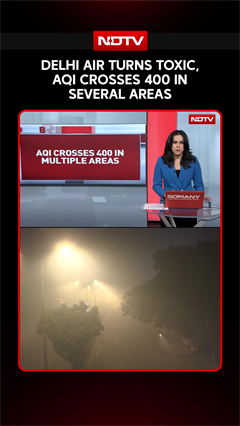
The Chief Minister's comment came amid a heated debate on why the government's AQI figures are not reflecting a deterioration in air quality, even though pollution is getting worse.
The Opposition Aam Aadmi Party has repeatedly claimed that the government is presenting fake figures -- a claim the BJP has denied. Gupta had branded the national capital's winter pollution a "legacy" problem.
The political battle heated up after Gupta said earlier this month that the Delhi government is planning to deploy mist spray technology to combat air pollution. The government, she said, will install 305 mist sprayers at nine pollution hotspots in the city.
"As soon as pollution increases, the government shuts down AQI monitoring stations. Wherever AQI is high, spraying is being done around those AQI monitoring stations... People are troubled and stunned to see that major institutions are involved in this tampering, and that the fraud is happening openly... The government's intention is not to reduce pollution but to reduce its figures," said senior AAP leader Saurabh Bhardwaj.
"The BJP got water to be sprinkled on AQI monitors to lower the readings. The BJP is manipulating the data... This lowers the BJP's integrity and credibility... Even the BJP people should be here with us, but they are sitting at home with their air purifiers," said AAP spokesperson Priya Kakkar.
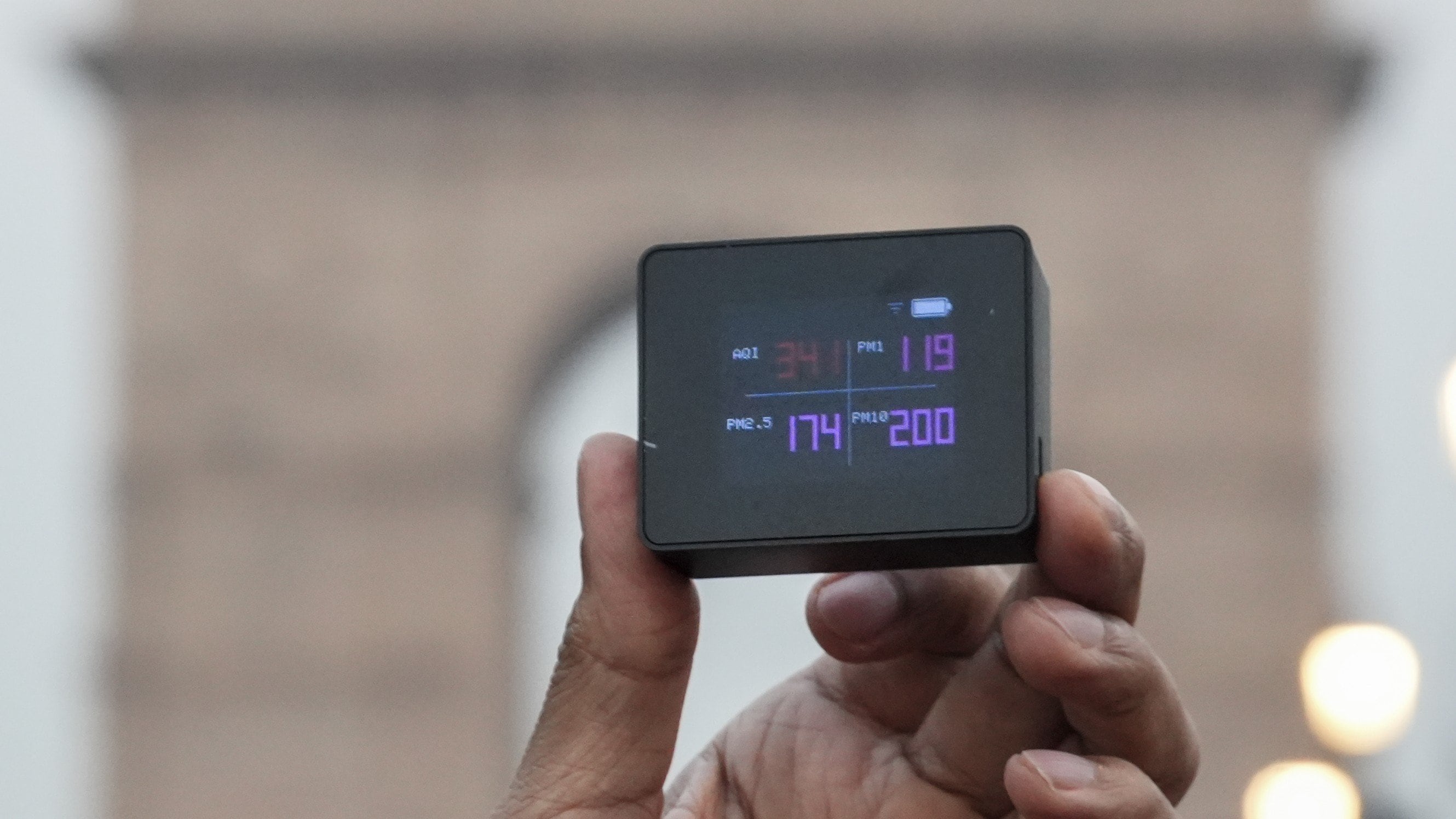
Delhi gets enveloped in a toxic blanket after Diwali every year. This year, the development has been late in coming. But over the past couple of weeks, the air quality has swung between "poor" and "very poor" levels.
According to the Central Pollution Control Board (CPCB), an AQI between 0 and 50 is classified "good", 51 and 100 "satisfactory", 101 and 200 "moderate", 201 and 300 "poor", 301 and 400 "very poor" and 401 and 500 "severe".
Published: December 08, 2025 22:17 IST
also read
Opposition Claims Data Fraud As Delhi Chokes Post Diwali, BJP Blames '25 Years Of Inaction'
Edited by Debanish AchomDelhi AQI Above 1,000 And Below 500 At Same Time? Conflicting Data Explained
Edited by Debanish AchomWhy Delhi's Major Air Quality Stations Stopped Showing Data On Diwali Evening
Reported by Kumar Kunal
 Written by Varsha Vats | Monday November 09, 2026
Children (whose lungs are still developing), the elderly, pregnant individuals, and those with pre-existing heart or lung diseases are at the greatest risk for acute complications.
- Edited by Debanish Achom | Monday November 09, 2026 , New Delhi
The war of words comes as a thick layer of smoke covers Delhi-National Capital Region (NCR) after Diwali celebrations, reducing visibility and taking air pollution into the 'severe' category at several locations
- AFP | Monday November 09, 2026 , India
Toxic air in parts of India's capital New Delhi soared to more than 58 times the World Health Organization's recommended daily limit Monday.
- Edited by Debanish Achom | Monday November 09, 2026 , New Delhi
Real-time figures from the CPCB's Sameer mobile application and station-level monitoring indicated widespread pockets of extreme toxicity across the national capital
- Reported by Kumar Kunal | Monday November 09, 2026 , New Delhi
Sudden discontinuation of online data is not surprising for those who follow the website on Diwali evening regularly.


................................ Advertisement ................................



दीवाली की चौखट पर दिल्ली में सांसों का संकट: 30 साल की स्टडी ने हरियाली को लेकर क्या बताया?
Thursday November 05, 2026अध्ययन में हरियाली की मात्रा के साथ उसके फैलाव और आपसी जुड़ाव को भी महत्वपूर्ण पाया गया. जिन इलाकों में हरियाली ज्यादा बिखरी हुई थी, वहां सतही तापमान अधिक रहा. इसके विपरीत, बड़े और आपस में जुड़े हरित क्षेत्रों में तापमान कम पाया गया.
Opinion: Why Delhi's Smog Can't Be Fixed From SpaceDavid Fickling, Bloomberg
Monday October 19, 2026The clearest sign that Delhi is on a path to cleaner air would be a decline in the amount of paddy grown nearby, and therefore the acreage liable to be burned each year.
Don't Normalise Air Purifiers As Delhi Chokes | The Reason Why
Thursday December 11, 2025More than 90 cities in the world's top 100 polluting list are in India. With every passing year, the AQI is rising, reaching 'hazardous' levels.
Blog | Well Done, Delhi. You've Turned Lung Sacrifice Into A Badge Of HonourSaikat Kumar Bose
Monday November 10, 2025Till some years back, Delhiites would ask angry questions to those in power about the capitals annual tryst with toxic air. This has changed. Those in the driving seat dont see the need to answer now.
Opinion | Why Indians Have Just Given Up On Air Pollution CrisisTanushree Ganguly
Friday December 20, 2024While some may argue that people in Delhi are now more aware of air pollution than they were a decade back, my rebuttal would be that awareness does not mean that people are concerned.