- Home/
- Battle For Breath: Mumbai's Elite Enclave Turns Pollution Hotspot
Battle For Breath: Mumbai's Elite Enclave Turns Pollution Hotspot
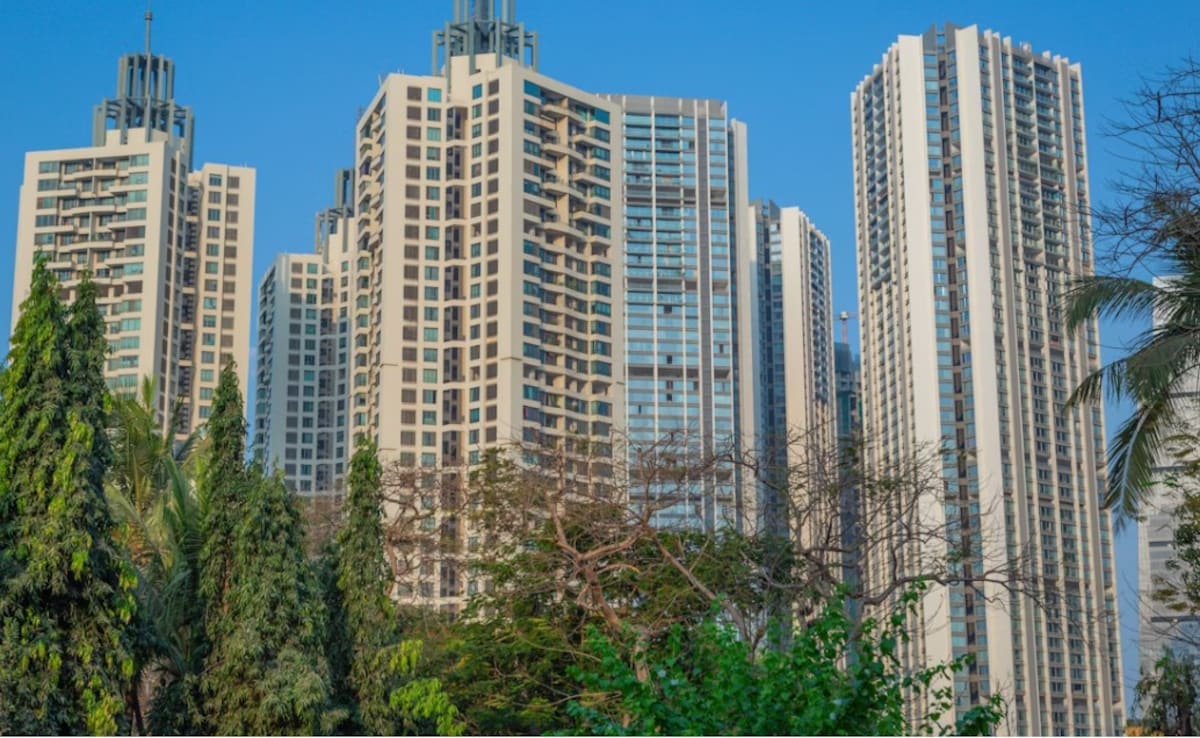
Mumbai's Bhakti Park, an upscale residential enclave in the city's eastern corridor, offers a paradox.
Spread across 20 acres with lush gardens, a multiplex, panoramic sea views, and mangroves, the colony boasts enviable connectivity to the monorail, Eastern Freeway, and the Atal Setu. Its residents include former judges, bureaucrats, IPS officers, top bankers, senior journalists, and even a few politicians - making it one of Mumbai's most desirable addresses.
Here is the grim reality: residents are struggling to breathe. Air quality in and around Bhakti Park and Wadala Truck Terminal (TT) has plummeted in recent weeks, with AQI levels soaring beyond 300 - classified as "severe." For months, the area has ranked among Mumbai's most polluted localities, and several residents report respiratory ailments linked to the toxic air.
While winter smog worsens the situation annually, locals blame a cement-mixing plant that came up two years ago for aggravating the crisis. Located adjacent to the Eastern Freeway at the colony's entrance, the plant sprawls across 230 square meters and supplies concrete for government infrastructure projects and BDD chawl redevelopment. In May 2024, the Maharashtra Pollution Control Board (MPCB) issued a closure notice citing violations, but operations resumed after the company claimed compliance.
Despite heavy vehicle restrictions on the Freeway, trucks ferrying cement to and from the plant ply round the clock, creating another safety hazard. Traffic police have penalised violators following complaints, but enforcement has failed to stem the flow.
Residents also allege that another plant is coming up near MHADA buildings toward BPT Road, adding to the two already active in Wadala TT. Large-scale construction work, which includes Metro Line 4 and the Customs Officers' Colony, has further thickened the dust blanket.
Illegal industrial activity compounds the problem: garbage burning, scrap fires and metal smelting are rampant. Vehicular emissions from Wadala TT only worsen the air quality. For the past year, Bhakti Park has not seen a single day of safe AQI levels. This month, readings hovered around 300, exposing residents to pollution equivalent to smoking six to eight cigarettes daily. Many report persistent respiratory issues.
Among those gasping for clean air are former MMRDA chief, a former Lokayukta, a former Police Commissioner, and senior officers from agencies like the CBI, Enforcement Directorate, and Income Tax Department. Bhakti Park residents include some top bankers and senior journalists.
Frustrated by official inaction, residents have come together, petitioning the BMC, MPCB, and police, but there haven't been any tangible results. Now, in a last-ditch effort, they have launched a campaign to write complaint letters directly to Prime Minister Narendra Modi.
Published: December 19, 2025 22:04 IST
also read
Opposition Claims Data Fraud As Delhi Chokes Post Diwali, BJP Blames '25 Years Of Inaction'
Edited by Debanish AchomDelhi AQI Above 1,000 And Below 500 At Same Time? Conflicting Data Explained
Edited by Debanish AchomWhy Delhi's Major Air Quality Stations Stopped Showing Data On Diwali Evening
Reported by Kumar Kunal
 Written by Varsha Vats | Monday November 09, 2026
Children (whose lungs are still developing), the elderly, pregnant individuals, and those with pre-existing heart or lung diseases are at the greatest risk for acute complications.
- Edited by Debanish Achom | Monday November 09, 2026 , New Delhi
The war of words comes as a thick layer of smoke covers Delhi-National Capital Region (NCR) after Diwali celebrations, reducing visibility and taking air pollution into the 'severe' category at several locations
- AFP | Monday November 09, 2026 , India
Toxic air in parts of India's capital New Delhi soared to more than 58 times the World Health Organization's recommended daily limit Monday.
- Edited by Debanish Achom | Monday November 09, 2026 , New Delhi
Real-time figures from the CPCB's Sameer mobile application and station-level monitoring indicated widespread pockets of extreme toxicity across the national capital
- Reported by Kumar Kunal | Monday November 09, 2026 , New Delhi
Sudden discontinuation of online data is not surprising for those who follow the website on Diwali evening regularly.


................................ Advertisement ................................


दीवाली की चौखट पर दिल्ली में सांसों का संकट: 30 साल की स्टडी ने हरियाली को लेकर क्या बताया?
Thursday November 05, 2026अध्ययन में हरियाली की मात्रा के साथ उसके फैलाव और आपसी जुड़ाव को भी महत्वपूर्ण पाया गया. जिन इलाकों में हरियाली ज्यादा बिखरी हुई थी, वहां सतही तापमान अधिक रहा. इसके विपरीत, बड़े और आपस में जुड़े हरित क्षेत्रों में तापमान कम पाया गया.
Opinion: Why Delhi's Smog Can't Be Fixed From SpaceDavid Fickling, Bloomberg
Monday October 19, 2026The clearest sign that Delhi is on a path to cleaner air would be a decline in the amount of paddy grown nearby, and therefore the acreage liable to be burned each year.
Don't Normalise Air Purifiers As Delhi Chokes | The Reason Why
Thursday December 11, 2025More than 90 cities in the world's top 100 polluting list are in India. With every passing year, the AQI is rising, reaching 'hazardous' levels.
Blog | Well Done, Delhi. You've Turned Lung Sacrifice Into A Badge Of HonourSaikat Kumar Bose
Monday November 10, 2025Till some years back, Delhiites would ask angry questions to those in power about the capitals annual tryst with toxic air. This has changed. Those in the driving seat dont see the need to answer now.
Opinion | Why Indians Have Just Given Up On Air Pollution CrisisTanushree Ganguly
Friday December 20, 2024While some may argue that people in Delhi are now more aware of air pollution than they were a decade back, my rebuttal would be that awareness does not mean that people are concerned.