


- Home/
- Why Delhi Is Spending Rs 9,585 Crore To Replace Old Commercial Vehicles
Why Delhi Is Spending Rs 9,585 Crore To Replace Old Commercial Vehicles
Reported by Ankita Tiwari | Updated: July 15, 2026 07:29 IST
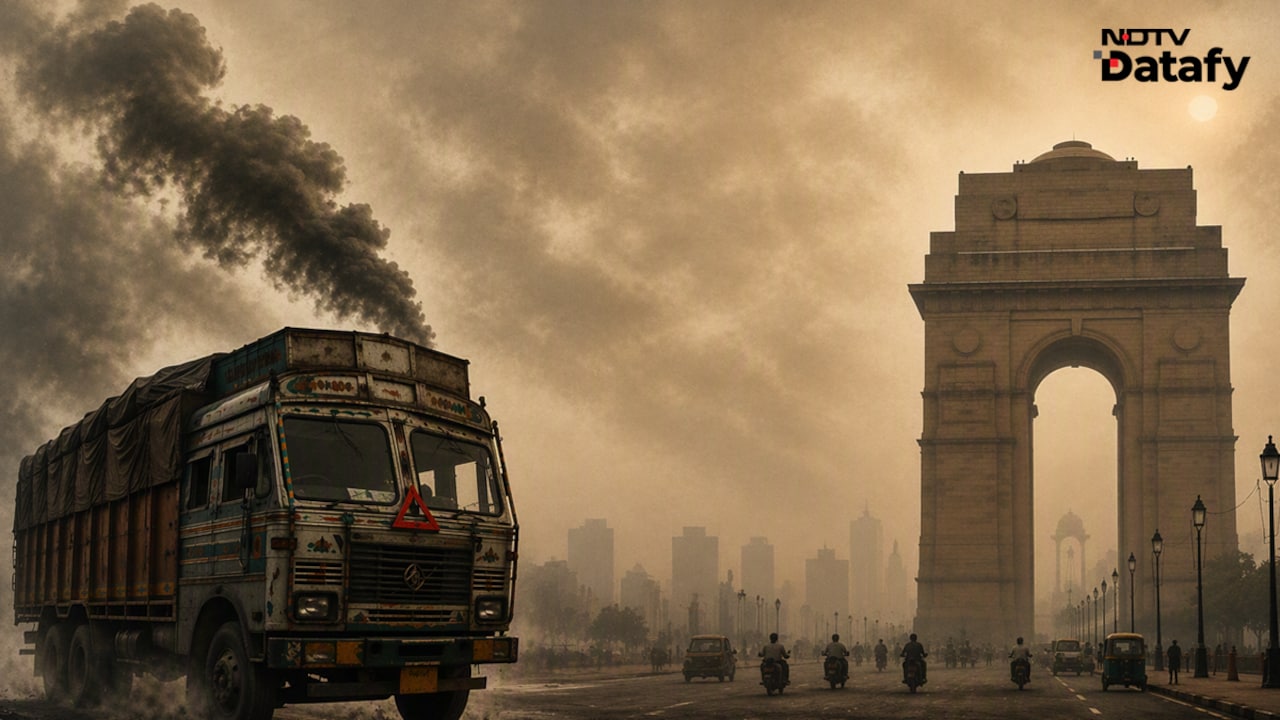
Trucks entering Delhi emit an estimated 52.18 kg of PM2.5 every day.
Highlights
- Delhi remains a pollution hotspot despite various air quality improvement measures
- The Centre approved Rs 9,585 crore Naya Safar Yojana to replace old commercial vehicles
- Scheme offers financial incentives and tax concessions for switching to cleaner vehicles
New Delhi: 
Delhi remains the country's pollution hotspot despite a series of measures to improve air quality. Over the years, authorities have introduced cleaner fuels, expanded CNG and electric public transport, promoted ethanol-blended petrol, tightened industrial norms and imposed restrictions on older vehicles. The latest step shifts the focus to one of the biggest sources of transport pollution, ageing commercial vehicles.
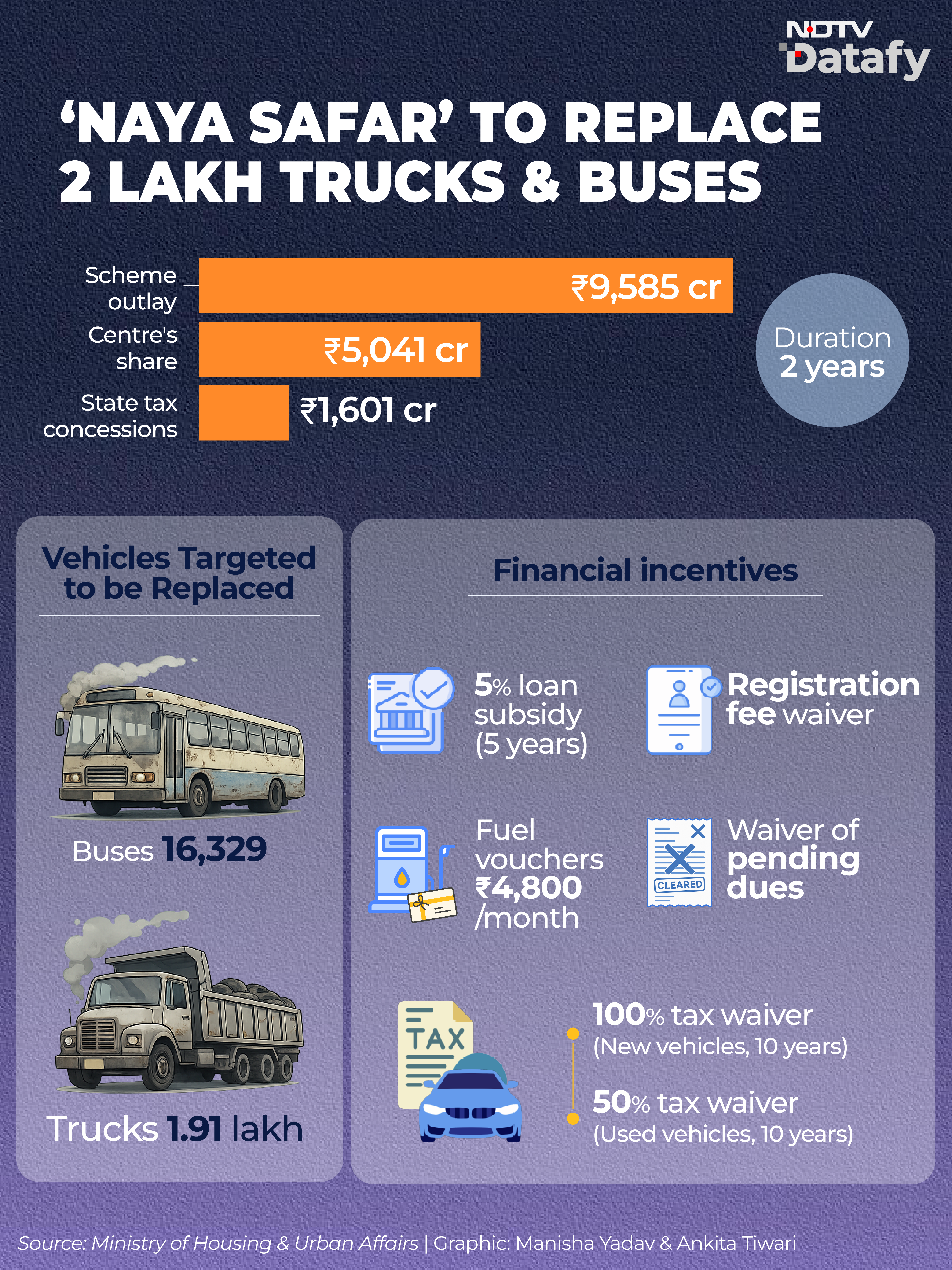
The Centre has approved the Rs 9,585 crore Naya Safar Yojana, a two-year scheme aimed at replacing old trucks and buses across Delhi-NCR with cleaner vehicles. The scheme covers around 2.07 lakh commercial vehicles, including 1.91 lakh trucks and 16,329 buses.
What the scheme offers
The programme encourages owners of older commercial vehicles to switch to BS-VI or electric vehicles through a package of financial incentives. Owners can avail a five per cent interest subsidy on vehicle loans for five years, monthly fuel vouchers of up to Rs 4,800, registration fee waivers and motor vehicle tax concessions. State governments will provide 100 per cent tax concessions on new vehicles and 50 per cent on used vehicles for 10 years, while pending dues on participating old vehicles will also be waived.
The scheme also lays down clear replacement rules. BS-III and older vehicles will have to be scrapped, while BS-IV vehicles can either be scrapped or sold outside NCR and non-NCAP cities. In Delhi, new buses purchased under the scheme must be BS-VI CNG or electric, while new light goods vehicles will have to be electric.
Why does the scheme matter?
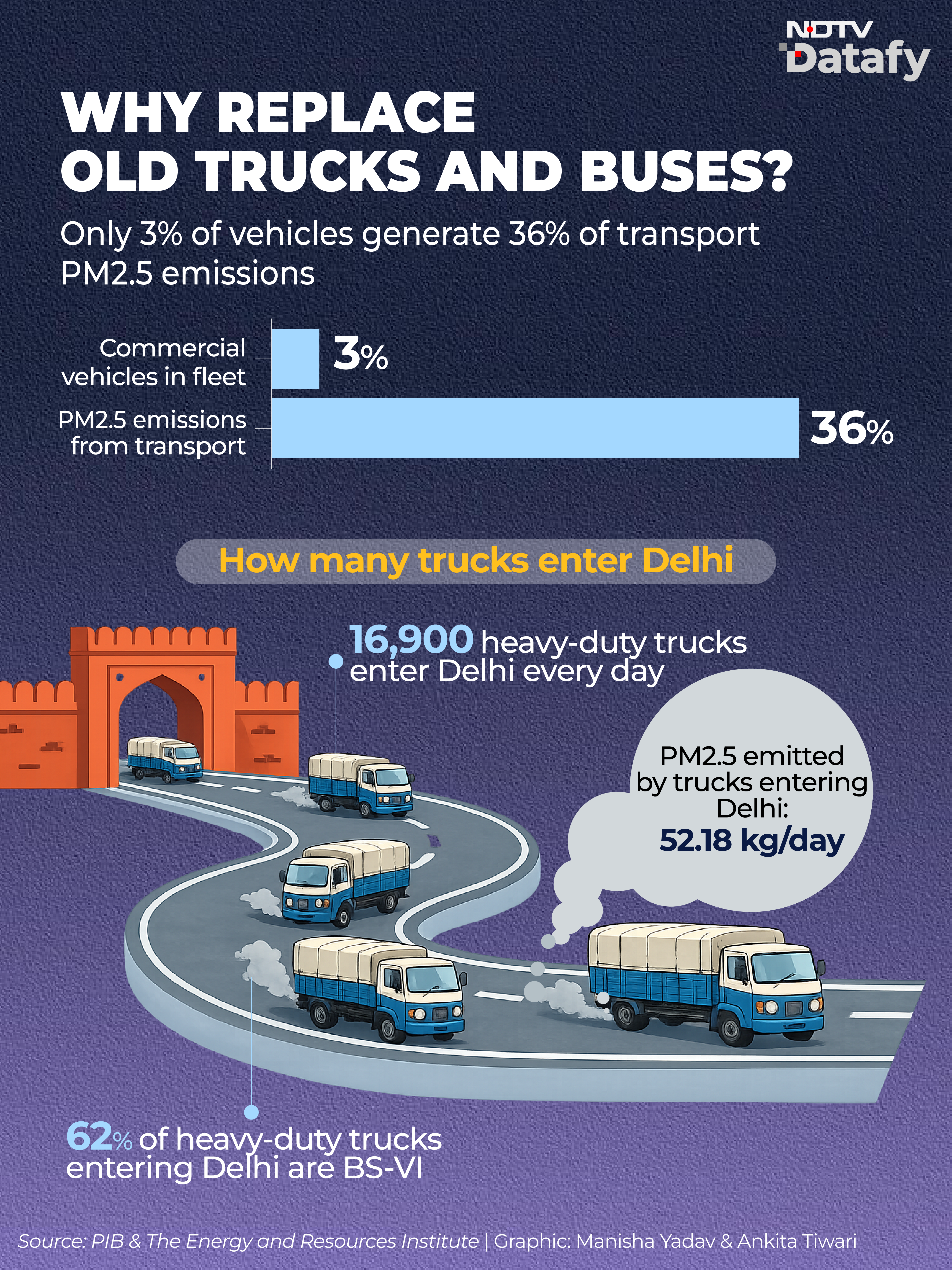
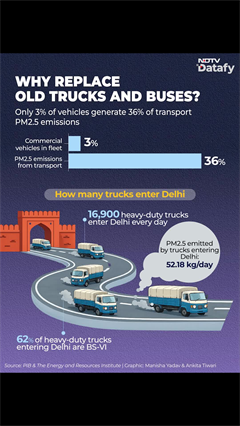
The government's focus is on commercial vehicles because they contribute far more to pollution than their numbers suggest. Trucks and buses make up only about three per cent of the vehicle fleet in Delhi-NCR but account for 36 per cent of PM2.5 emissions from the transport sector. Replacing older commercial vehicles is therefore expected to deliver a much larger reduction in emissions than replacing the same number of private vehicles.
What about trucks entering Delhi?
A recent study by the Air Pollution Action Group (AirPACT), IIT Delhi and TERI offers a closer look at the trucks entering the capital every day.
The study estimates that 16,900 heavy-duty trucks enter Delhi daily. Around 92 per cent of these trucks report Delhi as their destination, while only eight per cent are passing through the city.
Most trucks entering Delhi already comply with the latest emission norms. About 62 per cent are BS-VI vehicles, while 28 per cent are BS-IV and 10 per cent are BS-III or older.
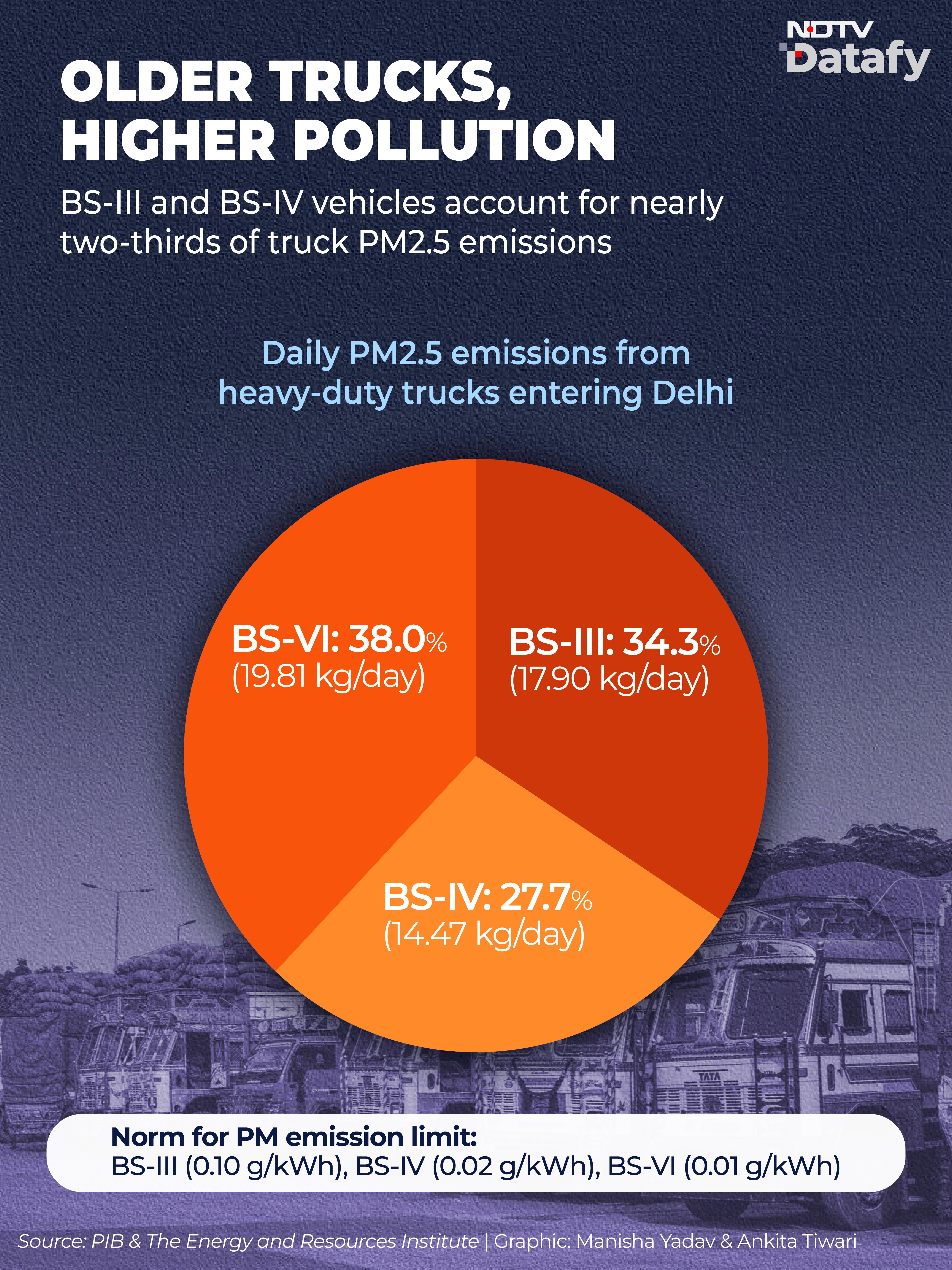
Despite being fewer in number, the older trucks are responsible for a disproportionate share of pollution. Trucks entering Delhi emit an estimated 52.18 kg of PM2.5 every day.
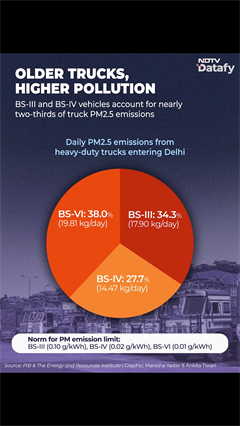
Of this, BS-III trucks emit 17.9 kg, while BS-IV trucks emit 14.47 kg. Together, BS-III and BS-IV trucks account for nearly 62 per cent of total PM2.5 emissions from trucks entering Delhi, even though they represent only 38 per cent of the fleet.
In comparison, BS-VI trucks, which make up 62 per cent of trucks entering Delhi, contribute 19.81 kg, or about 38 per cent of the total PM2.5 emission. On average, an older BS-III/BS-IV truck emits about 2.7 times more PM2.5 than a BS-VI truck in the surveyed fleet.
While most heavy-duty trucks entering Delhi are already BS-VI compliant, a relatively small share of older BS-III and BS-IV vehicles continues to generate a majority of particulate pollution. By targeting these vehicles first, the government hopes to achieve larger air-quality gains from a smaller section of the commercial fleet.
Published: July 15, 2026 07:29 IST
- Reported by Reet Kaur Sahni | Tuesday September 29, 2026
Starting November 1, petrol and diesel vehicles registered outside Delhi and not meeting BS-VI standards will be banned from entering the city, though CNG and electric vehicles are exempt.
- Written by Dr Sabine Kapasi | Tuesday September 29, 2026
Air pollution is often discussed as a cause of respiratory disease, but its effects extend to the heart and blood vessels.
- Edited by Debanish Achom | Monday September 28, 2026 , New Delhi
The steps include doubling parking charges, a complete ban on construction and demolition activity and work-from-home for government and private employees
- Written by Debosmita Ghosh | Friday September 25, 2026
Air purifiers are mainly designed to clean pollutants that are suspended in the air. A HEPA filter can trap very small particles and may help reduce indoor levels of particulate matter, dust, pollen and some other airborne particles. However, the performance of a purifier depends on several factors.
- Written by Dr Ankit Kumar Sinha | Friday September 25, 2026
To improve respiratory health, it is important to minimise exposure to polluted air, enhance indoor ventilation, adhere to workplace safety regulations, and promote physical activity.



................................ Advertisement ................................

Blog | Well Done, Delhi. You've Turned Lung Sacrifice Into A Badge Of HonourSaikat Kumar Bose
Monday November 10, 2025Till some years back, Delhiites would ask angry questions to those in power about the capitals annual tryst with toxic air. This has changed. Those in the driving seat dont see the need to answer now.
Opinion | Why Indians Have Just Given Up On Air Pollution CrisisTanushree Ganguly
Friday December 20, 2024While some may argue that people in Delhi are now more aware of air pollution than they were a decade back, my rebuttal would be that awareness does not mean that people are concerned.
Opinion | You Must Outrage Over Filthy Air More Than Once A YearJyoti Pande Lavakare
Tuesday December 10, 2024Delhi welcomed us with monsoon rains and mangos. We were home. Fast forward a couple of years, in the winter of 2012, I found myself in denial about something other parents, mostly expats, were calling toxic air.
Opinion | Delhi's Air Pollution Situation Is Like A Bad MarriageNishtha Gautam
Friday November 22, 2024On a good day, such as today, the AQI reading in Delhi is 407. We are jubilant at the sickly sunshine trickling through the slightly dissipated smog. At least its not 1600.
दिवाली... पराली... सियासी जुगाली!Ashwini kumar
Monday November 18, 2024दिल्ली-एनसीआर में प्रदूषण का समाधान तो आज तक मिला नहीं. हर साल चिंतित होकर हम-आप सांसों की तकलीफ के साथ-साथ दिल और ब्लड प्रेशर के मरीज भी क्यों बनें?


