


- Home/
- Budget 2026: Market Expert Seeks Better Govt Spending To Fix FII Exodus—'No Clean Air To Breathe'
Budget 2026: Market Expert Seeks Better Govt Spending To Fix FII Exodus—'No Clean Air To Breathe'
| Updated: January 07, 2026 15:38 IST

Ajay Srivastava, managing director of Dimension Corporate Finance Services has a big warning for India's pace offoreign capital inflows.
Highlights
- India’s Budget 2026 will focus on efficient government spending and capex growth
- Foreign investment may remain low due to environmental and health challenges
- Rising pollution and poor air quality deter foreign investors and affect citizens
India Inc gears up for the upcoming Budget 2026 when Finance Minister Nirmala Sitharaman will unveil the new set of fiscal interventions and policy announcements in the Parliament on Feb, 1, 2026. Ahead of the much-anticipated event, market experts seek efficient government capex, low interest costs and push deregulation across various sectors.
In an exclusive interaction with NDTV Profit on Jan. 7, 2026, Ajay Srivastava, MD, Dimensions Consulting has highlighted that India's main challenge in 2026 is the efficiency of government spending including capex. The market veteran has warned that foreign capital inflows to India may stay muted this year as well due to the country's pertinent 'health hazard'
Budget 2026: Anticipate Govt To Go For 10% Capex Growth, Says L&T CFO R Shankar Raman'No Clean Air': How will FII/FDI inflows sustain?
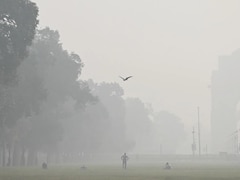
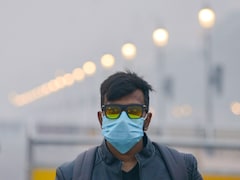
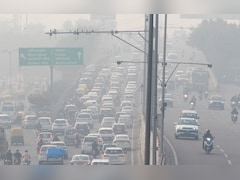
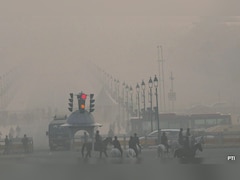
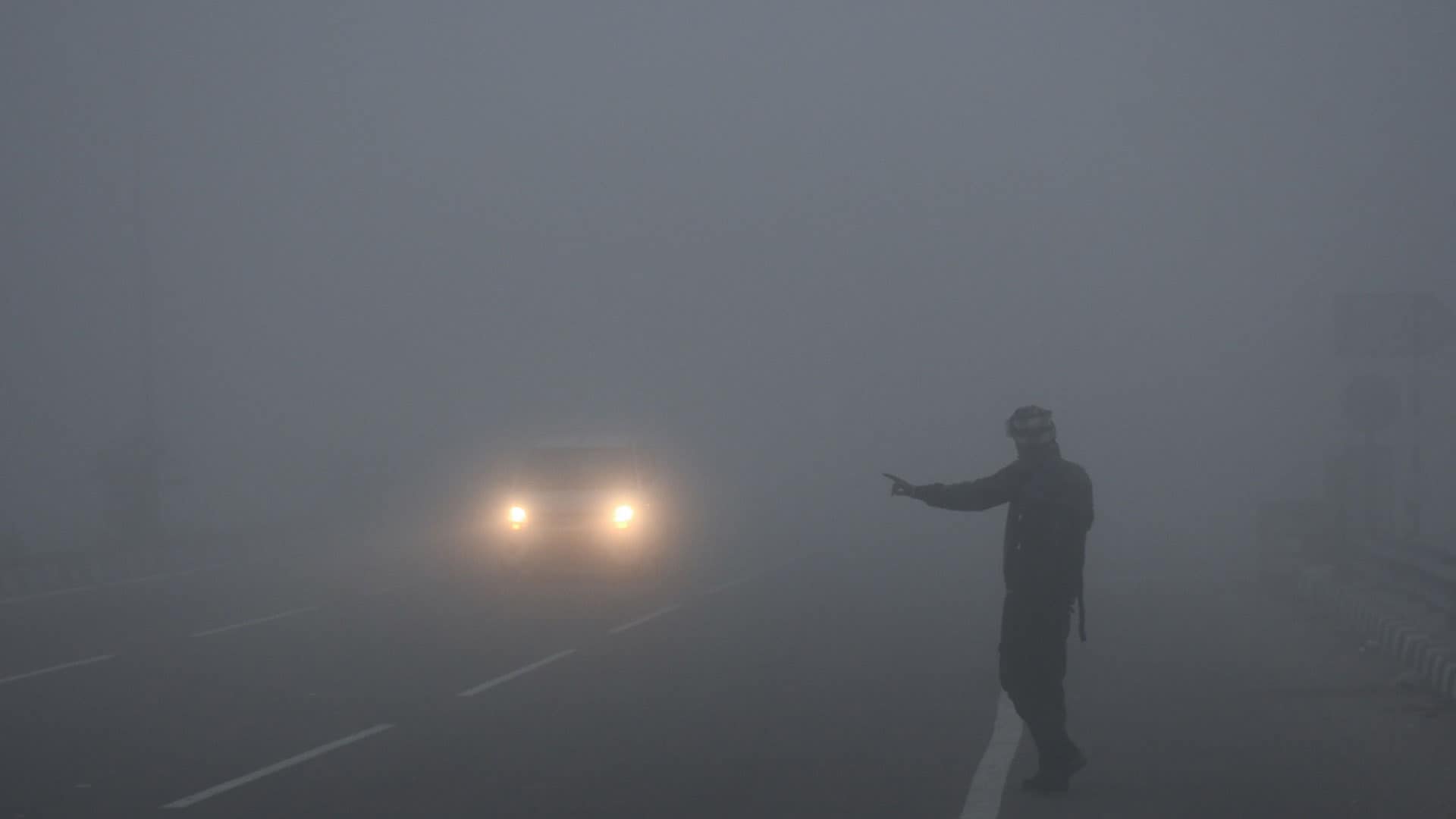
'When we talk of FIIs, FDI coming in, let's understand how the investments enter because environmentally, we have a problem,'' said Srivastava. He referred to the rising levels of AQI and pollution which has made daily life difficult across metropolitan cities. The living quality has drastically come down over rising cases of respiratory diseases, allergies, and low immunity levels reported by individuals across all age groups in Delhi, Mumbai.
Srivastava asks, ''How do you convince a foreigner to invest and live in this country if this is what we present?'' The market expert seeks a more efficient government capex from Budget 2026, which is ''accountable and in-line with strengthening the living standard of this country''.
''Economics will work if you are healthy. Otherwise, what's the point if having money in the bank, if you can't breathe clean air? I am a citizen so I have no choice'', he said. However, the government has a discretion of FDIs investment to come or not, according to the market veteran.
''Unfortunately, this has become a big criterion because when we talk to all companies overseas who say how to bring people in this country if you have a health hazard sitting out there,'' said Srivastava. ''So, we are looking at efficiency of government spending, resolving the environmental crisis and better city infrastructure more than everything else,'' he added.
Referring to the government, Srivastava claimed, ''You got to get capital and get people to stop taking money out of this country.'' According to the expert, that's the real issue and a challenge for India in 2026.
Budget 2026: PM Modi To Meet Economists As Govt Prepares To Rollout FY27 Fiscal RoadmapBudget 2026: Deregulation on the cards?
Interest costs is the biggest component of our budget and the biggest component of what's holding back growth, according to Srivastava. ''The current interest cost does not leave much scope for Indian corporates to produce goods which are globally competitive,'' he said. With Budget 2026, the Centre is expected to deepen its push for deregulation across sectors.
The market expert sees deregulation in two aspects. Improving PSUs and better convenience of business in the country. He seeks lower interest costs for corporates to come down, especially at a time when the state government is borrowing at a rate of 7.7%. ''At this rate, what do you expect the corporates to do?,'' he told NDTV Profit.
Finance Minister Nirmala Sitharaman Signals Major Customs Overhaul Ahead Of BudgetCentre's fiscal prudence, health of states' balance sheets
Srivastava goes on to say, ''Why is it that our 10-year yield is stubbornly at 6.6% even after 125 bps rate reduction by the RBI? The reason is, we're borrowing much more than the people can provide you money with it.''
''You see the stress in the banking sector. RBI can keep playing back and forth and it has paid the price with rupee crashing to record low levels against the US dollar. So, they can play with interest rates but they'll have a rupee depreciation cost which is now at 15-17% in euros/pounds and 5-7% in dollars. That's a hell of a cost to pay,'' said Srivastava.
''The Centre doesn't have its act together, otherwise the yield would not have still been at 6.8% for 10-year bonds. So, it is a major issue. Globally, institutions are looking at it. And then we wonder why Rs 2.7 lakh crore went out of this country last year. It's apparent,'' he explained.
According to Srivastava, people have been shoved into mutual funds because interest rates are low so people don't want to put money in fixed deposits and savings. The pain is lower interest costs at the retail level and higher interest costs at the corporate level, is bothering the system.
''So overall, the retail interest cost has to go up so that people can money money for investment and government interest cost has to go down and they need to borrow less. It's as simple as that'' he concluded.
India's IPO Market Braces For A Valuation Reality Check After Blockbuster Run In 2025Which sectors should you bet on?
According to the market veteran, autos are doing well after the GST rate cuts and gold loan companies as well after the spike in gold prices. ''It is the best and cheapest way to borrow money in the market,'' he said on gold loan companies. He noted that the duopolies will also do very well., whether it's the stock exchange or the telecom as there is no competition.
For metals and mining sector, the market expert noted that there has been a resurgence. Two more sectors where Srivastava bets on are engineering, hospitals, and healthcare. However, he doesn't want to bet on retail as the valuations of FMCG and consumer companies have extremely stretched valuations.
Consumption Cycle Set To Bottom Out, Says Jefferies Turning Positive — Check Stock PicksPublished: January 07, 2026 12:53 IST
 Press Trust of India | Friday January 09, 2026 , New Delhi
The PM2.5 assessment for 2025 ranks Byrnihat (Assam), Delhi, and Ghaziabad (Uttar Pradesh) as India's top three most polluted cities with annual concentrations of 100 g/m, 96 g/m, and 93 g/m, respectively.
- Written by Shreya Goswami | Wednesday January 07, 2026
A study by Jawaharlal Nehru University finds that Delhi's polluted winter air carries high levels of antibiotic-resistant bacteria or superbugs far above safe limits, posing public health risks, especially for vulnerable groups and those with chronic
- Reported by Nupur Dogra | Tuesday January 06, 2026 , New Delhi
The Commission for Air Quality Management or CAQM, was strongly reprimanded by the Supreme Court today, which said the pollution body was not taking the issues raised by the court seriously.
- Written by Shreya Goswami | Tuesday January 06, 2026
Bronchial asthma often worsens in winter due to cold air, pollution and infections.
- Asian News International | Sunday January 04, 2026 , New Delhi
Delhi's air quality continued to remain in the 'poor' category on Sunday, with the national capital recording an overall Air Quality Index of 248, according to data from the CPCB.

................................ Advertisement ................................
Blog | Well Done, Delhi. You've Turned Lung Sacrifice Into A Badge Of HonourSaikat Kumar Bose
Monday November 10, 2025Till some years back, Delhiites would ask angry questions to those in power about the capitals annual tryst with toxic air. This has changed. Those in the driving seat dont see the need to answer now.
Opinion | Why Indians Have Just Given Up On Air Pollution CrisisTanushree Ganguly
Friday December 20, 2024While some may argue that people in Delhi are now more aware of air pollution than they were a decade back, my rebuttal would be that awareness does not mean that people are concerned.
Opinion | You Must Outrage Over Filthy Air More Than Once A YearJyoti Pande Lavakare
Tuesday December 10, 2024Delhi welcomed us with monsoon rains and mangos. We were home. Fast forward a couple of years, in the winter of 2012, I found myself in denial about something other parents, mostly expats, were calling toxic air.
Opinion | Delhi's Air Pollution Situation Is Like A Bad MarriageNishtha Gautam
Friday November 22, 2024On a good day, such as today, the AQI reading in Delhi is 407. We are jubilant at the sickly sunshine trickling through the slightly dissipated smog. At least its not 1600.
दिवाली... पराली... सियासी जुगाली!Ashwini kumar
Monday November 18, 2024दिल्ली-एनसीआर में प्रदूषण का समाधान तो आज तक मिला नहीं. हर साल चिंतित होकर हम-आप सांसों की तकलीफ के साथ-साथ दिल और ब्लड प्रेशर के मरीज भी क्यों बनें?


Comments