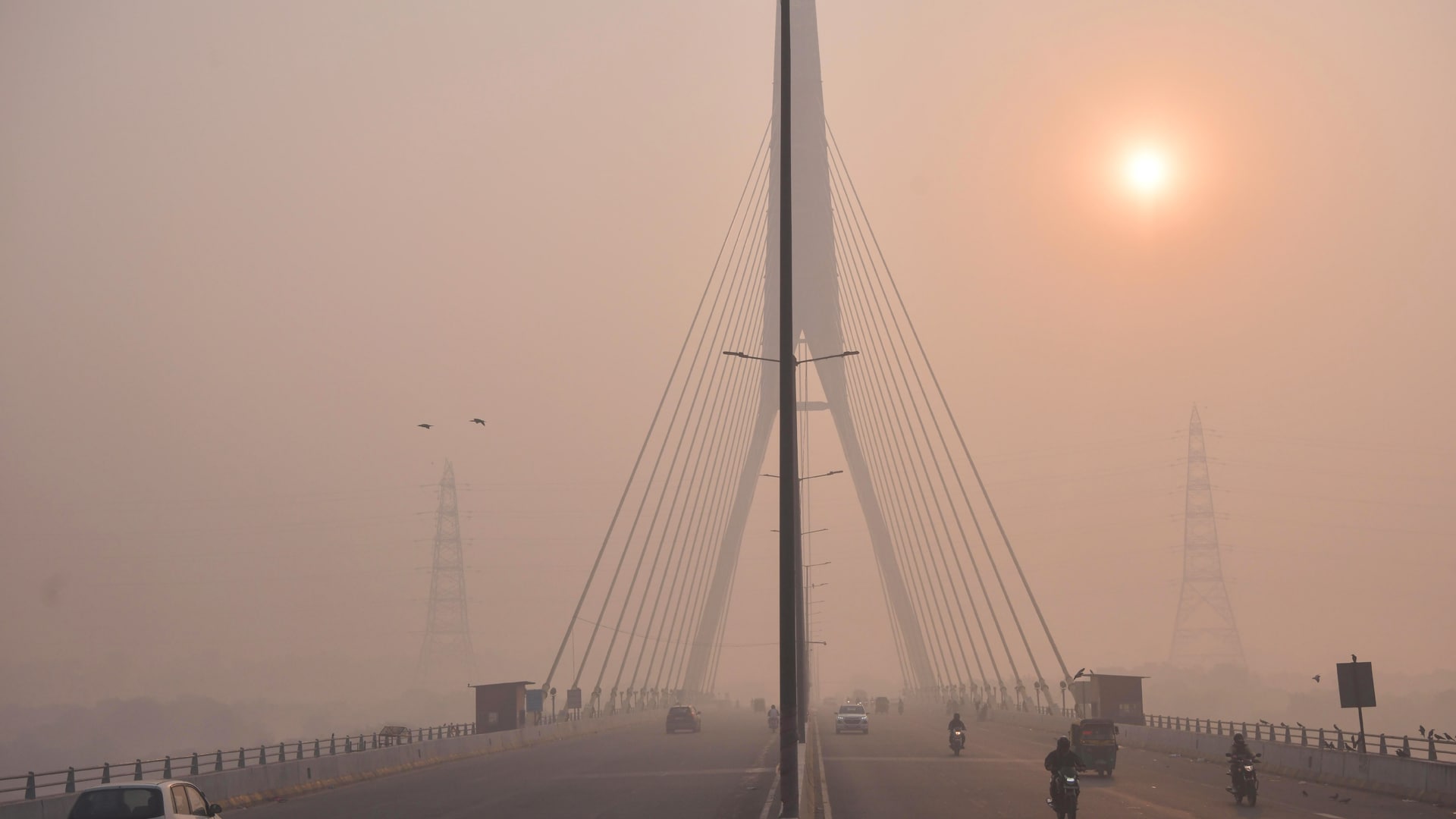
Delhi's air pollution crisis is usually discussed in terms of its impact on the lungs and heart. But could the air people breathe also be affecting their brains? Could years of exposure to fine particulate matter influence memory, concentration and emotional health, or even increase the risk of stroke and dementia?
A growing body of research is raising these questions. Studies published in 2026 have linked long-term exposure to particulate matter, particularly PM2.5, with changes in brain structure, accelerated brain ageing and a higher risk of dementia.
Brain Scans Reveal Possible Structural Changes
An October 2026 study published in 'Environmental Pollution' examined 4,276 middle-aged and older adults who underwent repeated brain MRI scans. Researchers found that higher long-term exposure to PM2.5 and PM10 was associated with faster loss of global and regional grey matter, as well as a greater progression of white matter hyperintensities. These are abnormal changes in the brain's white matter, often associated with small-vessel damage and ageing.
The researchers described their findings as "longitudinal, population-based evidence" linking ambient air pollution to neurodegenerative and cerebrovascular pathways of brain ageing.
Dr. Atma Ram Bansal, Director of Neurology at Medanta Hospitals, said the brain may be affected through several pathways, including inflammation and the movement of fine particles through the bloodstream.
"PM2.5 is particularly harmful because these fine particles can enter the bloodstream and travel through blood vessels to different organs. Air pollution can trigger inflammatory responses in the lungs and other parts of the body, and these processes may also affect the brain," he said.
PM2.5 refers to fine particulate matter measuring 2.5 micrometres or less in diameter. These particles can penetrate deep into the lungs. Once inhaled, they may trigger an immune response and inflammation. Researchers believe that the resulting inflammatory signals can travel through the bloodstream and affect other organs, including the brain. Some very fine particles may also reach the brain through pathways such as the olfactory system.
READ | The Economic Cost Of Toxic Air: How Pollution Impacts Workforce Productivity And Healthcare Spending
Dr Bansal explains that there may be more than one route through which pollution affects neurological health.
"Particles entering the lungs can trigger inflammation, which may have effects beyond the respiratory system. Some very fine particles may also reach the brain directly, while inflammatory responses and toxic substances in the bloodstream may contribute to neurological damage."
Scientific research has proposed several mechanisms, including oxidative stress, activation of immune cells in the brain, disruption of the blood-brain barrier and damage to blood vessels. These mechanisms are biologically plausible, although scientists are still investigating how much each contributes to neurological disease in humans.
The Lancet Commission's Warning On Dementia
The concern is not limited to the latest brain-imaging study. The 2024 report of the Lancet Commission on dementia prevention, intervention and care identified air pollution as one of 14 modifiable risk factors for dementia.
The Commission estimated that addressing all 14 factors could potentially prevent or delay around 45 per cent of dementia cases worldwide. Air pollution alone was estimated to account for approximately 3 per cent of the global population-attributable risk. This is a population-level estimate, not a prediction of an individual's risk.
According to Dr Rajashekar Reddi, Vice Chairman of Neurology at Max Hospital, the inclusion of air pollution in the Lancet Commission's list reflects the growing recognition of its possible neurological consequences.
"There is no longer debate on whether air pollution impacts the brain, there is enough literature that proves the link. Exposure to particulate matter has been linked to an increased risk of stroke and other neurological problems," he said.
The Lancet report points to the wider implications of environmental exposure for brain health, including dementia risk. Other research has examined possible links with cognitive problems, impaired executive functioning and mental health. Dr Reddi noted the effects may extend beyond memory loss to stress, anxiety and behavioural concerns, including among children.
Brain Fog, Headaches And Difficulty Concentrating
For people living in Delhi, the immediate effects of poor air quality may be more familiar. Headaches, lethargy, nasal congestion and difficulty concentrating are commonly reported during periods of high pollution.
Dr Saurabh Mittal, Associate Professor in the Department of Pulmonary Medicine at AIIMS, New Delhi, said "acute exposure to air pollution can cause headaches, lethargy, difficulty concentrating and a feeling of heaviness in the head. Some people may also experience reduced smelling ability. These symptoms tend to become more pronounced during winter, particularly in North India, when pollution levels rise."
Dr Bansal added that pollution can affect mood and psychological well-being. "People exposed to high levels may feel more distressed, particularly when they step outdoors. Those who move to Delhi from less polluted regions may notice recurring headaches and nasal congestion, especially during winter."
Dr Reddi said the term "brain fog" is often used loosely, but poor air quality can affect everyday functioning, sometimes indirectly through its impact on respiratory health and sleep.
"When someone is in an unpleasant environment where air quality is poor and their respiratory health is affected, their alertness and day-to-day functioning can suffer," he said.
A persistent cough caused or aggravated by pollution, for instance, can disrupt sleep. Poor sleep can then affect concentration, energy levels and performance through the day. In this way, the impact on daily functioning may be both direct and indirect.
Are Children And Adolescents More Vulnerable?
The possible effects may also differ across age groups. Dr Bansal and Dr Reddi believe pollution can affect attention in children, emotional regulation in adolescents and memory in adults. He believes children may be particularly vulnerable because their brains are still developing.
When asked whether growing up in a highly polluted city such as Delhi affect a child's IQ, attention span or academic performance, the doctors stated that the evidence is not yet conclusive enough to predict these outcomes for an individual child. But the possibility is a growing concern among researchers.
Dr Reddi said prolonged exposure could eventually affect children's attention, behaviour and scholastic performance. He pointed to concerns around behavioural and personality changes, while acknowledging that these outcomes must be considered alongside other influences on a child's development.
READ | It's Not Just AQI: Why Tiny Particulate Matter Poses A Bigger Health Risk
Stroke Risk And The Wider Impact On The Body
The risk may not be confined to cognitive development. Pollution can also affect blood vessels and cardiovascular health, potentially increasing the risk of stroke. Fine particles can contribute to inflammation and oxidative stress, while exposure may affect blood vessel function and processes involved in clotting.
Dr Mittal said these effects can compound one another. However, he cautioned against assuming that a particular stroke or neurological condition in an individual patient was caused by pollution. Stroke has multiple risk factors, and it is rarely possible to isolate the contribution of one exposure.
Winter adds another layer of concern. Pollution levels often rise during the colder months, while low temperatures can also affect blood pressure and cardiovascular health. Dr Bansal said the combination of these factors may contribute to increased health risks during winter, including stroke. Pollution, however, is not the only explanation for seasonal changes in stroke incidence.
Dr Reddi on the other hand firmly reinstated the notion that stepping out in Delhi with the current Air Quality Index, is equivalent to smoking 20 cigarettes. He strongly agrees that particulate matter exposure is a serious concern and that reducing it is an important preventive measure.
From PM2.5 Exposure To Dementia: What The Studies Reveal
The evidence has continued to grow in 2026. A prospective study involving 488,348 UK Biobank participants examined exposure to pollutants including PM2.5, PM10 and nitrogen dioxide. Compared with participants in the lowest exposure group, those in the highest exposure group had a higher relative risk of dementia: 14 per cent for PM2.5, 9 per cent for PM10 and 20 per cent for nitrogen dioxide. The researchers also reported associations between pollution exposure, changes in brain structure and accelerated biological ageing.
Another 2026 study, published in 'Environmental Pollution', analysed 269,683 UK Biobank participants. It found that each interquartile-range increase in PM2.5 exposure was associated with a 5 per cent higher risk of all-cause dementia and a 9 per cent higher risk of Alzheimer's disease.
The study also examined possible biological explanations, finding that inflammatory markers and lipid metabolites together accounted for a small proportion of the observed associations. Brain imaging results pointed to changes in the hippocampus, a region important for memory, and in white matter microstructure.
These findings offer possible clues about how long-term exposure could affect the ageing brain.
Dr Mittal noted prolonged exposure to air pollution may affect memory and cognitive functioning, and has been associated with an increased risk of stroke and dementia. Pollution may accelerate processes involved in the loss of brain cells that occur naturally with ageing."
A systematic review published in 'Current Environmental Health Reports' in November 2026 assessed 21 observational studies on particulate matter exposure and neurological health in older adults. It found the most substantial evidence for an association between long-term PM2.5 exposure and adverse cognitive outcomes, including cognitive decline and cognitive impairment. Several large studies also reported links with dementia and Alzheimer's disease, although the findings varied.
READ | Air Pollution Emerging As A Threat To Child Brain Development, Doctors Warn, Parents Worry
Can We Prove That Pollution Causes Dementia?
This remains one of the most difficult questions.
Air pollution does not act in isolation. Smoking, diet, physical activity, stress, education, socioeconomic conditions, existing illnesses and access to healthcare can all influence brain health. People exposed to higher pollution levels may also experience several of these risks together.
Dr Mittal said this makes it difficult to establish a direct cause-and-effect relationship in an individual patient.
"Air pollution has several confounding effects on the body. Although research increasingly points towards a link between pollution and neurological problems, it is difficult to establish a direct cause-and-effect relationship because many other factors are involved," he said.
Dr Bansal added that it remains challenging to determine precisely how much of an individual's cognitive decline or neurological illness can be attributed to pollution alone.
"Lifestyle, smoking, diet, stress and socioeconomic conditions can all influence neurological health. It is often impossible to isolate just one factor when several are operating together. Each factor may contribute to the eventual outcome," he said.
However, Dr Reddi argued that the broader association should not be dismissed. In his view, the evidence recognised by scientific bodies, including the Lancet Commission, establishes air pollution as a serious concern for the brain, heart and lungs. The continuing challenge is to understand the extent of its contribution and the mechanisms involved.
The geographical gap in research is also important. Much of the available evidence comes from populations in Europe, China, South Korea and the United States. These findings cannot automatically be translated into a precise estimate of neurological risk for people living in Delhi, where pollution sources, exposure patterns, healthcare conditions and population characteristics may differ.
How Can People Protect Themselves?
For residents of highly polluted cities, avoiding exposure altogether may be difficult. But doctors say reducing exposure, particularly when pollution levels are severe, remains important.
Dr Mittal advises people to limit outdoor activity when air quality is poor, wear a well-fitted mask when going outside and take practical steps to protect their health. He also stresses that the responsibility cannot rest only on individuals.
"We should not create unnecessary fear among patients. Instead, the focus should be on practical steps to reduce exposure and protect health. Maintaining a healthy diet, avoiding outdoor activity when pollution levels are high and wearing an appropriate mask can help reduce exposure," he said.
Dr Bansal noted that people should also focus on what they can do collectively to reduce pollution, rather than viewing the problem only through the lens of individual protection.
READ | Air Pollution Can Heighten Anxiety And Trigger Panic-Like Symptoms: Doctors
Dr Reddi said the full consequences of prolonged exposure may become more apparent over the coming years and across generations. He noted "cognitive decline is being reported more frequently than it was a decade ago, although several factors may be contributing to that trend."
For Delhi, where millions are repeatedly exposed to high levels of particulate pollution, the neurological dimension of the air crisis deserves closer attention. The evidence does not mean that every headache signals brain damage, or that exposure inevitably leads to dementia. Nor can current studies tell us exactly how much an individual's memory, intelligence or risk of stroke has been affected by polluted air.
But the growing body of research suggests that the consequences of polluted air may extend well beyond the lungs. The question facing researchers is no longer simply whether pollution can affect the brain, but how, to what extent and over what period of exposure. Clean air may be important not only for breathing better today, but also for protecting brain health over a lifetime.
\r\n
\r\n
Disclaimer: This content including advice provides generic information only. It is in no way a substitute for a qualified medical opinion. Always consult a specialist or your own doctor for more information. NDTV does not claim responsibility for this information.



 Written by Tanushka Dutta | Thursday November 12, 2026