


- Home/
- Cars In Delhi Fined Rs 1 Crore In A Day For Pollution Norm Violations
Cars In Delhi Fined Rs 1 Crore In A Day For Pollution Norm Violations
Press Trust of India | Updated: November 16, 2024 19:53 IST
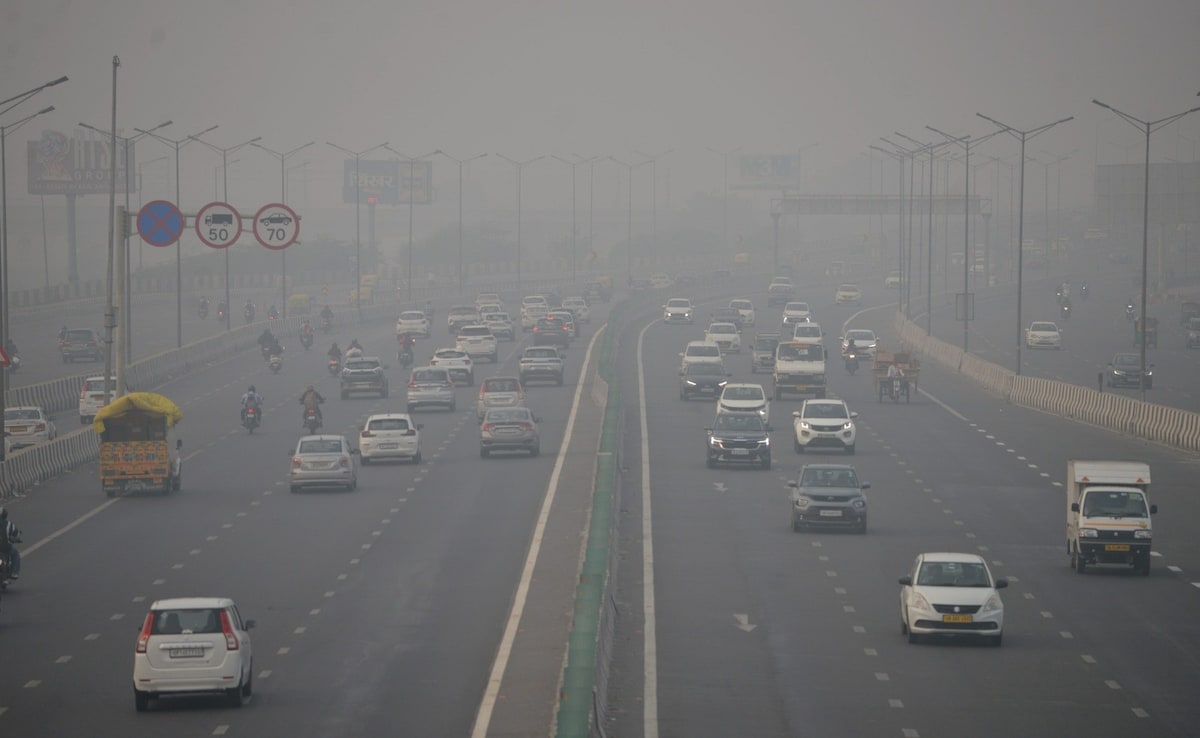
The national capital continues to choke under 'severe'-category air pollution. (File)
New Delhi :
Delhi Traffic Police has issued around 550 challans, imposing a total fine of over Rs 1 crore, to BS III petrol and BS IV diesel vehicles on Friday on the first day of the ban on these vehicles under the Graded Response Action Plan (GRAP) III in the national capital, officials said.
According to police, they have also issued challans to 4,855 vehicles imposing a total of Rs 4.8 crore in fines for not having Pollution Under Control Certificates (PUCC) in the national capital on Friday.
A fine of Rs 10,000 is imposed on motorists for not having a valid pollution under control (PUC) certificate. These challans get released from courts. Private BS III petrol and BS IV diesel vehicles were banned from roads with violations inviting a penalty of Rs 20,000. Diesel and petrol inter-state buses from the NCR cities to Delhi are also banned.
A senior police officer said that they have issued a total of 293 challans for BS-III and BS-IV vehicles in the eastern, central and northern ranges of the city. A total of 2,404 challans have been issued for not having PUCC certificates.
While the New Delhi range has issued 63 such challans, the western range issued 73 and the southern range issued 121 challans, the officials said.
The New Delhi, southern, and western ranges have also issued 322, 894, and 1,235 challans respectively for not having PUCC, they said.
Deputy Commissioner of Police (Traffic) Rajiv Kumar Rawal said that they checked around 3,000 vehicles in the three ranges of the traffic police on Friday.
"We have intensified checking especially in the bordering areas and the inter-state buses are also being checked. Vehicles whose entry is prohibited are being turned back from the borders. We have returned around 300 such vehicles. We are also prosecuting the vehicles which do not have a PUCC," Rawal said.
The Delhi government has banned private BS III petrol and BS IV diesel vehicles, prohibited the entry of interstate non-electric-CNG buses, certain categories of construction activities, and staggered government office timings, as the city choked under 'severe'-category air pollution Friday morning.
The restrictions were imposed under stage III of the Graded Response Action Plan, or GRAP, announced by the Commission for Air Quality Management (CAQM) on Thursday.
(Except for the headline, this story has not been edited by NDTV staff and is published from a syndicated feed.)
Published: November 16, 2024 19:48 IST
 Reported by Reet Kaur Sahni | Friday August 07, 2026
As per the ministry, prior Environmental Clearance becomes mandatory for data centres depending on their physical footprint under Schedule 8 of the EIA Notification, 2006.
- Written by Sambhav Kumar | Thursday August 06, 2026
Keerthy Suresh's 41-hour no-sleep stretch highlights the intense demands many professionals face, but experts warn that prolonged sleep deprivation should never become routine.
- Written by Sambhav Kumar | Wednesday August 05, 2026
Preliminary evidence suggests the blood filtration treatment could reduce some microplastic particles, though findings are limited and require more study.
- Monday August 03, 2026 , New Delhi
Study reveals black crust from pollution weakens Humayuns Tomb sandstone
- Written by Debosmita Ghosh | Saturday August 01, 2026
Lung cancer is often diagnosed at an advanced stage because its early symptoms are easy to overlook. A persistent cough is among the most commonly ignored warning signs.


................................ Advertisement ................................

Blog | Well Done, Delhi. You've Turned Lung Sacrifice Into A Badge Of HonourSaikat Kumar Bose
Monday November 10, 2025Till some years back, Delhiites would ask angry questions to those in power about the capitals annual tryst with toxic air. This has changed. Those in the driving seat dont see the need to answer now.
Opinion | Why Indians Have Just Given Up On Air Pollution CrisisTanushree Ganguly
Friday December 20, 2024While some may argue that people in Delhi are now more aware of air pollution than they were a decade back, my rebuttal would be that awareness does not mean that people are concerned.
Opinion | You Must Outrage Over Filthy Air More Than Once A YearJyoti Pande Lavakare
Tuesday December 10, 2024Delhi welcomed us with monsoon rains and mangos. We were home. Fast forward a couple of years, in the winter of 2012, I found myself in denial about something other parents, mostly expats, were calling toxic air.
Opinion | Delhi's Air Pollution Situation Is Like A Bad MarriageNishtha Gautam
Friday November 22, 2024On a good day, such as today, the AQI reading in Delhi is 407. We are jubilant at the sickly sunshine trickling through the slightly dissipated smog. At least its not 1600.
दिवाली... पराली... सियासी जुगाली!Ashwini kumar
Monday November 18, 2024दिल्ली-एनसीआर में प्रदूषण का समाधान तो आज तक मिला नहीं. हर साल चिंतित होकर हम-आप सांसों की तकलीफ के साथ-साथ दिल और ब्लड प्रेशर के मरीज भी क्यों बनें?


