


- Home/
- Clean Air Measures Can Improve Delhi's Air Quality By 20% By 2040: UN Report
Clean Air Measures Can Improve Delhi's Air Quality By 20% By 2040: UN Report
| Updated: September 08, 2026 08:25 IST
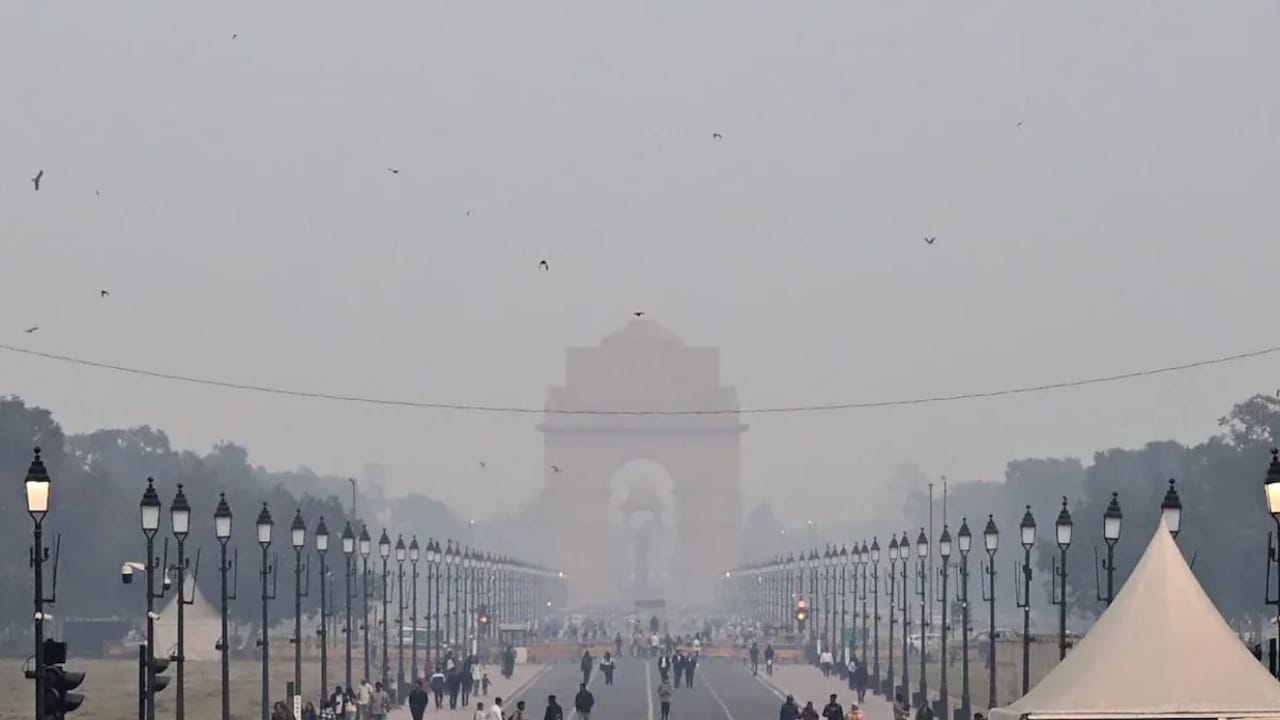
Delhi can reduce PM2.5 exposure by 20% by 2040 if it meets air quality standards on time.
Highlights
- Delhi could reduce PM2.5 exposure by 20% by 2040 if standards are met by 2026
- An 8-year delay in standards would cut reduction to 10%, increasing health impacts
- UNEP and CCAC report outlines 25 solutions for climate and clean-air action
New Delhi:
Delhi would reduce PM2.5 exposure burden by 20 per cent by 2040 if it achieves current national air quality standards on schedule starting in 2026, a new report claims.
The report says that if there is a delay of about eight years (the expected average global implementation delay) in reaching the standards, the reduction would only be 10 per cent, translating into substantially greater health impacts over the period.
The report, 'Hidden Assets: The Economic and Health Case for Climate and Clean Air Action', was released by the UN Environment Programme (UNEP) and the Climate and Clean Air Coalition (CCAC) on Monday.
The report is the first comprehensive global economic assessment of integrated climate and clean-air action.
The document identifies 25 solutions to tackle both problems simultaneously – measures that are already feasible, like renewable power and energy efficiency, increasing clean cooking and heating solutions, and tighter vehicle emission and efficiency standards.
The annual economic benefits of implementing those measures would be equivalent to 2.8 per cent of global GDP in 2035, 4.5 per cent of the global GDP in 2050, and 11.4 per cent of the global GDP in 2100, according to the analysis.
Each year of delay foregoes more than 0.5 per cent of global GDP in benefits, equivalent to more than USD 1.5 trillion in combined market and non-market value.
"Strengthening enabling conditions -- economic, social, technological and institutional -- can bring all 25 solutions fully into place up to a decade sooner, substantially boosting reductions in PM2.5 and ozone precursors over the 2025-2050 period," the report says.
Implementation delays of 7.5 to 8 years are expected globally on average, with institutional barriers the single largest contributor, accounting for approximately 2.4 years over a notional 15-year implementation window.
"A delay of this scale roughly halves the emissions reductions achievable by 2035," it says.
(Except for the headline, this story has not been edited by NDTV staff and is published from a syndicated feed.)
Published: September 08, 2026 00:30 IST
also read
 Edited by Debanish Achom | Monday September 28, 2026 , New Delhi
The steps include doubling parking charges, a complete ban on construction and demolition activity and work-from-home for government and private employees
- Written by Debosmita Ghosh | Friday September 25, 2026
Air purifiers are mainly designed to clean pollutants that are suspended in the air. A HEPA filter can trap very small particles and may help reduce indoor levels of particulate matter, dust, pollen and some other airborne particles. However, the performance of a purifier depends on several factors.
- Written by Dr Ankit Kumar Sinha | Friday September 25, 2026
To improve respiratory health, it is important to minimise exposure to polluted air, enhance indoor ventilation, adhere to workplace safety regulations, and promote physical activity.
- Tuesday September 22, 2026 , Mumbai
The court had on Monday taken suo motu (on its own) cognizance of the issue of severe noise and air pollution caused during processions.
- Written by Sambhav Kumar | Tuesday September 22, 2026
Air pollution does not necessarily mean you have to give up physical activity. The key is to adapt your workout according to the conditions.

................................ Advertisement ................................

Blog | Well Done, Delhi. You've Turned Lung Sacrifice Into A Badge Of HonourSaikat Kumar Bose
Monday November 10, 2025Till some years back, Delhiites would ask angry questions to those in power about the capitals annual tryst with toxic air. This has changed. Those in the driving seat dont see the need to answer now.
Opinion | Why Indians Have Just Given Up On Air Pollution CrisisTanushree Ganguly
Friday December 20, 2024While some may argue that people in Delhi are now more aware of air pollution than they were a decade back, my rebuttal would be that awareness does not mean that people are concerned.
Opinion | You Must Outrage Over Filthy Air More Than Once A YearJyoti Pande Lavakare
Tuesday December 10, 2024Delhi welcomed us with monsoon rains and mangos. We were home. Fast forward a couple of years, in the winter of 2012, I found myself in denial about something other parents, mostly expats, were calling toxic air.
Opinion | Delhi's Air Pollution Situation Is Like A Bad MarriageNishtha Gautam
Friday November 22, 2024On a good day, such as today, the AQI reading in Delhi is 407. We are jubilant at the sickly sunshine trickling through the slightly dissipated smog. At least its not 1600.
दिवाली... पराली... सियासी जुगाली!Ashwini kumar
Monday November 18, 2024दिल्ली-एनसीआर में प्रदूषण का समाधान तो आज तक मिला नहीं. हर साल चिंतित होकर हम-आप सांसों की तकलीफ के साथ-साथ दिल और ब्लड प्रेशर के मरीज भी क्यों बनें?


