


- Home/
- Who's Polluting Delhi's Air? Data Shows Farm Fires Are Just Part Of Problem
Who's Polluting Delhi's Air? Data Shows Farm Fires Are Just Part Of Problem
Reported by Subham Singh | Updated: November 26, 2025 20:14 IST
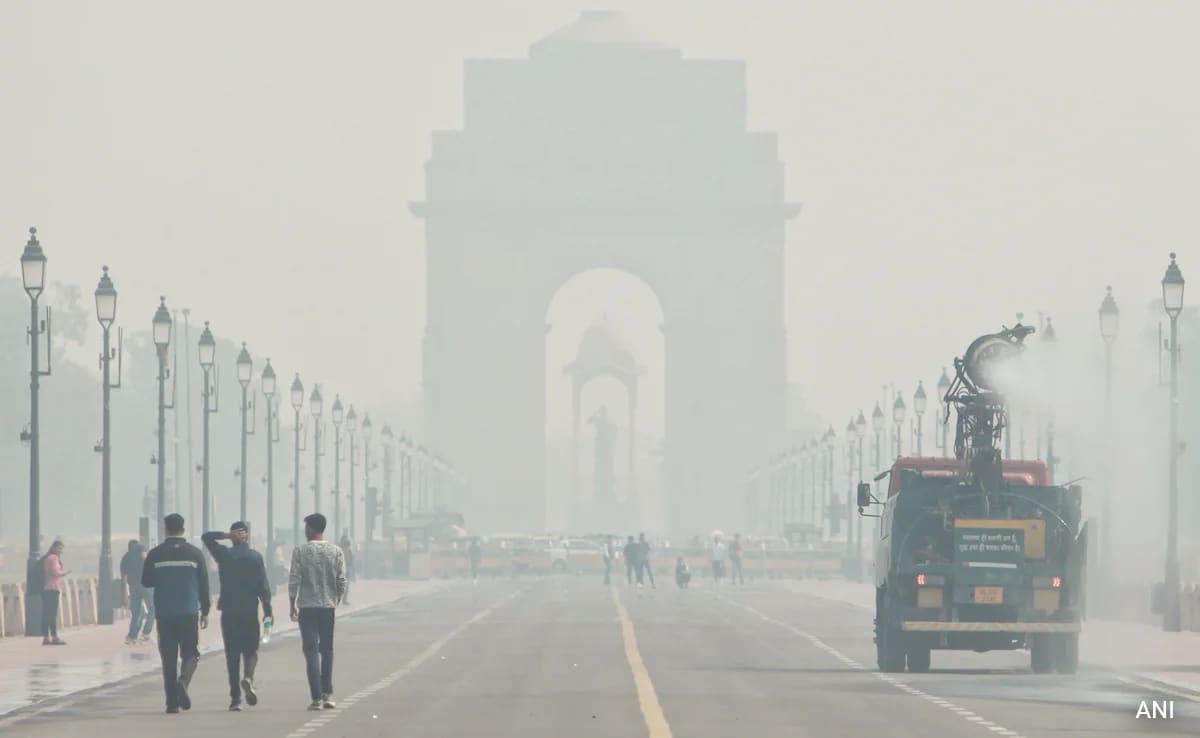
Stubble burning is a major factor during peak smog days-but not the sole culprit.
New Delhi : 
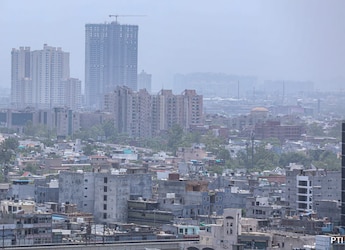
Delhi's annual battle with toxic air has once again turned the capital into a gas chamber. Data from the Central Pollution Control Board (CPCB) shows that Delhi's 24-hour average Air Quality Index (AQI) jumped from 130 on October 1 to a staggering 428 by November 11, before sliding slightly to 327 on November 26-still in the 'Very Poor' category.
Farm Fires: A Seasonal Spike, Not The Whole Story
Stubble burning in Punjab and Haryana is often blamed for Delhi's pollution crisis, but data from the Decision Support System (DSS) under the Ministry of Earth Sciences paints a nuanced picture.
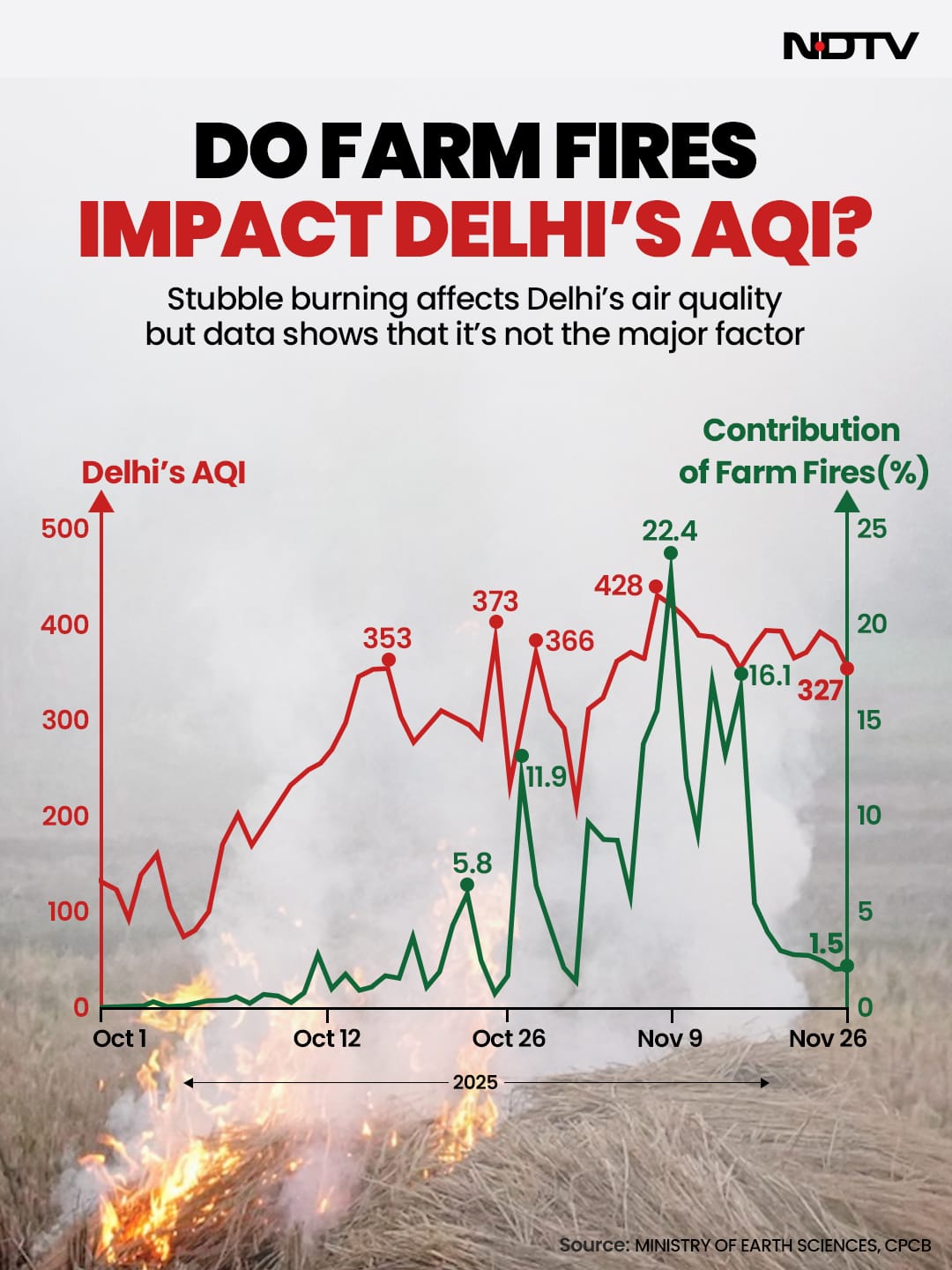
In early October, farm fires contributed almost nothing to Delhi's pollution. But by October 17, their share rose to 2.62 per cent, coinciding with AQI crossing 250. The situation worsened in November:
November 12: Farm fires contributed 22.47 per cent, AQI soared to 418 ('Severe')
November 18-20: Contribution fluctuated between 5.4 per cent and 2.8 per cent, yet AQI stayed above 325
Clearly, stubble burning is a major factor during peak smog days-but not the sole culprit.
Who Else Is Polluting Delhi?
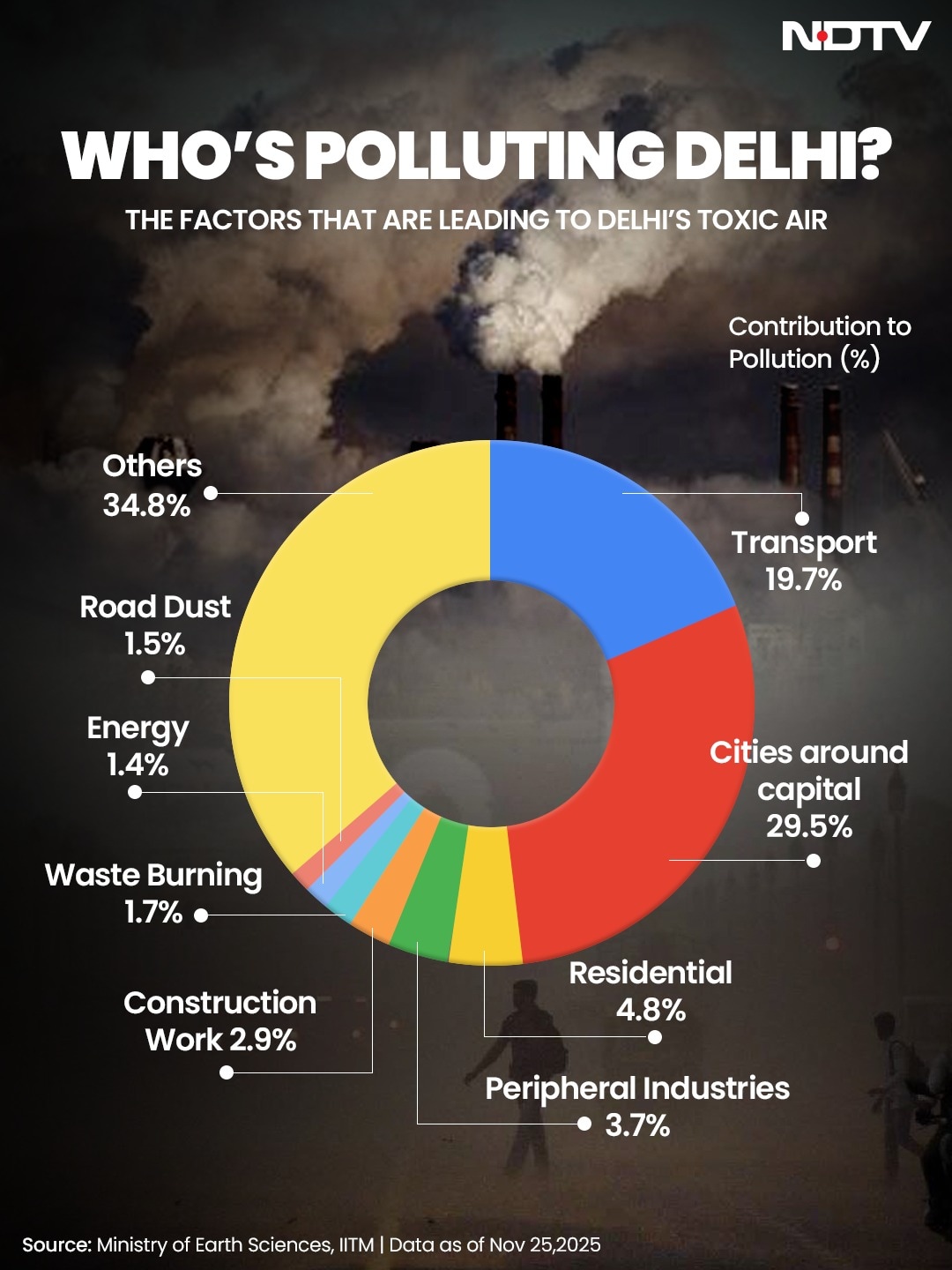
Data from DSS data reveals other significant contributors. Cities around the capital, which include Gautam Buddha Nagar, Gurgaon, Karnal, Meerut and others, contribute 29.5 per cent to the toxic air of Delhi, followed by transport at 19.7 per cent. Residential emission (4.8 per cent), peripheral industries (3.7 per cent) and construction dust (2.9 per cent) also add to the toxic mix. But what is more alarming is the 34.8% contribution from unknown sources, because pollution cannot be controlled unless it is traced.
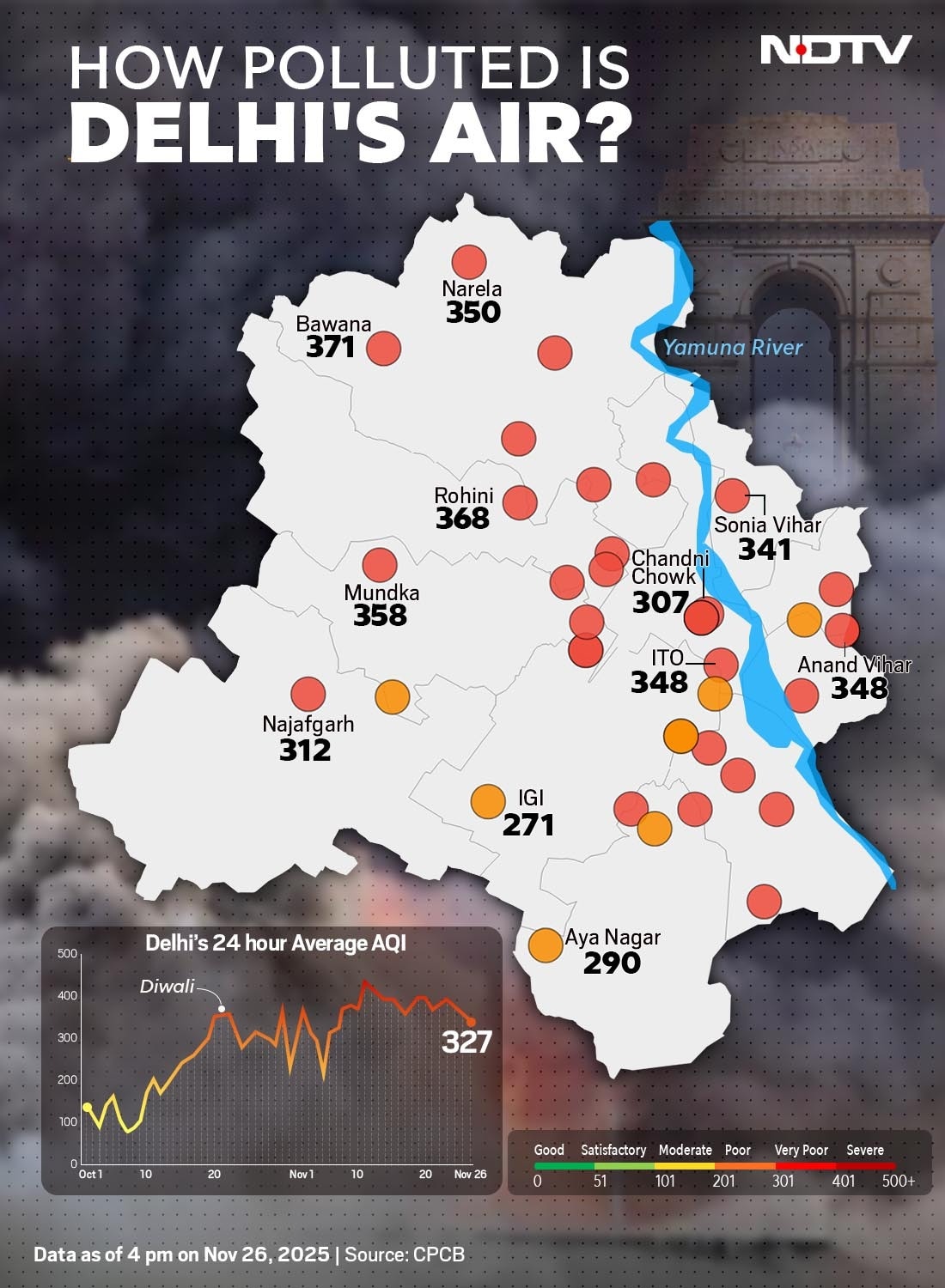
Delhi's AQI Snapshot: No Safe Zones
On November 26, AQI readings across Delhi at 4 PM were grim:
Rohini: 368
Jahangirpuri: 365
Wazirpur: 369
Even relatively cleaner areas like Dilshad Garden (259) and Mandir Marg (231) were far above the safe limit of 50.
Delhi's toxic air is not just about farm fires-it's a complex mix of regional pollution, vehicular emissions, industrial activity, and unknown factors. Without a coordinated strategy across states and sectors, the capital will keep choking every winter.
Published: November 26, 2025 20:14 IST
- Thursday July 30, 2026
Air pollution has links to health risks in pregnant woman as they can face reproductive issues. Here is how genetic and environmental factors could impact reproductive health.
- Written by Sambhav Kumar | Tuesday July 28, 2026
Heavy monsoon rains in Delhi-NCR may clear outdoor pollutants temporarily but increase indoor humidity and mould growth, affecting respiratory health.
- Written by Dr Ramanarayanan | Sunday July 26, 2026
Invasive fungal infections are rising in India, affecting more patients and showing resistance to treatments, posing serious health risks.
- Written by Ashwini Sehgal | Thursday July 23, 2026
The study included 85 adults and children with poorly controlled asthma who lived in homes or apartments with gas stoves. Asthma control was determined from responses to a standard questionnaire.
- Written by Rupashi Chhabra | Tuesday July 21, 2026
Dr Bhuvan Chugh explains how hidden environmental toxicants cause lung cancer in young non-smokers. Here is how fine air pollution triggers hidden mutations.



................................ Advertisement ................................

Blog | Well Done, Delhi. You've Turned Lung Sacrifice Into A Badge Of HonourSaikat Kumar Bose
Monday November 10, 2025Till some years back, Delhiites would ask angry questions to those in power about the capitals annual tryst with toxic air. This has changed. Those in the driving seat dont see the need to answer now.
Opinion | Why Indians Have Just Given Up On Air Pollution CrisisTanushree Ganguly
Friday December 20, 2024While some may argue that people in Delhi are now more aware of air pollution than they were a decade back, my rebuttal would be that awareness does not mean that people are concerned.
Opinion | You Must Outrage Over Filthy Air More Than Once A YearJyoti Pande Lavakare
Tuesday December 10, 2024Delhi welcomed us with monsoon rains and mangos. We were home. Fast forward a couple of years, in the winter of 2012, I found myself in denial about something other parents, mostly expats, were calling toxic air.
Opinion | Delhi's Air Pollution Situation Is Like A Bad MarriageNishtha Gautam
Friday November 22, 2024On a good day, such as today, the AQI reading in Delhi is 407. We are jubilant at the sickly sunshine trickling through the slightly dissipated smog. At least its not 1600.
दिवाली... पराली... सियासी जुगाली!Ashwini kumar
Monday November 18, 2024दिल्ली-एनसीआर में प्रदूषण का समाधान तो आज तक मिला नहीं. हर साल चिंतित होकर हम-आप सांसों की तकलीफ के साथ-साथ दिल और ब्लड प्रेशर के मरीज भी क्यों बनें?


