


- Home/
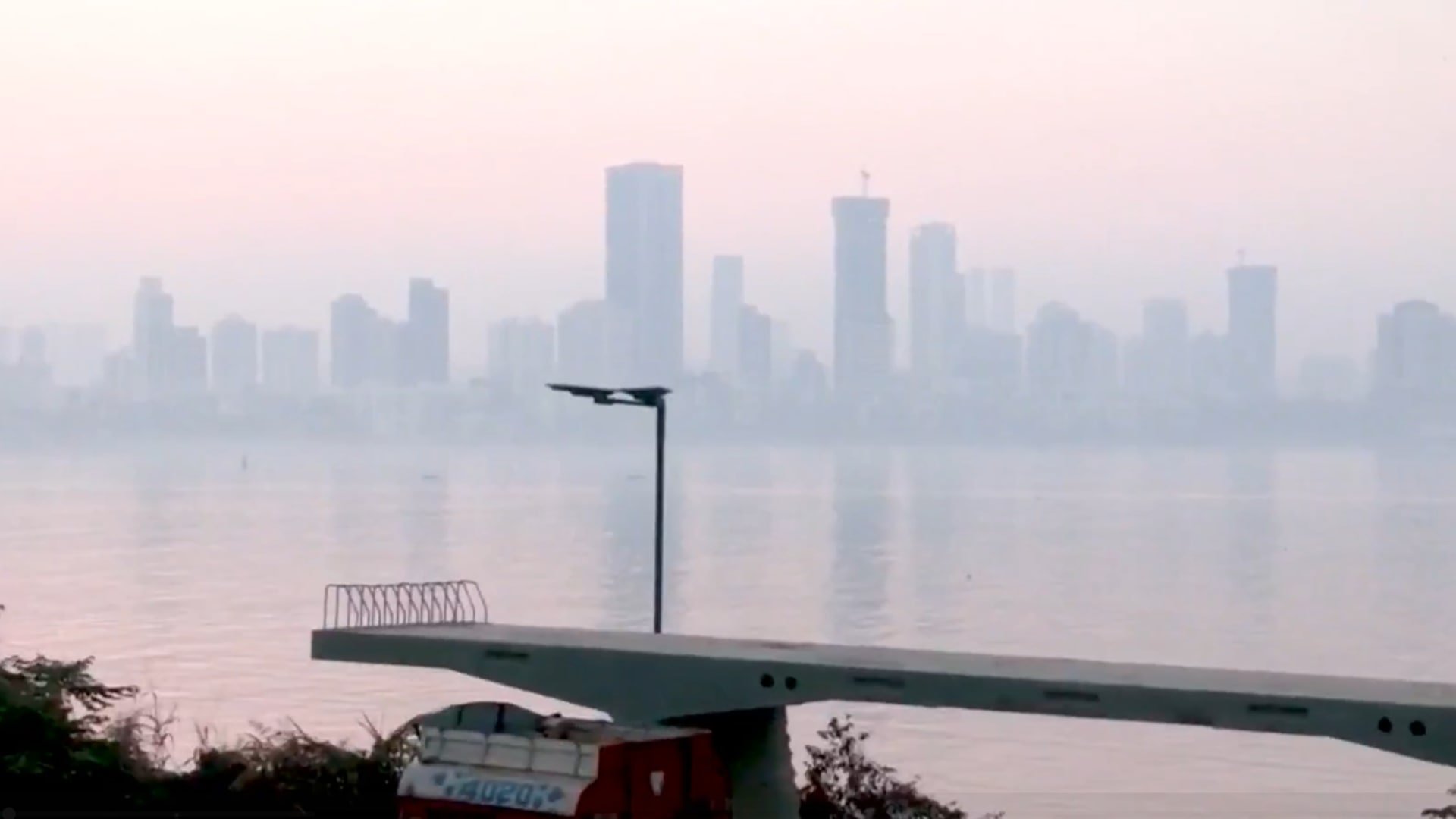
- Toxic Haze Chokes Delhi, Surrounding Areas As Air Quality Remains "Severe"
Toxic Haze Chokes Delhi, Surrounding Areas As Air Quality Remains "Severe"
Edited by Samiran Mishra | Updated: November 04, 2023 12:28 IST

Delhi's air quality is one of the worst among capital cities globally.
New Delhi:
Delhi's air remained severely polluted for the third consecutive day on Saturday morning with an Air Quality Index (AQI) of 504. Despite a slight improvement in pollution levels overnight due to increased wind speeds, the concentration of toxic PM2.5 in the national capital and its surrounding areas remained more than 80 times the World Health Organisation's limit.
A suffocating blanket of toxic smog continued to cloak Delhi today, prompting doctors to raise concerns about the growing number of respiratory and eye ailments among children and the elderly.
Microscopic PM2.5 particles, which can lodge deep in the lungs and cause health problems, soared to seven to eight times the government's safe limit of 60 micrograms per cubic metre in multiple locations across Delhi-NCR. This was 80 to 100 times higher than the WHO's safe limit of 5 micrograms per cubic meter.
Delhi Environment Minister Gopal Rai implored Union Environment Minister Bhupender Yadav to take proactive measures to combat the worsening air quality in the national capital region, emphasising that entire North India is struggling with air pollution.
Quoting a study by the independent think tank Centre for Science and Environment, he said that neighboring states contribute 69 percent of Delhi's air pollution.
"While we (Delhi) are taking all possible steps to address the problem, no one knows what the environment ministers of Uttar Pradesh and Haryana are doing," he said.
"The effect of the Delhi government's steps is visible. If we talk about pollution throughout the year, in 2015 there were only 109 days when the air quality was good, this year it has been good for more than 200 days," Mr Rai added.
Delhi-NCR's air quality plummeted over the past week due to falling temperatures, stagnant winds that stifled pollution dispersion, and a surge in post-harvest paddy stubble burning in Punjab and Haryana.
Delhi's AQI skyrocketed by more than 200 points between October 27 and November 3, plummeting into the "severe plus" category (above 450) on Friday, according to Central Pollution Control Board (CPCB) data. A slight improvement was seen from 468 at 4 pm on Friday to 413 at 6 am on Saturday, but the 24-hour average AQI of 468 on Friday was the worst since November 12, 2021.
Delhi's air quality is one of the worst among capital cities globally, with a University of Chicago report finding that air pollution reduces life expectancy by almost 12 years. Delhi once again topped the real-time list of the world's most polluted cities, compiled by Swiss air quality technology company IQAir. The national capital's AQI was over 600 in some areas on Friday, which is considered "hazardous." The second on this list, by some distance, was Pakistan's Lahore with an AQI of 335.
In neighbouring Noida, the air quality plummeted to the "severe" category, with an AQI of 576. Sectors 116 and 62 recorded AQIs of 426 and 428, respectively, according to the CPCB. Similarly, Gurgaon's air quality remained in the "severe" category, with an AQI of 512.
Published: November 04, 2023 09:13 IST
 Reported by Reet Kaur Sahni | Friday August 07, 2026
As per the ministry, prior Environmental Clearance becomes mandatory for data centres depending on their physical footprint under Schedule 8 of the EIA Notification, 2006.
- Written by Sambhav Kumar | Thursday August 06, 2026
Keerthy Suresh's 41-hour no-sleep stretch highlights the intense demands many professionals face, but experts warn that prolonged sleep deprivation should never become routine.
- Written by Sambhav Kumar | Wednesday August 05, 2026
Preliminary evidence suggests the blood filtration treatment could reduce some microplastic particles, though findings are limited and require more study.
- Monday August 03, 2026 , New Delhi
Study reveals black crust from pollution weakens Humayuns Tomb sandstone
- Written by Debosmita Ghosh | Saturday August 01, 2026
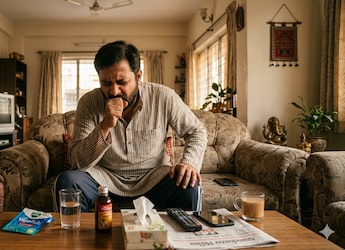
Lung cancer is often diagnosed at an advanced stage because its early symptoms are easy to overlook. A persistent cough is among the most commonly ignored warning signs.



................................ Advertisement ................................


Blog | Well Done, Delhi. You've Turned Lung Sacrifice Into A Badge Of HonourSaikat Kumar Bose
Monday November 10, 2025Till some years back, Delhiites would ask angry questions to those in power about the capitals annual tryst with toxic air. This has changed. Those in the driving seat dont see the need to answer now.
Opinion | Why Indians Have Just Given Up On Air Pollution CrisisTanushree Ganguly
Friday December 20, 2024While some may argue that people in Delhi are now more aware of air pollution than they were a decade back, my rebuttal would be that awareness does not mean that people are concerned.
Opinion | You Must Outrage Over Filthy Air More Than Once A YearJyoti Pande Lavakare
Tuesday December 10, 2024Delhi welcomed us with monsoon rains and mangos. We were home. Fast forward a couple of years, in the winter of 2012, I found myself in denial about something other parents, mostly expats, were calling toxic air.
Opinion | Delhi's Air Pollution Situation Is Like A Bad MarriageNishtha Gautam
Friday November 22, 2024On a good day, such as today, the AQI reading in Delhi is 407. We are jubilant at the sickly sunshine trickling through the slightly dissipated smog. At least its not 1600.
दिवाली... पराली... सियासी जुगाली!Ashwini kumar
Monday November 18, 2024दिल्ली-एनसीआर में प्रदूषण का समाधान तो आज तक मिला नहीं. हर साल चिंतित होकर हम-आप सांसों की तकलीफ के साथ-साथ दिल और ब्लड प्रेशर के मरीज भी क्यों बनें?


