


- Home/
- Ready For Steps Like Full Lockdown: Delhi To Supreme Court On Pollution
Ready For Steps Like Full Lockdown: Delhi To Supreme Court On Pollution
Edited by Divyanshu Dutta Roy | Updated: November 15, 2021 12:35 IST

Delhi air quality saw a slight improvement a day ago.
New Delhi:
The Delhi government on Monday told the Supreme Court that it was ready to take steps like a complete lockdown to fight air pollution though it will have a limited effect, as the court asked for an emergency plan to tackle the capital's air quality crisis.
Delhi's air pollution was a "crisis", the judges said, sharply pulling up the city government for "lame excuses" and "passing the buck", and insisting on immediate steps as the Supreme Court resumed its hearing on Monday.
A lockdown will have only a limited impact, the Arvind Kejriwal government said in its affidavit, adding that similar restrictions will be needed for the neighbouring areas of Delhi too, which come under the National Capital Region (NCR).
"The Delhi government is ready to take steps like complete lockdown to control local emissions. However, such a step would be meaningful if it is implemented across the NCR areas in neighbouring states. Given Delhi's compact size, a lockdown would have limited impact on the air quality regime," says the affidavit.
"We are ready to consider this step if the same is mandated for the entire NCR areas by the Government of India or by the Commission for Air Quality Management in National Capital Region and Adjoining Areas," said the Delhi government.
Listing the steps taken so far, Delhi said no physical classes would be held in schools this week and government officials would work from home. Private offices have also been advised to Work From Home. Construction sites will be shut for three days.
Hearing the case on Saturday, Chief Justice NV Ramana had asked the central government to come up with an emergency plan to tackle the dangerous smog, calling the situation "very serious".
Asking the centre and states to submit their response by Monday, the Chief Justice said: "You tell us how do you plan to take the emergency measures? Two-day lockdown? What is your plan on lowering the AQI (Air Quality Index) levels?".
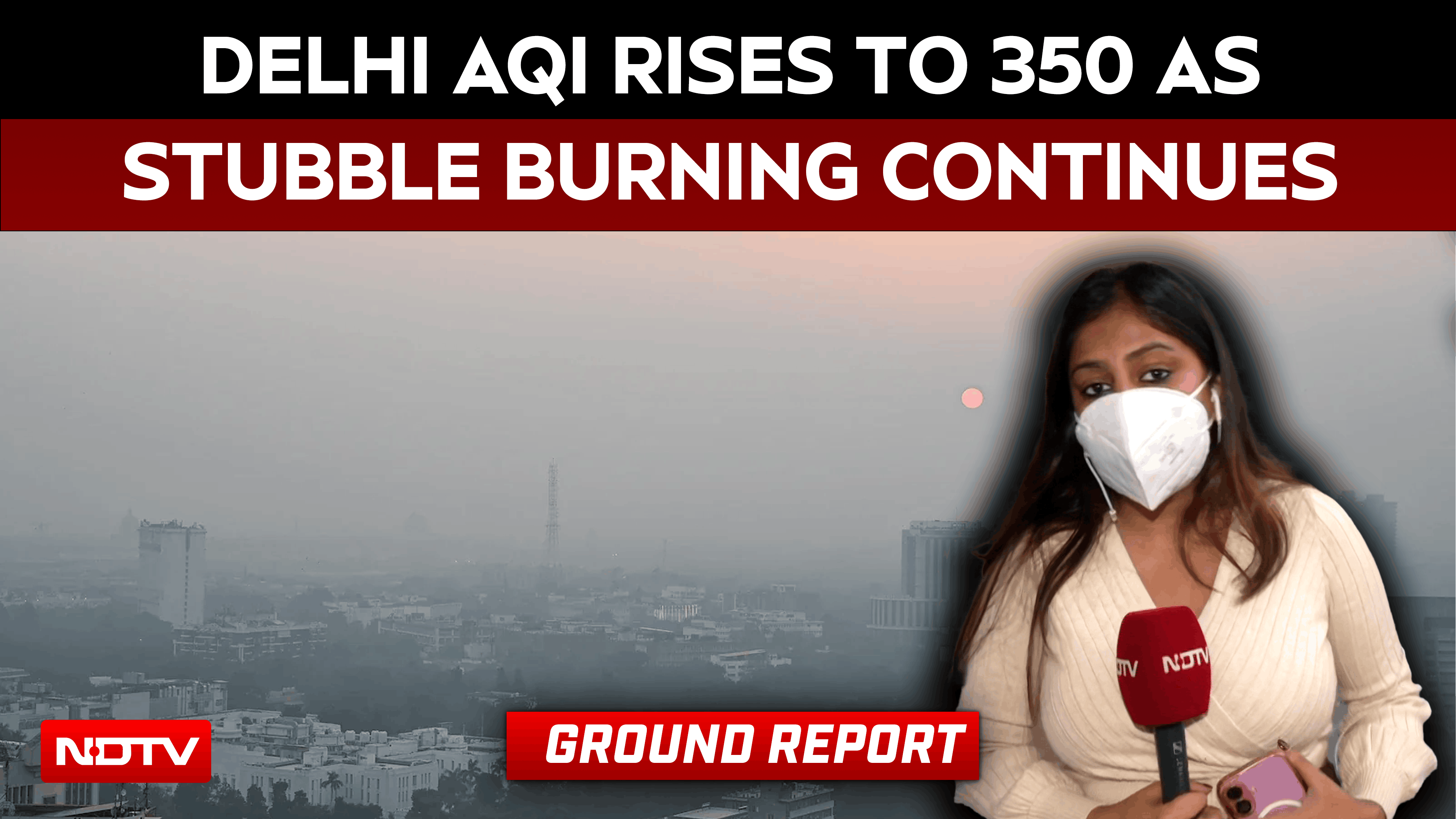
Air quality in Delhi, often ranked the world's most polluted capital, has declined due to crop stubble burning, emissions from transport, coal-fired plants outside the city and other industries, as well as open garbage burning and dust.
Although it was in the ''very poor'' category, Delhi reported an improvement in the air quality on Sunday recording a 24-hour average air quality index (AQI) of 330 against 437 the previous day as emissions from farm fires in Haryana and Punjab dropped significantly. The AQI was 471 on Friday, the worst this season so far.
Delhi's air quality remained in the ''very poor'' category for the second consecutive day on Monday, with the AQI being recorded at 342.
Published: November 15, 2021 12:35 IST
 Edited by Madhumanti Pait Chowdhury | Friday November 13, 2026
"Will someone please tell me what this strange burnt-fuel smell in the air is?" asked Juhi Chawla
- Written by Sneha Mordani | Friday November 13, 2026
As air pollution continues to threaten the health of the capital, the question is no longer simply whether schools should close.
- Friday November 13, 2026
Air quality index (AQI) in Delhi was "hazardous" at 334, making it the most polluted global major city, according to Swiss group IQAir, which measures air quality levels based on the concentration of toxins
- Written by Varsha Vats | Friday November 13, 2026
Exposure to heavily polluted air can lead to respiratory issues. Within hours, it can cause coughing, wheezing, a scratchy throat, burning or watery eyes, and shortness of breath.
- Edited by Prateek Shukla | Friday November 13, 2026
From lost working hours and rising medical bills to employees struggling through illness, air pollution is quietly becoming a major business expense.



................................ Advertisement ................................
Opinion | Delhi Has Every Pollution Control Policy - Except One That Works
Monday November 09, 2026Every November, Delhi performs the same ritual. We check the AQI before stepping outdoors, children are kept indoors, masks reappear, schools consider shutting, construction is restricted, and emergency meetings are convened. Politicians blame the weather, neighbouring states, farmers, or firecrackers. And then, as the season changes, the urgency d...
दीवाली की चौखट पर दिल्ली में सांसों का संकट: 30 साल की स्टडी ने हरियाली को लेकर क्या बताया?
Thursday November 05, 2026अध्ययन में हरियाली की मात्रा के साथ उसके फैलाव और आपसी जुड़ाव को भी महत्वपूर्ण पाया गया. जिन इलाकों में हरियाली ज्यादा बिखरी हुई थी, वहां सतही तापमान अधिक रहा. इसके विपरीत, बड़े और आपस में जुड़े हरित क्षेत्रों में तापमान कम पाया गया.
Opinion: Why Delhi's Smog Can't Be Fixed From SpaceDavid Fickling, Bloomberg
Monday October 19, 2026The clearest sign that Delhi is on a path to cleaner air would be a decline in the amount of paddy grown nearby, and therefore the acreage liable to be burned each year.
Don't Normalise Air Purifiers As Delhi Chokes | The Reason Why
Thursday December 11, 2025More than 90 cities in the world's top 100 polluting list are in India. With every passing year, the AQI is rising, reaching 'hazardous' levels.
Blog | Well Done, Delhi. You've Turned Lung Sacrifice Into A Badge Of HonourSaikat Kumar Bose
Monday November 10, 2025Till some years back, Delhiites would ask angry questions to those in power about the capitals annual tryst with toxic air. This has changed. Those in the driving seat dont see the need to answer now.



Comments
