


- Home/
- Delhi Air Quality Remains 'Very Poor' For 13th Consecutive Day
Delhi Air Quality Remains 'Very Poor' For 13th Consecutive Day
Press Trust of India | Updated: November 26, 2025 22:54 IST
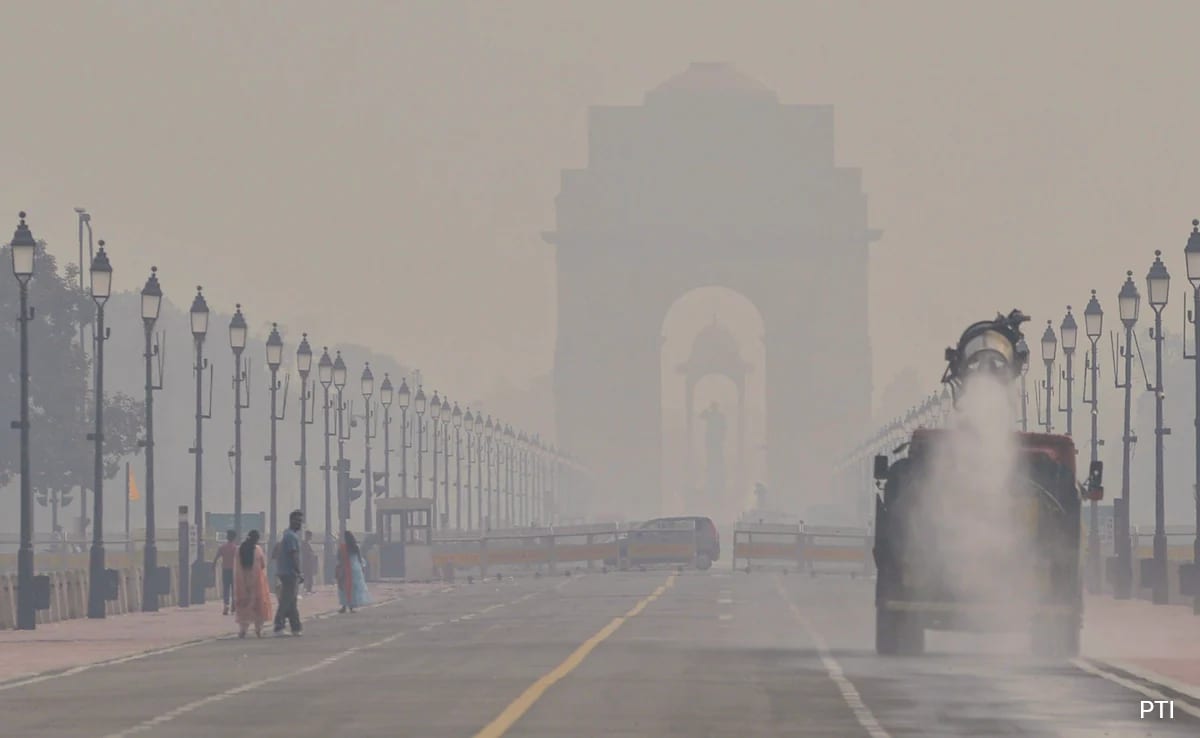
The air quality is likely to remain "very poor" over the coming week.
New Delhi:
Delhi's air quality remained in the "very poor" category for the 13th consecutive day on Wednesday, with the city recording an AQI of 327 and forecasts indicating no relief in the coming week.
The 24-hour average Air Quality Index (AQI) settled at 327 on Wednesday, compared to 352 on Tuesday and 382 on Monday, remaining in the "very poor" category for the 13th consecutive day.
The air quality is likely to remain "very poor" over the coming week, according to a forecast issued by the Air Quality Early Warning System for Delhi.
Meanwhile, the Central Pollution Control Board's (CPCB) Sameer app, which displays real-time readings from monitoring stations across Delhi, had not updated data till 5 pm on Wednesday. On Tuesday, only one station -- Rohini -- recorded the air quality in the "severe" category with an AQI of 401. On Monday, 15 stations were in the "severe" range.
According to the CPCB's standards, an AQI between 0 and 50 is considered "good", 51 and 100 "satisfactory", 101 and 200 "moderate", 201 and 300 "poor", 301 and 400 "very poor" and 401 and 500 "severe".
The Decision Support System (DSS) of the Indian Institute of Tropical Meteorology in Pune estimated that vehicular emissions contributed 21.6 per cent to Delhi's pollution on Wednesday -- the highest among all sources -- while stubble burning accounted for 0.8 per cent.
For Thursday, these contributions are projected at 19.5 per cent and 0.7 per cent, respectively.
With Delhi's air quality slipping deep into the "very poor" and "severe" categories this winter, doctors have stressed the need for regular diagnostic screening to detect early signs of pollution-linked health deterioration, especially among smokers, asthma patients, children and people with pre-existing cardiac or respiratory conditions.
Experts have said that preventive health checks are becoming increasingly important as toxic air triggers airway inflammation, reduces lung function and aggravates underlying diseases.
For patients with persistent breathing difficulties, chest X-rays may be advised to detect chronic inflammation or structural lung changes. Advanced tests such as FeNO (fractional exhaled nitric oxide) are gaining relevance because they can identify airway inflammation even before major symptoms appear.
Health specialists have said that individuals frequently exposed to poor air quality -- including outdoor workers, traffic personnel and daily commuters -- should consider establishing a baseline spirometry profile and repeating the test every six months to monitor any decline.
Pulse oximetry can help people experiencing fatigue or breathlessness track oxygen saturation levels. An annual chest evaluation is also recommended for those with chronic exposure to pollutants.
(Except for the headline, this story has not been edited by NDTV staff and is published from a syndicated feed.)
Published: November 26, 2025 22:54 IST
 Edited by Astitva Raj | Saturday October 03, 2026
He said someone should be at home to light the diyas and celebrate Diwali properly.
- Written by Shreya Goswami | Thursday October 01, 2026
October's changing temperatures, dry air, dust and rising pollution can leave Delhi-NCR residents with a scratchy throat, cough or hoarseness.
- Written by Dr Shivanshu Raj Goyal | Thursday October 01, 2026
Since most people spend a lot of time indoors, the air quality indoors becomes essential in relation to respiratory health. Considering different environments, air inside can contain dirt, allergens and several pollutants from multiple sources.
- Wednesday September 30, 2026 , France
In a new analysis covering the first eight months of 2026, the European Union's Copernicus Climate Atmosphere Monitoring Service (CAMS) highlighted the close relationship between climate change and air pollution.
- Reported by Reet Kaur Sahni | Tuesday September 29, 2026
Starting November 1, petrol and diesel vehicles registered outside Delhi and not meeting BS-VI standards will be banned from entering the city, though CNG and electric vehicles are exempt.




................................ Advertisement ................................


Blog | Well Done, Delhi. You've Turned Lung Sacrifice Into A Badge Of HonourSaikat Kumar Bose
Monday November 10, 2025Till some years back, Delhiites would ask angry questions to those in power about the capitals annual tryst with toxic air. This has changed. Those in the driving seat dont see the need to answer now.
Opinion | Why Indians Have Just Given Up On Air Pollution CrisisTanushree Ganguly
Friday December 20, 2024While some may argue that people in Delhi are now more aware of air pollution than they were a decade back, my rebuttal would be that awareness does not mean that people are concerned.
Opinion | You Must Outrage Over Filthy Air More Than Once A YearJyoti Pande Lavakare
Tuesday December 10, 2024Delhi welcomed us with monsoon rains and mangos. We were home. Fast forward a couple of years, in the winter of 2012, I found myself in denial about something other parents, mostly expats, were calling toxic air.
Opinion | Delhi's Air Pollution Situation Is Like A Bad MarriageNishtha Gautam
Friday November 22, 2024On a good day, such as today, the AQI reading in Delhi is 407. We are jubilant at the sickly sunshine trickling through the slightly dissipated smog. At least its not 1600.
दिवाली... पराली... सियासी जुगाली!Ashwini kumar
Monday November 18, 2024दिल्ली-एनसीआर में प्रदूषण का समाधान तो आज तक मिला नहीं. हर साल चिंतित होकर हम-आप सांसों की तकलीफ के साथ-साथ दिल और ब्लड प्रेशर के मरीज भी क्यों बनें?


